

ATESSIA

Do “over the counter” medicines exist in France?

French always do it different
In many domains, French people like to stand out, either in a positive or negative way.In the Healthcare field, France has set a system that is highly effective, and very protective for the patient, but at the price of a heavy state involvement and of one of the most complex regulations.
As a result, understanding the regulatory specificities of France is key for entering the French market.
ATESSIA can help you in this process and provide you assistance and expertise.
Here are a few areas where France follows its own, often complicated and restrictive, rules.

What are direct-access medicines ?

Over-the-counter (OTC) drugs do not constitute a legal category of drugs under French or European law. This concept, imported from Anglo-Saxon countries, refers to drugs that are directly available to patients at authorized dispensing locations. They promote responsible self-medication and patient autonomy.

In France, since July 1, 2008, certain medicines known as officinal medicines (MMO) can be made directly available to the public in pharmacies, under strict conditions. They are referred to in several ways: “self-medication medicines“, “over-the-counter medicines” or “direct access medicines

A dedicated space in pharmacies

Article R. 4235-55 of the Public Health Code (CSP), authorizes pharmacists to display MMO in a dedicated, clearly identified space located in the immediate vicinity of the dispensing and pharmaceutical record stations.

Their dispensing remains subject to the effective control of the pharmacist, in accordance with the obligation to provide advice imposed on them by the Code of Ethics and Good dispensing practices.

Eligibility Criteria for Inclusion on the MMO List

To be presented for direct public access, medicines must be listed by the Director General of the National Agency for the Safety of Medicines and Health Products (ANSM). Under Article R.5121-202 of the PHC, inclusion is subject to the following conditions:

  • Medicine must not require a mandatory medical prescription (excluding those classified in Lists I and II of poisonous substances, such as narcotics, as well as other medicines subject to restricted prescription);
  • Therapeutic indications, treatment duration, and information provided in the package leaflet must allow safe use by the patient, on pharmacist advice and without a medical prescription: : symptoms must be easily recognisable and must not risk concealing a serious condition;
  • Packaging (weight, volume, number of dosage units) must correspond to the posology and recommended treatment duration indicated in the leaflet;
  • The medicine must not be subject to advertising restrictions for public health reasons;
  • It must not appear on the lists provided for under Article L.162-17 of the Social Security Code, which qualifies for reimbursement by health insurance.

The required documentation for the application is detailed in the ANSM document, “Modalities for Submitting Requests to Add, Modify, or Remove a Medicine from the List of Officinal Medications for Direct Public Access”, available on the ANSM website.

Following review, under Article R.5121-203, the ANSM’s Director General may, by reasoned decision, refuse the listing of medicine on public health grounds, including after reassessment of the benefit-risk balance. The Director General may also suspend or remove a medicine from the list if it no longer meets the criteria of Article R.5121-202 or for any public health reason.

Advertising authorized for the public

Given the criteria imposed by Article R.5121-202, these drugs meet the conditions imposed by Article L.5122-6 of the CSP and may therefore be advertised to the public, subject to obtaining a GP (“Grand Public”) visa

The ANSM recommendations specify that reference to the fact that it is an officinal medicine remains possible provided that “it is sober and informative in nature […]”. This reference cannot constitute the main focus of the communication and must not be interpreted in its form as “[…] an official accreditation or label for the advertising message.”

Messages or slogans must not suggest that the medicine is effective or safe.

Conclusion: Balancing Accessibility and Safety

The French regulatory framework allows community pharmacists to provide direct public access to certain non-prescription medicines, provided that their MA permits safe use under pharmacist guidance. This voluntary procedure for MA holders balances healthcare accessibility and patient safety while complying with strict regulatory requirements.


Article written by Arthur DI RUGGIERO, Regulatory Affairs Advisor

Clinical Trials versus Research Involving Human Subjects (RIPH): How Are Pharmaceutical Companies Affected?

Medical research constitutes an essential lever for the development of new treatments and for the continuous improvement of patient care.

In France, this research is governed by strict regulations designed to protect participants and ensure the integrity of human subjects. The Jardé Law, adopted in March 2012 and fully applied since November 2016, constitutes the legal framework for research involving human subjects (RIPH).

Relationship between the Jardé Law and the European Clinical Trials Framework

It should be noted that clinical trials involving medicinal products are primarily regulated by the EU Clinical Trials Regulation (EU) 536/2014 (CTR), which came into effect on January 31, 2022. This regulation repealed and replaced Directive 2001/20/EC. Since that date, clinical trials on drugs must be submitted via the Clinical Trials Information System (CTIS). As a reminder, any clinical trial with at least one active investigator site in France as of January 31, 2025 had to undergo a transition request to CTIS by its sponsor. The ANSM notice to sponsors provides practical guidance on the submission of applications.

The Jardé Law does not replace the CTR but complements the European framework with specific national requirements, notably regarding the protection of participants, consent and information, research classification, and procedures involving the Committees for the Protection of Persons (CPP).
Other regulatory provisions must also be integrated by sponsors, such as procedures on personal data protection (GDPR, CNIL rfefernce methodologies), procedures related to the use of medicinal products composed wholly or partially of genetically modified organisms (GMOs), and specific rules applicable to certain health products.

Indeed, depending on the nature of the research object, the applicable provisions differ. The Jardé Law thus covers: drugs, medical devices (clinical investigation) in vitro diagnostic medical devices (performance study), cell therapy products, tissues, organs, labile blood products (LBPs), or even research on dietary supplements or cosmetics.

What is the Jardé Law?

The Jardé Law, named after Deputy Olivier Jardé, is a regulation that governs the conditions under which research involving human participants can be conducted in France. It replaces the Huriet-Sérusclat Law of 1988 and aims to strengthen the protection of participants while simplifying and harmonizing procedures, taking into account the level of risk incurred.

The main reference texts include: 

The Jardé Law, Law No. 2012-300 of March 5, 2012, relating to research involving human subjects. 

The ordinance, known as the “modified Jardé Law,” relating to research involving human subjects. 

Decree No. 2016-1537 of November 16, 2016, relating to research involving human subjects. 

Classification of RIPH

Research organized and conducted on human beings with the aim of developing biological or medical knowledge is referred to as “research involving human subjects” (RIPH). There are three types of RIPH:

Category Legal Provisions Framework 
Category 1 Interventional research involving a risk to participants (intervention not justified by usual care)Articles L1121-1 to L1121-17 of the Public Health CodeThese studies require prior authorization from the ANSM (French National Agency for Medicines and Health Products Safety) and a favorable opinion from a Committee for the Protection of Persons (CPP).
Category 2: Interventional research with minimal risks and constraints *Articles L1121-1 to L1121-17 of the Public Health CodeThese studies require a favorable opinion from a CPP, but not authorization from the ANSM.
Category 3: Non-interventional research (observational studies – negligible risks)Article L1121-1 of Public Health CodeThese studies require a favorable opinion from a CPP, but not authorization from the ANSM.

* Research involving drugs cannot in principle fall under Category 2, except for very specific cases defined by regulation. An order sets the criteria to be met to remain within the scope of RIPH 2.

What Are the Implications for the Industry? 

Participant Information and consent

The objective of the Jardé Law is to ensure the safety of participants. Special attention is given to the notions of informed consent and clear, understandable, and fair information.

Industrials, as sponsors, must ensure that participants fully understand the stakes, procedures, risks and constraints, and potential benefits of the study. These requirements are detailed in Articles L1122-1-1 to L1122-2 of the Public Health Code (CSP).

Determination of Competent Authorities and Applicable Procedures

Sponsors must determine the category of their research during the design phase, ensure they obtain the necessary authorizations (CPP and/or ANSM), and define the applicable procedure (CTR/CTIS for drugs).

Interactions with CPPs and the ANSM 

CPPs are French ethics committees (Committees for the Protection of Persons) responsible for evaluating participant protection, the quality of information and consent, and the benefit/risk balance. Interactions with CPPs and the ANSM are essential for the validation of research projects. Good communication and submission of complete dossiers are necessary, in accordance with Articles L1123-6 and L1123-7 of the Public Health Code. For each RIPH, a CPP responsible for assessing the application is selected by random draw. The information system for research involving the human person (SI RIPH 2G) enables the submission of an application for an opinion and the random designation of a CPP. The platform also allows for the declaration of healthy volunteers participating in a study.

Procedures

Before submitting the authorization request dossier (initial authorization and substantial modification) and/or human research opinion request, or routine care research, sponsors must obtain an IDRCB registration number for the research. This number identifies each research conducted in France. For a interventional research authorization and opinion request concerning a medicinal product for human use, sponsors must instead obtain a research registration number in the European CTIS database (formerly: EudraCT).

Subsequently, sponsors will electronically submit the biomedical research authorization and/or opinion request dossier to the ANSM and/or CPP, in accordance with the current orders setting the dossier formats for each type of research. Various “Notices to Sponsors” guide these procedures according to the situation.

Conclusion

The Jardé Law thus ensures the safety of participants in clinical research in France.

For health manufacturers, understanding and complying with these regulations is not only a legal obligation but also a guarantee of the quality of the data generated, particularly for use in a Marketing Authorization Application (MAA) dossier.

By integrating the requirements of the Jardé Law into their processes, manufacturers contribute to the development of innovative treatments while ensuring high ethical standards, in accordance with French and European regulations on this subject.

Atessia supports you in implementing these processes with its expertise in clinical trials.

Article written by Mathilde ISRAEL 

MPUP Non GMP

How to manage a non-GMP raw material in your MA files? 

French always do it different 

In many domains, French people like to stand out, either in a positive or negative way. 

In the Healthcare field, France has set a system that is highly effective, and very protective for the patient, but at the price of a heavy state involvement and of one of the most complex regulations. 

As a result, understanding the regulatory specificities of France is key for entering the French market. 

ATESSIA can help you in this process and provide you assistance and expertise. 

Here are a few areas where France follows its own, often complicated and restrictive, rules. 

The substances used in a medicinal product intended for the European market, including for export, are defined as raw materials for pharmaceutical use (RMP). They can be active (active substance) or inert (excipients). 

Whether the medicinal products are intended for human or veterinary use, only active substances manufactured and distributed in accordance with European Good Manufacturing Practices (GMP – Part II) and Good Distribution Practices (GDP), introduced by article L.5138-3 of the French Heath Code, can be used. 

Thus, when applying for a marketing authorization or for certain applications to modify the marketing authorization, the notice to applicants requires the submission of a signed QP declaration by the qualified person of the manufacturing site and/or of the certification of the batches of the finished product attesting that the active substance used is manufactured in accordance with good manufacturing practices. 

Concerning the excipients used in medicinal products for human or veterinary use, there is no enforceable standard in the national or European regulations and they are not subject to the QP declaration in the marketing authorization file. It is up to the manufacturer or distributor of the finished product to define its quality system the applicable standard(s) for the manufacture or distribution of the excipient, according to its/their intended use(s). This exercise will be carried out in consultation with pharmaceutical users on the basis of the results obtained during a formal quality risk assessment (GMP point 5.29). It should be noted that ANSM recommends, at a minimum, the IPEC/PQG GMP & GDP reference systems.  

However, it is recognized that for some raw materials, their pharmaceutical use may represent only a minor fraction of their other industrial uses (agri-food, cosmetics or others). Thus, their producers may not have the objective of meeting the specific requirements of pharmaceutical customers. 

The EMA’s Q&A Part 1 reaffirms that compliance with the above-mentioned standards is a legal obligation and that, in the event of difficulties in guaranteeing a supply of satisfactory quality, alternative GMP sources must be sought out, qualified and, if necessary, registered. In the case of a source identified on European territory, the establishment must apply for authorization or registration from the competent authority of the Member State in which it is established. In case of import from a third country to the European territory, the source of the identified active substance will be conditioned by the provision of a written confirmation from the competent authority of the exporting third country. This document attests that the applicable standards are at least equivalent to the GMP defined by the European Union.  

In exceptional circumstances these same EMA Q&A Part 1 introduces the possibility for manufacturing authorization holders (of the finished product) to assess and document the extent to which GMP is met, and to provide a risk-based justification for the acceptance of any deviation. At the MA level, the QP declaration should detail the rationale for stating that the standards applied provide the same level of assurance as GMP. The EMA will collect the experience gained with this approach, which can be used as a basis for discussion of possible future related changes to the guidelines. 

However, at the national level, the ANSM does not, for example, explicitly provide for derogations or for exceptional circumstances, unlike the EMA for centralized MA. When informed in advance of a particular context (such as medicinal products of major therapeutic interest or the absence of a therapeutic alternative), the competent authorities could then request additional information or carry out an inspection to ensure that the establishment complies with the standards in force in the Union. Thus, this situation can only be transitory, since these alternative sources (in the EU or in third countries) and/or their principals can request an express request for an inspection of the raw materials from a competent authority of one of the member states in order to obtain a certificate of conformity. 

The control of the supply chain is the key word. Deficiencies in the qualification and monitoring process of suppliers and/or manufacturers of raw materials are regularly the subject of injunctions issued by the ANSM against pharmaceutical establishments (2 for the year 2024 and 2 for the year 2025). For the alternative identified source, this may be a hindrance (compulsion to comply with the opposable standards) or an opportunity (to comply with them in order to enter the EU market for UPMPs). A mutualization of supplies (and on-site audits) can also be an interesting approach to encourage the source to seize this opportunity.  

This article was written by Véronique LEWIN, Senior Consultant in CMC Regulatory Affairs

Rétrocession

The Hospital-to-Community Dispensing (“Retrocession”) of Hospital Medicines to Outpatients in France

In France, community pharmacies are the standard point of dispensing for outpatients when medicines are not restricted to hospital use. 

“Retrocession” refers to the dispensing of medicines to outpatients by hospital pharmacies (PUI – pharmacies à usage intérieur), as an exception to or in addition to the community pharmacy supply chain. It is justified by public health or safety reasons listed in the French Public Health Code. 

According to Articles L5126-6 and R5126-58 of the French Public Health Code, and the dedicated page on the ANSM website, medicines must meet the following criteria to be eligible for rétrocession: 

  • not be restricted to hospital use (RH status), 
  • present specific dispensing or administration constraints, 
  • have particular requirements related to supply security, 
  • require monitoring of the prescription or dispensing. 
  •  

Medicines are included on this list for public health reasons, in the interest of patients. 

The retrocession list, initially established in 2004 and managed by the Ministry of Health until 2021, was originally built on the basis of practice and needs. 
Its management was then transferred to the ANSM at the end of 2021 (Decree No. 2021-1531 of 26 November 2021). It is now supplemented by generic medicines corresponding to reference products already listed, or by certain new medicines considered by the ANSM to have added value when dispensed through hospital pharmacies due to safety-of-use or supply considerations. These medicines hold a Marketing Authorisation (MA) or an Import Authorisation (AI). The ANSM has expressed its intention to streamline this list, keeping only medicines that legitimately require access through this distribution channel. 

Decisions to include medicines on the retrocession list are published on the ANSM website approximately every 15 days, depending on the flow of newly granted MAs. A consolidated and updated retrocession list is also available (including antibiotics/antifungals, anticancer agents/immunosuppressants, antivirals, plasma-derived medicinal products, etc.). 

Other medicines may be dispensed through retrocession without being explicitly listed. These include the following categories: magistral or hospital preparations, medicines granted early access or compassionate use. 

The purpose of the retrocession system is to ensure that patients can access certain treatments despite specific distribution, dispensing, or administration constraints, or when particular monitoring of the prescription or dispensing is required, without the need for hospitalisation. 

When medicines have been marketed for several years and sufficient experience has been gathered, their switch to community pharmacy dispensing logically leads to their removal from the retrocession list. 

Atessia supports pharmaceutical companies in defining or modifying the prescribing and dispensing conditions of their medicinal products. 

This article was written by Estelle ICARD, Regulatory & Pharmaceutical Affairs Consultant. 

PCVRR

The PRRC: Person Responsible for Regulatory Compliance 

Article 15 of Regulation (EU) 2017/745 on medical devices and Article 15 of Regulation (EU) 2017/746 on in vitro diagnostic medical devices formally introduce the requirement for each manufacturer (and each authorised representative) to designate a Person Responsible for Regulatory Compliance (PRRC). This requirement aims to ensure the continuous compliance of devices placed on the market, regardless of their class or medical purpose. 

This obligation applies to all types of devices: 

  • Implantable or non-implantable 
  • Active or non-active 
  • Standard or custom-made 
  • With or without a medical purpose 

Who Needs a PRRC? 

  • Manufacturers  

All manufacturers placing CE-marked medical devices on the EU market are required to appoint a PRRC. 

  • Authorised Representatives (ARs) 

EU-based authorised representatives acting on behalf of non-EU manufacturers are also required to designate a PRRC. 

Other economic operators such as distributors, importers, and assemblers are not required to have a PRRC. 

Roles and Responsibilities of the PRRC 

The PRRC plays a critical role throughout the regulatory lifecycle of a medical device. The main responsibilities include : 

  • Verifying the conformity of devices prior to their release, relying on the manufacturer’s quality management system. 
  • Preparing and updating technical documentation, including the EU declaration of conformity. 
  • Post-market surveillance obligations: monitoring device performance and safety after it has been placed on the market. 
  • Reporting obligations to competent authorities in the event of incidents or significant changes. 
  • Submitting declarations in case of clinical investigations and performance studies, as required by the regulation. 

🔒 Independence Guarantee : The regulation ensures that the PRRC cannot be disadvantaged in carrying out their duties, whether they are an employee of the company or an external party. 

Required Qualifications to Act as a PRRC 

There are two possible routes to qualify as a PRRC, as set out in the regulation: 

1. Academic Path + Experience 

  • A diploma (or certificate) in law, medicine, pharmacy, or another relevant scientific discipline. 
  • ≥ 1 year of professional experience in regulatory affairs or quality management systems related to medical devices/or in vitro diagnostic medical devices. 
  • For custom-made devices: ≥ 2 years of experience in a relevant manufacturing field. 

2. Professional Experience Path 

  • ≥ 4 years of professional experience in regulatory affairs or quality systems applicable to medical devices /or in vitro diagnostic medical devices. 

PRRC Role Based on Company Size 

The regulation acknowledges structural differences between large companies and SMEs: 

  • Large enterprises: The PRRC must be a permanent part of the organization. 
  • Micro and small enterprises*: The PRRC role can be outsourced, provided the person is permanently and continuously available. 

Multiple PRRCs: If more than one person is appointed, they share joint responsibility for regulatory compliance. Their respective responsibilities must be clearly defined in writing, and each individual must meet the qualification requirements. 

Registration and Compliance 

Since the Regulation came into effect on 26 May 2021, the contact details of the PRRC must be registered in EUDAMED, the European database for medical devices. 
(See our blog post on EUDAMED for more details.) 

Useful References 

  • SNITEM Guide – The Person Responsible for Regulatory Compliance 

*Commission Recommendation 2003/361/ΕC of 6 May 2003 concerning the definition of micro, small and medium-sized enterprises: 

-Within the SME category, a small enterprise is defined as an enterprise which employs fewer than 50 persons and whose annual turnover and/or annual balance sheet total does not exceed EUR 10 million. 

-Within the SME category, a microenterprise is defined as an enterprise which employs fewer than 10 persons and whose annual turnover and/or annual balance sheet total does not exceed EUR 2 million. 

Article written by Camille NEERMUL, Senior Consultant in Quality and Regulatory Affairs for medical devices 

Extension d'AMM versus variation de type II

Marketing Autorisation Extension versus type II variation. 

Legal basis: 

When marketing authorization holders wish to register a medicine in Europe, they submit a marketing authorisation (MA) application to the health authorities.  

Once marketing authorisation has been obtained, it is the responsibility of the marketing authorisation holder to keep the dossier up to date and to report any changes that affect the marketing authorisation. These changes may be of various types (administrative, quality, safety).  To do this, the marketing authorisation holder must submit a notification or a variation application to the competent health authorities.  

A variation is a modification to the marketing authorisation.  

There are also other types of MA modifications, known as MA extensions. 

Changes to the terms of a European marketing authorisation are provided for in Directive 2001/83/EC and Regulation (EC) No 726/2004, and detailed in Regulation (EC) No 1234/2008 on the examination of variations to the terms of marketing authorisations for medicinal products for human use (hereinafter referred to as the ‘Variations’ Regulation). New guidelines to facilitate the interpretation and application of the Variations Regulation were published in the Official Journal on 22 September 2025 and are applicable on 15 January 2026. The Annex to these guidelines provides details of the classification of variations. These guidelines cover the following categories of variations, defined in Article 2 of the Variations Regulation: 

— Minor variations of Type IA, 

— Minor variations of Type IB, 

— Major variations of Type II, 

— Extensions, 

— Urgent safety restrictions. 

Any modification must be classified in one of the above categories. However, in some cases, the distinction between a Type II (major) variation or an extension is complex. 

Definitions: 

  1. Type II variations 

Type II variations are considered as major variations. These are variations which are not extensions of marketing authorisations and may have a significant impact on the quality, safety or efficacy of the medicinal product concerned. This type of variation is generally assessed within 60 days, but shorter assessment periods (30 days for safety-related variations) or longer periods (90 days for indication extensions) may be necessary. 

  1. Extensions 

Certain changes to a marketing authorisation must be considered as fundamentally altering the terms of that authorisation and therefore cannot be granted through a variation procedure. Annex I of the Variations Regulation sets out a list of changes to be considered as extensions; the two main changes requiring an extension are:  

– Changes to the active substance(s): 

– Changes to strength, pharmaceutical form and route of administration 

According to Article 19 of the « modification » Regulation, an application for an extension shall be evaluated and granted in accordance with the same procedure as for the initial marketing authorisation to which it relates.  

The extension may either be granted as a new marketing authorisation (national procedures, MRP and DCP) or included in the initial marketing authorisation to which it refers (centralised procedure). 

In all cases, the new MA obtained is part of the global marketing authorisation and is not eligible to additional data protection (except in cases of ‘significant’ indication extensions based on comparative data). 

The assessment timetable for an extension is the same as that for an initial marketing authorisation application. 

In practice 

Experience has shown problems in the classification of extension applications versus variations particularly regarding the items pharmaceutical form and strength. The « GUIDELINE ON THE CATEGORISATION OF EXTENSION APPLICATIONS (EA) versus VARIATIONS APPLICATIONS (V) » (Revision 4 – July 2019), proposes a harmonised and agreed interpretation of the Standard terms, with the aim of facilitating the application of the Regulation on variations throughout the EU and helping in the classification of requests.   

The main principles of classification of extensions versus type II variations are as follows: 

 Type of changes 
Pharmaceutical form Strength Presentation Route of administration Inclusion of medical devices 
Variation  Deletion of a pharmaceutical form Deletion of a strength Change or deletion of a pack size Change of fill volume    Addition or replacement of a measuring or administration device (part of the primary packaging)* 
Extension Change of addition Different strength or any other changes to the active substance(s)  Change or addition of a route of a route of administration   

* : unless the modification results in a change to the strength, pharmaceutical form or route of administration. 

The guideline also provides examples presented as table for more complex cases. 

It is important to note that variation requests may be grouped together with a marketing authorisation extension request. The assessment period applied to variations will be that of the marketing authorisation extension. 

In summary 

Apart from the question of the regulatory classification of the application (variation or extension), numerous practical questions may arise when compiling the application: 

– Will my brand name be affected? 

– How should I submit my extension request? 

– What data should I generate? 

– Can I group extension submissions with other types of variations? 

– Do I need to meet pediatric requirements in my extension application? 

– How should I integrate this extension into the eCTD? 

ATESSIA can assist you in developing your regulatory strategy and drafting your variation or extension application dossiers, regardless of the registration procedure. 

This article was written by Anne-Valérie Angérard, senior regulatory affairs consultant. 

La Charte de QUalité des Pratiques Professionnelles : Un Nouveau Cadre pour la Promotion des Produits de Santé

The Quality Charter for Promotional Practices: A New Framework for the Promotion of Health Products 

In March 2022, the Quality Charter for Professional Practices was published to provide a framework for the presentation, information and promotion of medical devices for individual use, health products other than medicinal products and any associated services. The publication of the Quality Charter for Professional Practices marks a turning point in the supervision of commercial and promotional practices, with the aim of guaranteeing transparent information that complies with quality requirements in the field of medical devices and associated services. 

A strengthened regulatory framework 

This charter, published by decree in the Official Journal on 8 March 2022, is part of an initiative to regulate promotional practices for healthcare products. It was drawn up in consultation with the “Comité économique des produits de santé” (CEPS) and the sector’s professional organisations. Its main objective is to provide a better framework for interactions between healthcare professionals and companies marketing or distributing medical devices or associated services included on the list of reimbursable products and services (LPP). 

The charter applies to all products and services listed on the LPP, used in towns and in healthcare and medico-social establishments, under both brand names and generic descriptions. 

The charter imposes several essential rules to guarantee reliable and ethical information: 

Control of promotional visits: A threshold is proposed for the frequency of visits to healthcare professionals in order to avoid excessive commercial pressure. 

Transparency of information: obligation to provide exhaustive data on the proper use of products. 

Certification of practices: commitment by manufacturers, operators and distributors to respect the principles of the charter and to join a certification process. 

On the basis of this text, the French National Authority for Health (HAS) is drawing up a set of guidelines with a view to the implementation, by accredited bodies, of a certification audit procedure for the practices of economic operators. 

But with all this:  

What can companies give doctors, and what should companies give them? And above all, how should medical sales representatives be trained? How often? How do you declare a conference with a speaker? 

ATESSIA can help you decipher these regulations, prepare for your internal audits, audits of your subcontractors, certification audits, draw up procedures or train your teams in the field. 

Sandrine DE SOUSA, Senior Advisor Compliance and Quality of External Communications 

Atessia Quelle substitution des hybrides en france ?

What substitution for hybrid Medicines in France? Status of the ANSM Hybrid Groups Register

A laborious creation of the register of hybrid groups 

The purpose of the hybrid group registry is to enable substitution in certain medical situations, taking into account the variety of “hybrid” situations. 

Thus, the creation of the hybrid group registry is the result of a long legislative process in France that led to the creation of hybrid groups and the hybrid group registry to address the potential risks associated with substitution: 

1- The first steps were introduced with the 2019 law related to finance of the French public health system (so-called LFSS*) and its decree no. 2019-1192 of November 19, 2019: these texts laid the foundations with the definition of the hybrid register and an initial framework for substitution; 

2- Next came the decree of April 12, 2022: this is the first list of ATC classes R03A & R03B of drugs that can be included in groups included in the hybrid register, i.e., drugs for obstructive airway diseases administered by inhalation. Since then, new ATC classes have been added; 

3- New details were provided in the decrees of January 31, 2023, with the medical situations: 

– in which substitution is possible; 

– in which the physician can exclude substitution; 

4- finally, everything actually has started with the ANSM decision of April 22, 2024: the creation of the register of hybrid groups and the registration of products in this register allowing the first substitutions on the pharmacy field. 

A variety of hybrid products 

    Hybrid medicinal products are defined in the French Public Health Code (Articles L5121-1 5°c) and R5121-28)) and in Article 10(3) of Directive 2001/83/EC as medicinal products that do not meet the definition of generic medicinal products: 

    due to differences in the active substance, therapeutic indications, dosage, pharmaceutical form, or route of administration

    – or when bioequivalence with the reference medicinal product could not be demonstrated by bioavailability studies

    This definition therefore covers a wide variety of situations: let us cite topical drugs for which bioavailability is not achievable due to a local mode of action (e.g. dermatological, ophthalmic or pulmonary), parenteral drugs with a variety of pharmaceutical presentations, or even drugs which, for historical reasons, have heterogeneous therapeutic indications. 

    The content of the dossier depends on the reason for the hybrid drug. In many situations, substitution in pharmacies is not trivial. 

    However, it should be noted that, as with generic drugs, marketing authorizations for hybrid drugs refer in part to the non-clinical and/or clinical data of a reference drug that has had a marketing authorization for more than 8 years in France or the European Union. 

    In addition to this definition, the French Public Health Code defines: 

    – A hybrid group as the grouping of a reference drug and its hybrid drugs that can be substituted for it (Article L5121-1 5°d)). 

    – The register of hybrid groups, including substitutable hybrid groups (Article L5121-10). 

    *Loi de Financement de la Sécurité Sociale 

    In practice 

      Unlike generic medicinal products, inclusion in the hybrid group register is not automatic. However, the Marketing Authorisation Holder is not required to submit a request: it is the ANSM (French National Agency for the Safety and Health) that assesses the legitimacy of the product’s inclusion. 

      Hybrid groups are classified by active substance designated by its common name. 

      As with the generics register, the specialties listed in the register are classified by hybrid group. Each group includes the reference specialty (identified by the letter “R”) and its hybrids (identified by the letter “H”). 

      The hybrid group register indicates, for each product, its name, dosage, pharmaceutical form, and the name of the marketing authorisation holder and, if different, the name of the “Exploitant”. This register also includes the nature of any differences observed between a hybrid product and the reference product. Excipients with known effects are also included. Finally, the medical conditions for which substitution may be made are also specified, where applicable. 

      The decision to register is made on a case-by-case basis and is the responsibility of the Director General of the ANSM. 

      In the first versions of the register, only medicinal products belonging to therapeutic classes R03A and R03B used for obstructive pulmonary diseases have been included in the hybrid group register. Specialties belonging to the ATC classes relating to drugs used in dermatology (D01A, D05A and D08A) and relating to drugs used in ophthalmology (S01A and S01E) were added by decision of the ANSM in October 2025. 

      We are awaiting new registrations for the following ATC classes: 

      • A01AB – Stomatological preparations – Antiinfectives and antiseptics for local oral treatment 

      • D11A – Other dermatological preparations – Other dermatological preparations 

      • R02A – Throat preparations – Throat preparations 

      • S02A – Otologicals– Antiinfectives 

      The hybrid registry began with a sample of respiratory drugs, and has been fed with other drugs indicated in dermatology and ophthalmology. It is expected to expand further in the coming years. 

      Atessia supports its clients in their registration strategy for hybrid drugs in Europe. 

      Article written by Agathe DAUBISSE, Senior Regulatory Affairs Consultant 

      Une image contenant personne, intérieur, soins de santé, verres

      The French Repository for Generic medicinal Products 

      What’s the French Repository of Generic Medicinal products ? 

      According to European regulation, ‘Generic medicinal product’ shall mean a medicinal product which has the same qualitative and quantitative composition in active substances and the same pharmaceutical form as the reference medicinal product, and whose bioequivalence with the reference medicinal product has been demonstrated by appropriate bioavailability studies. Bioavailability studies need not be required of the applicant if he can demonstrate that the generic medicinal product meets the relevant criteria as defined in the appropriate detailed guidelines. 

      The French Repository of Generics is defined in the French Regulation (Article R5121-8 of the French Public Health Code (PHC)) as a repository that displays generic groups. Generic group, also defined in the French Regulation(Article L5121-1-5b) of the French PHC), may include reference medicinal product and generics (legal basis 10(1)) but also medicines that can substitute a reference medicinal product without being a generic*. Within each generic group, the repository provides information about: 

      • Dosages, 
      • Pharmaceutical forms, 
      • Excipients with known effect if relevant; 

      The various immediate-release oral pharmaceutical forms shall be considered to be one and the same pharmaceutical form. 

      Specific identifiers enables to understand the status of medicines in each generic group: 

      • R: Reference medicinal product; 
      • G: Generic 
      • S: medicines that can substitute the reference medicinal product without being generic*. 

      It is to be noted that a generic group: 

      • may not systematically includes reference medicinal product* 
      • may include more than one reference product* 

      This repository is dedicated to generic medicinal products (and some exceptions mentioned). Even if there are some historical exceptions, it does not concern hybrid medicinal products or biosimilar medicinal products that have their own respective registries with additional requirements and specificities. 

      *according to a Decision made by the Director of the French HAs

      What’s the goal? 

      In France, the regulation plans that prescription of medicines should be done using INN.  

      The goal of the repository is to enable the substitution of reference medicinal product by generic by providing a clear view on equivalence in terms of products within a same group. 

      The right of substitution may be used by pharmacist within the same group between the reference medicinal product and a generic/substitutable medicinal product, as well as between one generic/substitutable specialty and another. 

      Moreover, for generic groups without a reference medicinal product, the right of substitution can be exercised indifferently within the group 

      Of note, substitution should be done cautiously in some situations: 

      • When it introduces excipients with known effects; 
      • Where the repository includes particular warning about a specific risk that can arise from the substitution; 
      • Where the substitution concerns medicinal product with a narrow therapeutic margin. 

      How is it updated? 

      The French Regulation provides that it is the responsibility of the French HA Director to update this repository with dedicated Decisions and a consolidated version of the repository. All those documents are available in the French HA Website. 

      In practice, upon approval of a generic medicinal product, the French HA informs the MAH of the reference product about the issuance of a MA decision for a generic. Then, the French HAs update the repository 60 days after the notification.  

      The repository might also be updated due to change of MAH, Exploitant, change in name but also in case of withdrawal of MA. 

      As illustration, this repository has been updated 11 times in 2024. 

      This article was written by Agathe DAUBISSE, Senior Regulatory Affairs Advisor 

      The Silicon Review

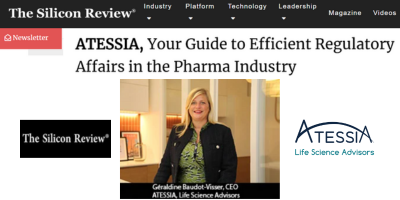
      ATESSIA, Your Guide to Efficient Regulatory Affairs in the Pharma Industry 

      In the intricate and highly regulated world of pharmaceuticals and healthcare, ATESSIA stands out as a consulting firm dedicated to guiding companies through the complexities of regulatory affairs. Recognizing the critical role of compliance and patient safety, ATESSIA offers comprehensive expertise that spans scientific documentation, clinical trials, regulatory submissions, and pharmacovigilance. By ensuring seamless collaboration with regulatory authorities across multiple jurisdictions, ATESSIA helps companies achieve compliance while driving growth and maintaining a strong focus on patient welfare and product efficacy. 

      Regulatory Affairs: a Growth Engine 

      Regulatory affairs are far more than a checklist of tasks—they represent a strategic driver of growth and innovation within the pharmaceutical and medical device sectors. At their core, they ensure that products meet the highest safety and quality standards, from development to commercialization. This involves aligning manufacturing processes with legal requirements, maintaining ongoing communication with regulatory authorities, and managing the vast documentation required for regulatory submissions. 

      Regulatory affairs also operate as a vital connector, fostering collaboration across clinical, medical, and marketing teams to ensure that every stage of product development adheres to regulatory standards. Beyond compliance, they enable strategic growth by guiding research and development efforts, supporting faster market access through regulatory frameworks, and facilitating partnerships and licensing agreements. Moreover, regulatory expertise ensures that companies can enter new markets efficiently, navigating diverse local requirements while maintaining compliance for existing products as regulations evolve. 

      Balancing Regulatory Workload 

      An overburdened regulatory workload can strain a company’s resources, stifling growth and innovation. ATESSIA’s solutions address this challenge by alleviating internal pressures, allowing teams to focus on core activities such as clinical trials and market strategy. 

      By partnering with ATESSIA, companies gain access to a balanced approach to regulatory affairs. ATESSIA’s expertise accelerates market access by efficiently managing regulatory submissions and ensures operations remain cost-effective and controlled. As an independent consultancy, ATESSIA provides objective and unbiased advice, enabling clients to navigate the complexities of the regulatory landscape with confidence. 

      What makes french Regulatory Affairs unique and how can ATESSIA Help? 

      The French pharmaceutical market presents unique challenges and opportunities due to its distinct regulatory environment. Stringent requirements from the ANSM (Agence Nationale de Sécurité du Médicament et des Produits de Santé), coupled with specific laws such as the Public Health Code, create a complex framework for compliance. ATESSIA acts as a strategic partner for international companies, offering expert guidance to navigate these complexities and thrive in the French market. 

      Key challenges include obtaining Exploitant status, adhering to packaging and labeling requirements, maintaining robust pharmacovigilance systems, and complying with strict advertising and anti-gift regulations. ATESSIA also supports companies in negotiating pricing and reimbursement with the HAS (Haute Autorité de Santé) and the CEPS (Comité Économique des Produits de Santé), ensuring optimal market entry strategies and compliance. 

      ATESSIA’s Commitment to Customer Experience 

      Led by Géraldine Baudot-Visser, ATESSIA is built on a foundation of precision, flexibility, and a deep understanding of client needs. The company prioritizes tailored solutions, crafting regulatory strategies that align with each client’s specific context, sector, and objectives. With a commitment to transparency, ATESSIA ensures clear and open communication throughout every project, empowering clients to make informed decisions confidently. 

      This long-term partnership approach positions ATESSIA as more than just a regulatory consultant. By adapting to changing regulatory environments and supporting clients as they grow, ATESSIA becomes an essential ally in achieving compliance and fostering sustainable growth. 

      ATESSIA transforms regulatory affairs from an operational challenge into a strategic tool for success. By providing unparalleled support and expertise, the company helps pharmaceutical businesses navigate complex landscapes, achieve compliance, and capitalize on growth opportunities. 

      For more information, visit www.atessia.fr or reach out via email at hello@atessia.fr. ATESSIA’s team is ready to help optimize your regulatory affairs and support your strategic objectives. 

      To read the full article on Silicon Review, click here