The Silicon Review

ATESSIA, Your Guide to Efficient Regulatory Affairs in the Pharma Industry 

In the intricate and highly regulated world of pharmaceuticals and healthcare, ATESSIA stands out as a consulting firm dedicated to guiding companies through the complexities of regulatory affairs. Recognizing the critical role of compliance and patient safety, ATESSIA offers comprehensive expertise that spans scientific documentation, clinical trials, regulatory submissions, and pharmacovigilance. By ensuring seamless collaboration with regulatory authorities across multiple jurisdictions, ATESSIA helps companies achieve compliance while driving growth and maintaining a strong focus on patient welfare and product efficacy. 

Regulatory Affairs: a Growth Engine 

Regulatory affairs are far more than a checklist of tasks—they represent a strategic driver of growth and innovation within the pharmaceutical and medical device sectors. At their core, they ensure that products meet the highest safety and quality standards, from development to commercialization. This involves aligning manufacturing processes with legal requirements, maintaining ongoing communication with regulatory authorities, and managing the vast documentation required for regulatory submissions. 

Regulatory affairs also operate as a vital connector, fostering collaboration across clinical, medical, and marketing teams to ensure that every stage of product development adheres to regulatory standards. Beyond compliance, they enable strategic growth by guiding research and development efforts, supporting faster market access through regulatory frameworks, and facilitating partnerships and licensing agreements. Moreover, regulatory expertise ensures that companies can enter new markets efficiently, navigating diverse local requirements while maintaining compliance for existing products as regulations evolve. 

Balancing Regulatory Workload 

An overburdened regulatory workload can strain a company’s resources, stifling growth and innovation. ATESSIA’s solutions address this challenge by alleviating internal pressures, allowing teams to focus on core activities such as clinical trials and market strategy. 

By partnering with ATESSIA, companies gain access to a balanced approach to regulatory affairs. ATESSIA’s expertise accelerates market access by efficiently managing regulatory submissions and ensures operations remain cost-effective and controlled. As an independent consultancy, ATESSIA provides objective and unbiased advice, enabling clients to navigate the complexities of the regulatory landscape with confidence. 

What makes french Regulatory Affairs unique and how can ATESSIA Help? 

The French pharmaceutical market presents unique challenges and opportunities due to its distinct regulatory environment. Stringent requirements from the ANSM (Agence Nationale de Sécurité du Médicament et des Produits de Santé), coupled with specific laws such as the Public Health Code, create a complex framework for compliance. ATESSIA acts as a strategic partner for international companies, offering expert guidance to navigate these complexities and thrive in the French market. 

Key challenges include obtaining Exploitant status, adhering to packaging and labeling requirements, maintaining robust pharmacovigilance systems, and complying with strict advertising and anti-gift regulations. ATESSIA also supports companies in negotiating pricing and reimbursement with the HAS (Haute Autorité de Santé) and the CEPS (Comité Économique des Produits de Santé), ensuring optimal market entry strategies and compliance. 

ATESSIA’s Commitment to Customer Experience 

Led by Géraldine Baudot-Visser, ATESSIA is built on a foundation of precision, flexibility, and a deep understanding of client needs. The company prioritizes tailored solutions, crafting regulatory strategies that align with each client’s specific context, sector, and objectives. With a commitment to transparency, ATESSIA ensures clear and open communication throughout every project, empowering clients to make informed decisions confidently. 

This long-term partnership approach positions ATESSIA as more than just a regulatory consultant. By adapting to changing regulatory environments and supporting clients as they grow, ATESSIA becomes an essential ally in achieving compliance and fostering sustainable growth. 

ATESSIA transforms regulatory affairs from an operational challenge into a strategic tool for success. By providing unparalleled support and expertise, the company helps pharmaceutical businesses navigate complex landscapes, achieve compliance, and capitalize on growth opportunities. 

For more information, visit www.atessia.fr or reach out via email at hello@atessia.fr. ATESSIA’s team is ready to help optimize your regulatory affairs and support your strategic objectives. 

To read the full article on Silicon Review, click here

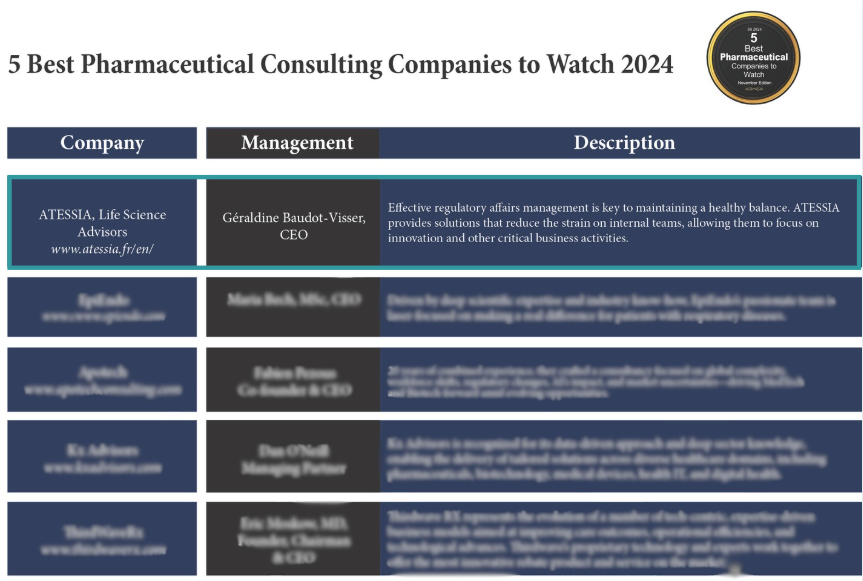
ATESSIA Named Among the “5 Best Pharma Consulting Companies to Watch in 2024”

We are proud to be featured in The Silicon Review, a recognition that highlights our unwavering commitment to excellence in regulatory affairs. 

In the pharmaceutical industry, regulatory compliance is more than a requirement—it is the foundation for driving innovation and safeguarding patient health. At ATESSIA, we tackle these challenges with precision and a strategic approach, helping our clients achieve their long-term goals. 

Why partner with ATESSIA? 

  • Streamlined Processes: We simplify regulatory workflows, enabling your teams to focus on innovation and clinical success. 
  • Accelerated Market Entry: With deep expertise in French regulatory requirements (Exploitant status, pricing, market authorizations), we ensure a smooth entry into the French market. 
  • Sustainable Compliance: Our tailored strategies align regulatory adherence with your budget and timeline constraints. 
  • Independent Expertise: As an autonomous consultancy, we offer objective guidance backed by in-depth knowledge of the pharmaceutical landscape. 

This achievement represents a key milestone in our mission to transform regulatory affairs into a strategic advantage for our clients. 


Let’s stay connected ! Our services

Learn more: Read the article 

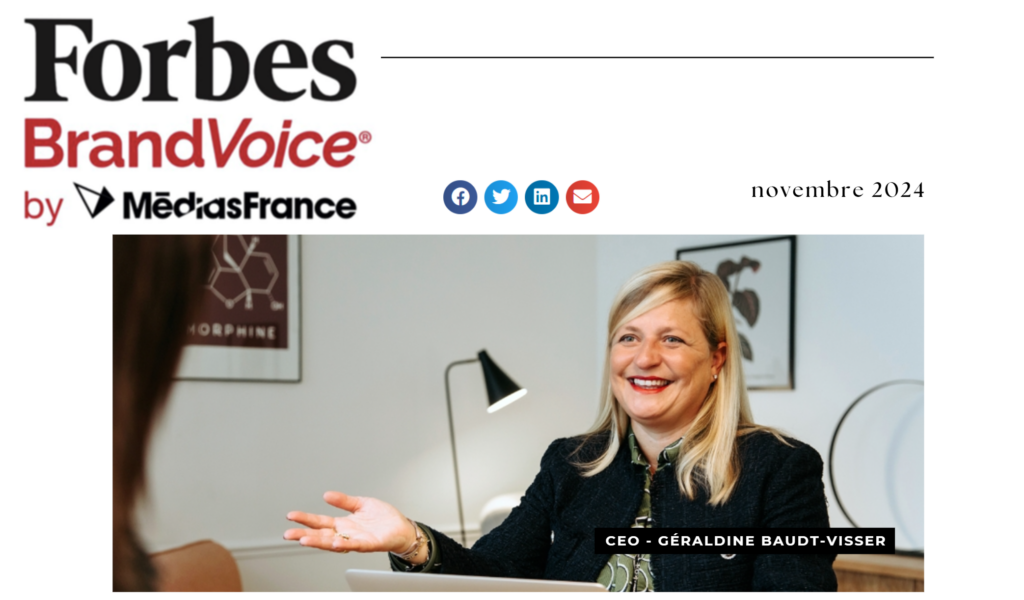
Forbes BrandVoice by MédiasFrance

Forbes – ATESSIA, Life Science Advisors : The Regulatory and Pharmaceutical Affairs Consulting Firm Dedicated to the Healthcare Industry

Leveraging its expertise, ATESSIA supports a wide range of health products, with a particular focus on pharmaceuticals and medical devices. Through a tailored and rigorous approach, the firm helps its clients navigate complex regulatory landscapes, ensuring compliance and innovation in their projects.

More Human, More Agile

“I founded ATESSIA, Life Science Advisors, with the conviction that regulatory and pharmaceutical affairs consulting could be reimagined through a more human and agile lens,” explains Géraldine Baudot-Visser. Drawing on several years of experience in the pharmaceutical industry and renowned consulting firms, I recognized the opportunity to create a company that prioritizes client satisfaction and the empowerment of its experts while ensuring unwavering excellence in the pharmaceutical field.” The initial challenges naturally revolved around gaining the trust of the first clients and dismantling stereotypes about consulting. The firm needed to prove that rigor and creativity can coexist and demonstrate that a consulting firm can combine cutting-edge expertise with a bespoke approach. Striking the balance between managing a young company and delivering excellence has been a top priority since day one. For the founder, the goal was clear: to become a reference in regulatory consulting in the French and European markets within a few years, despite competition from established firms.

Tailor-Made Solutions, Continuously Enhanced

Every phase of ATESSIA’s growth has been driven by the ambition to establish itself as a leader while rallying employees around its clients’ challenges. Each step has also been an opportunity to reinvent, innovate, and grow while staying true to its values to ensure a client-centered approach. “For example,” says the founder, “our regulatory intelligence service is essential for our pharmaceutical clients, achieving a satisfaction and retention rate exceeding 90%. This success reflects our ability to provide tailored support and anticipate market changes, meeting the most demanding expectations of our partners.” This commitment to exceeding expectations relies on a team capable of anticipating, adapting, and ensuring compliance with the strictest standards. This collective dynamic keeps ATESSIA at the forefront, offering clients ever more efficient, custom-tailored solutions.

An Excellence-Driven Approach

“Our clients choose us because they seek far more than standardized solutions. At ATESSIA, we work with the precision of master artisans, designing bespoke solutions perfectly adapted to the specificities of each project in a highly regulated environment. Like the finest craftsmen of traditional expertise, we pay particular attention to ensuring impeccable quality in our services to provide reliable technical support to our clients,” shares Géraldine Baudot-Visser. This excellence-driven approach makes ATESSIA a trusted partner for its clients. The consulting firm builds strong relationships founded on attentive listening, in-depth expertise, and the ability to anticipate market changes. This proactive, personalized vision allows ATESSIA to deliver solutions that are always perfectly adapted and tailored.

“Every contribution we make to the healthcare industry, no matter how modest, has the potential to impact someone’s life somewhere. This gives profound meaning to what we do and makes every project-whether centered on pharmaceutical facilities, system quality, or innovation-much more than just a mission for us: it’s an opportunity to actively contribute to improving patients’ lives. This responsibility is a source of immense and invaluable pride,” she concludes.

https://www.forbes.fr/mediasfrance/atessia/

MDR Transition: New Responsibilities and Major Changes in the Medical Device Industry

Since 1994, medical devices have had to comply with the requirements of European Directives 93/42/EEC and 90/385/EEC. Conformity with this regulation allows the affixing of the CE marking, enabling the free circulation of medical devices within the European Union (EU).

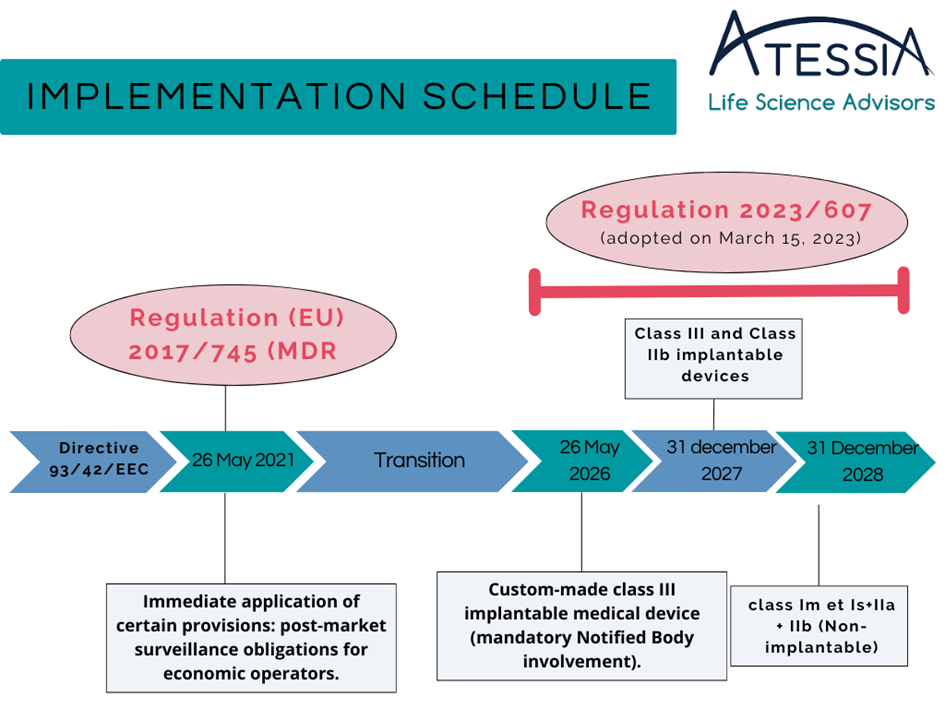
The European Union has recently revised this regulation through the European Regulation 2017/745/EU for medical devices (MDR), which finally came into effect on May 26, 2021. The adoption of a regulation instead of a directive ensures uniformity in the regulatory framework through its direct application.

This new regulation imposes new responsibilities on economic operators involved in the supply chain of medical devices: manufacturer, authorized representative, importer, distributor.

What are the main changes introduced by this new regulation (MDR)?

– Redesignation of Notified Bodies (NB) under MDR and EU control of Notified Bodies (NB)

– Improved traceability through the Unique Device Identification (UDI)

– Inclusion of certain aesthetic devices with the same characteristics and risk profile as medical devices covered by the regulation

– Enhanced transparency through EUDAMED, the medical device database

– Strengthened requirements for clinical data and post-market surveillance

What transition periods will apply?

Initially, the MDR was to come into effect on May 26, 2020. Due to the COVID-19 health crisis in 2020, the EU decided to postpone this date through Regulation (EU) 2020/561.

The implementation date was thus postponed to May 26, 2021, with a transition period for manufacturers with medical devices already on the European market (“LEGACY DEVICES”) until May 26, 2024 (end of the issuance of certificates under the directive) and the availability of these medical devices on the market until May 26, 2025. However, for class I medical devices and new medical devices entering the European market, they had to comply with the MDR since May 26, 2021.

On March 20, 2023, the EU assessed a potential shortage risk for many medical devices and adopted Regulation EU 2023/607, amending Regulation (EU) 2017/745 concerning transitional provisions (Article 120).

The extension dates of certificates under Directive 93/43/EEC are extended based on the class of the medical device:

However, manufacturers covered by this extension must meet the following conditions:

1/ The devices continue to comply with Directive 90/385/EEC or Directive 93/42/EEC, as applicable. ;

2/ There are no significant changes to the design and intended use.;

3/ The devices do not present an unacceptable risk to the health or safety of patients, users, or other persons, considering other aspects related to public health protection. ;

4/ no later than 26 May 2024, the manufacturer has put in place a quality management system in accordance with Article 10(9); ;

5/ The manufacturer or authorized representative has lodged a formal conformity assessment request under the MDR for a medical device or a replacement device to a Notified Body by September 26, 2024, and the Notified Body and the manufacturer have signed a written agreement.

Special case for custom-made class III implantable devices – transitional period introduced:

The conformity assessment of custom-made class III implantable devices requires an assessment by a Notified Body.

Custom-made class III implantable medical devices can be placed on the market without the corresponding certificate until May 26, 2026, provided that the manufacturer has submitted an application to a designated Notified Body under the MDR before May 26, 2024, and has signed a contract with that Notified Body before September 26, 2024.

MDR requirements applicable from May 26, 2021:

However, it is important to note that certain MDR requirements shall apply to devices  since May 26, 2021, such as requirements related to post-market surveillance, market surveillance, vigilance, and the registration of economic operators.

Removal of the availability date:

Additionally, Regulation EU 2023/607 completely removes the availability deadline, allowing “LEGACY DEVICES” to be available without a deadline (still respecting the device’s usage limit date). This removal also applies to in vitro diagnostic medical devices marketed before May 26, 2022, in Regulation (EU) 2017/746 (IVDR).

Are CE certificates under the directives still valid during this extension period?

Certificates that expired before the entry into force of Regulation 2023/607 (March 20, 2023) should only be considered valid if:

– Either before the certificate’s expiration date, the manufacturer and Notified Body signed a conformity assessment agreement before the certificate’s expiration date.

– Or if a competent authority has granted a derogation.

Notified Bodies can no longer issue or modify CE certificates under the directives since May 26, 2021. Therefore, they are considered extended unless they have been withdrawn.

Manufacturers can issue a self-declaration confirming that they comply with the extension conditions, indicating the end date of the transition period (the medical devices covered by the extension must be clearly specified). At the manufacturer’s request, the Notified Body can also issue a confirmation letter.

It is important to remember that despite these delays, manufacturers must now act toward this new regulation. The submission period to Notified Bodies can take from 6 to 18 months, depending on the Notified Body and the medical device.

Atessia supports its clients through all stages of MDR compliance.

Quelle substitution des médicaments biologiques en France?

Biological medicinal products substitution in France?

Biological medicinal products are used in the treatment of numerous pathologies, such as diabetes, cancer and autoimmune diseases. Any biological medicinal product whose patent has fallen into the public domain can be copied: this is known as a “biosimilar”. A biosimilar is a medicinal product which, like any biological medicinal product, is produced from or derived from a cell or living organism, and whose efficacy and side effects are equivalent to those of its reference biological medicinal product. By February 2022, 67 biosimilar medicinal products had been authorized in the European Union. 

The marketing authorization of a biosimilar medicinal product

The marketing authorization of a biosimilar medicinal product must meet strict regulatory requirements to demonstrate that its pharmaceutical quality, efficacy and safety are clinically equivalent to those of the reference biologic medicinal product. The ANSM maintains the reference list of similar biological groups registered in France. It is presented by common name of the active substance. It includes all the medicines registered in France with the legal basis of a “similar biological” marketing authorization file within the meaning of b of 15° of article L5121-1. 

Since biosimilar medicinal products are derived from living organisms, they cannot be strictly identical to reference products. Consequently, the substitution principle, which applies to chemical medicinal products and their generics, cannot be applied automatically. 

However, in the light of advances in knowledge, interchangeability and substitution during initial prescription or treatment can now be envisaged under strict conditions and within the framework of the indications, dosage regimens and routes of administration common to the reference product. 

In order to guarantee proper use and safety during substitution, this substitution is  introduced gradually in France. The right of substitution for biosimilars is decided at national level by each member state. In France, the order of April 12, 2022 first sets out the first two groups of biosimilars that can be substituted in pharmacies within a specific framework: filgrastim and pegfilgrastim (immunostimulant-cytokine agents).  

More recently

More recently, the decree of October 31 and the decree of February 20, 2025 have expanded the list of similar biological groups that can be substituted by the community pharmacist and specified the conditions of substitution and information for the prescriber and the patient: 

  • Filgrastim (2022) 
  • Pegfilgrastim (2022) 
  • Ranibizumab (2024) 
  • Adalimumab NEW 
  • Enoxaparine NEW 
  • Epoétine NEW 
  • Etanercept NEW 
  • Follitropine alfa NEW 
  • Teriparatide NEW 

What’s the latest on biosimilar substitution in France? 

> Prescription 

The prescriber must inform the patient of the possibility of substitution by the pharmacist of the prescribed biological medicine. He can also indicate on the prescription which type of medical administration device is to be preferred for a given patient (adalimumab, etanercep, teriparatide). 

> Dispensing 

When dispensing, the pharmacist must inform the patient of the actual substitution and the associated useful information, in particular by recalling the rules for storing the specialty. He – mentions on the prescription the name of the medicine actually dispensed and informs the prescriber about the medicine dispensed. He records the name of the medicine dispensed by substitution and its batch number by all appropriate means in order to implement the traceability required for all biological medicines. Finally, he ensures the continuity of dispensing of the same medicine during subsequent dispensations. 

For the following specialties, the pharmacist must also: 

– substitute specialties with the same active substance dosage: Etanercept, adalimumab, enoxaparin, epoetin 

– not substitute with a biosimilar that would have a higher injection volume than the prescribed medication: Adalimumab 

For follitropin αlfa, the pharmacist: 

– dispense a specialty that allows the administration of the exact dosage prescribed in the event of substitution of multi-dose pens by single-dose pens and vice versa, 

– ensure that the patient has the appropriate pen in the event of dispensing of cartridges and support the patient in learning the new device, 

– in the context of ovarian stimulation, ensures understanding of the protocol implemented including the prescribed dosage regimen and the administration methods of the specialty dispensed. ; 

– supports the patient in learning the new device, 

> The patient has the possibility of returning to the specialty initially dispensed if necessary, “based on their feedback” (adalimumab, enoxaparin, epoetin, etanercep, follitropin alfa, teriparatide). 

> Finally, the laboratory provides dummy administration devices to healthcare professionals and patients (adalimumab, enoxaparin, epoetin, etanercep, follitropin alfa, teriparatide). 

Atessia is monitoring this evolving subject on a daily basis. 

Glossary : 

– Biological medicinal product (article L.5121-1, paragraph 14 of the French Public Health Code): “any medicinal product whose active substance is produced from or extracted from a biological source and whose characterization and quality determination require a combination of physical, chemical and biological tests as well as knowledge of its manufacturing process and control”. 

– Biosimilar” medicinal product (article L.5121-1, paragraph 15 of the French Public Health Code) “any biological medicinal product with the same qualitative and quantitative composition in active substance and the same pharmaceutical form as a reference biological medicinal product, but which does not meet the conditions laid down in 5° of this article to be considered as a generic, due to differences linked in particular to the variability of the raw material or the manufacturing processes, and requiring the production of additional preclinical and clinical data under conditions determined by regulation”. 

– Reference medicinal product: biological medicinal product approved in the EU that a company developing a biosimilar medicinal product chooses as a reference point for direct comparison of quality, safety and efficacy. 

– Interchangeability: refers to the possibility of replacing one medicinal product with another that is intended to have the same clinical effect. Interchangeability can be achieved in two ways: 

– Permutation: when a prescriber substitutes one medicinal product for another with the same therapeutic intent. 

– Substitution: the practice of dispensing a medicinal product in place of another equivalent and interchangeable medicinal product, without reference to the prescriber. 

This article was written by Estelle ICARD 

Ouvrir votre établissement pharmaceutique

How to open a pharmaceutical establishment in France?

  1. What status for my establishment? 

In France, the Public Health Code (PHC) defines different status: 

Status Authorised activities 
Manufacturer Manufacture of medicinal products, products or objects referred to in Article L. 4211-1 of the PHC 
Importer Import, storage, quality control and release of batches of medicinal products, products or objects referred to in Article L. 4211-1 from: States not members of the European Community or parties to the Agreement on the European Economic Area Or other Member States of the European Community or parties to the Agreement on the European Economic Area when the medicinal products, products or articles have been manufactured by an establishment not authorised under Article 40 of Directive 2001/83 of 6 November 2001 on the Community code relating to medicinal products for human use. 
Exploitant Exploitation of medicinal products other than investigational medicinal products, generators, kits and precursors mentioned in 3° of article L. 4211-1. 
Depositary Storage of medicinal products, products, objects or articles of which it is not the owner, with a view to their wholesale distribution and as is for the order and on behalf of: – one or more Exploitant of medicinal products, generators, kits or precursors mentioned in 3° of article L. 4211-1; – or of one or more manufacturers or importers of dressing objects or articles presented as complying with the Pharmacopoeia mentioned in 2° of article L. 4211-1 of the PHC. 
Wholesaler Purchase and storage of medicinal products, other than investigational medicinal products, with a view to their wholesale distribution as such 
Wholesale distributor of pharmaceutical products other than medicinal products Purchase and storage of intermediate products intended for further processing by an authorised manufacturer or of products, objects, articles, generators, kits or precursors referred to in 2° and 3° of Article L. 4211-1, with a view to their wholesale distribution and as such 
Export Wholesale Distributor Purchase and storage of medicinal products other than experimental medicinal products, products, objects, articles, generators, kits or precursors referred to in 2° and 3° of Article L. 4211-1, medicinal plants referred to in 5° of Article L. 4211-1, with a view to their export as such 
Humanitarian wholesale distributor Acquisition, free of charge or against payment, and storage of medicinal products other than investigational medicinal products, with a view to their wholesale distribution or export 
Distributors of investigational medicinal products Storage of investigational medicinal products manufactured or imported by companies or organisations defined in 1° or 2° of this Article (R.5124-2), with a view to their distribution as such for the order and on behalf of one or more sponsors defined in Article L. 1121-1 
Wholesale distributor of medicinal plants Storage and controls and operations necessary for the wholesale and bulk distribution, in sachet-doses, fragments or in a fresh or dried state of medicinal plants mentioned in 5° of Article L. 4211-1 
Wholesale distributor of gases for medical purposes,  Purchase and storage of packaged gases for medical use, with a view to their wholesale distribution and as such 
Wholesale distributor of the Armed Forces Health Service Wholesale distribution of the medicinal products, products or objects referred to in Article L. 5124-8; 
Pharmaceutical establishment for the protection of the population in the face of serious health threats Purchase, manufacture, import and export of products necessary for the protection of the population against serious health threats, with a view to their distribution. 
Pharmaceutical purchasing centre  Purchase and storage of medicinal products other than experimental medicinal products, with the exception of medicinal products reimbursed by compulsory health insurance schemes, with a view to their wholesale distribution as such to pharmacists who are the owners of a dispensing service either in their own name and on their own behalf, or in order and on behalf of pharmacists who are members of a dispensing or the structures mentioned in Article D. 5125-24-16 

Some status are cumulative for all or part of an activity related to its status for the same legal institution. Example: a pharmaceutical establishment may be granted Exploitant status and may be granted manufacturer status limited to batch certification. 

  1. Who issues the opening authorisation? 

The Public Health Code specifies that the authorisation to open a pharmaceutical establishment is issued by the Director General of the National Agency for the Safety of Medicines and Health Products (ANSM). This opening authorisation is made public on EudraGMP. The start of the activity therefore requires prior authorisation from the ANSM to ensure that the project complies with the regulations and to verify that the necessary resources are available and that they will be implemented. This can be a challenge, for example when early access is about to start, or when a drug is being launched. Indeed, the Exploitant must be designated. 

The opinion of the competent central council of the National Order of Pharmacists is required within 2 months for any opening of a pharmaceutical establishment, except for a pharmaceutical establishment dependent on the central pharmacy of the armed forces or the health supply establishments of the armed forces health service. At the end of the 2 months, the Director General of the ANSM can make a decision. 

  1. How to compile your file?  

For the opening of a pharmaceutical establishment, the ANSM website has 3 types of files available depending on the desired status:  

  • Manufacturer/Importer file 
  • Exploitant’s file 
  • Distributor file 

In the event of a combination of activities, as in our example above for example, 2 files must be completed. 

The application to be submitted must comply with the decision of 1 October 2019 on the submission of applications for authorisation to open and amend the initial authorisations of the pharmaceutical establishments mentioned in Article R. 5124-2 of the Public Health Code, except for establishments under the authority of the Minister for the Armed Forces (cf. Article R. 5124-5 of PHC). 

Such a project includes essential areas of vigilance to carry it out. The constitution of the file requires defining the appropriate status according to the desired activity, anticipating the implementation of the desired organization to write a file that is as compliant as possible with what will be carried out in the future establishment as well as with the regulations in force. The ANSM is particularly attentive to the aspects of pharmaceutical liability, compliance with GxP and security of the premises. Identifying the pharmacist in charge upstream is a crucial point. 

  1. What is the processing time? 

No pharmaceutical operation may be carried out within the establishment until the authorisation to open has been obtained.  

Depending on the desired activity, the applicant submits an application for authorisation to open a site to the ANSM via the dedicated secure platform “Démarches Simplifiées”. 

Under the Public Health Code, the Director General of the ANSM is required to notify his decision within 90 days. 

Once the file has been submitted by the Responsible Pharmacist in charge of the future establishment via « Démarches Simplifiées », the Responsible Pharmacist receives an email acknowledging receipt of the file. 

The admissibility period begins. It lasts for 30 days from the date on which the application is received by ANSM, and allows the content of the application to be analysed: missing documents, incorrect naming of documents, etc. If the ANSM does not receive any requests within 30 days, the application is considered “admissible” and the processing can begin. 

The ANSM may ask the applicant for any additional information. The 90-day period is then suspended from the date of notification to the Responsible Pharmacist of the request for additional information by the Director General of the ANSM, until receipt of the information requested. 

The ANSM may also carry out an inspection during the processing period to ensure the accuracy of the information provided by the applicant. 

If ANSM does not respond within 90 days, this is equivalent to: 

  • refusal of authorisation for manufacturer and importer applications.  
  • tacit authorisation for other establishments. 

In recent years, Atessia has opened, modified or relocated more than a dozen pharmaceutical establishments. 

This article was written by Isabelle BARBIEUX, Senior Quality Assurance Consultant. 

The Excellence of ATESSIA’s CMC: Your Partner in Technical and Regulatory Affairs

In a constantly evolving pharmaceutical industrial environment, regulatory requirements for quality data are becoming increasingly complex. Health authorities are continually updating guidelines, increasing CMC demands on regulatory affairs professionals. Faced with this complexity, revising the operational model and utilizing external expertise are essential solutions to overcome these challenges and meet market demands. 

Why Outsource CMC Activities? 

  1. Increasing Regulatory Requirements Health authorities are continuously raising the quality standards from development to drug registration and throughout the lifecycle of marketing authorizations (MA**). This trend imposes a significant workload from a CMC perspective, necessitating rigorous and expert management of regulatory dossiers. 
  1. Impact of Mergers and Acquisitions Corporate mergers and acquisitions increase the number of regulatory submissions to reflect changes in supply sources, production site transfers, etc. This dynamic requires increased flexibility and responsiveness to maintain compliance and the continuity of pharmaceutical operations. 
  1. Resource Management Optimization Increasingly complex regulatory requirements necessitate deep knowledge, leading to increased personnel needs and creating a talent shortage. The traditional operational model of pharmaceutical laboratories is often no longer optimized to handle the surplus work related to these CMC activities. Outsourcing complex technical and regulatory aspects reduces workload and improves overall efficiency. 

ATESSIA’s Unique Expertise 

ATESSIA was founded by Géraldine Baudot-Visser, a recognized expert in the technical-regulatory field. With a doctorate in pharmacy, extensive experience in R&D and regulatory affairs, Géraldine created ATESSIA to offer an innovative and client-centered approach. Her solid CMC expertise, acquired within major pharmaceutical laboratories and consulting firms, is at the heart of the service offering. 

Why Choose ATESSIA for Your CMC Needs? 

  1. Cutting-Edge Expertise and Knowledge ATESSIA has multidisciplinary expert teams with in-depth CMC knowledge. Our consultants possess practical experience and a fine understanding of regulatory authorities’ expectations, ensuring the quality of dossiers and compliance with current requirements. 
  1. Cost Reduction and Time Savings ATESSIA has the expertise to efficiently manage CMC activities and offers economical and fast solutions, best adapting to the market entry deadlines desired by its clients. 
  1. Guaranteed Quality Structured around the ISO 9001 standard, ATESSIA ensures impeccable quality at every stage of the product lifecycle. 
  1. Partner for Your R&D Activities ATESSIA has Research Tax Credit approval, enabling you to be supported in your research and development activities. 

Our Commitment to Excellence and Innovation 

At ATESSIA, we stand out with our agile and tailored approach, integrating feedback and specific needs of each client. Our flexibility and ability to integrate new technologies allow us to offer innovative solutions adapted to evolving market demands. 

Choosing ATESSIA for your CMC needs ensures expert and personalized support, capable of transforming your regulatory challenges into successes. Our commitment to excellence and innovation guarantees optimal results that ensure your competitiveness in the market. 

To learn more about our CMC services and other regulatory and pharmaceutical affairs offerings, and to discover how we can support you, contact us today. 

hello@atessia.fr

www.atessia.fr 

*CMC: Chemistry Manufacturing and Control

**MA: Marketing Authorization 

What are Good Manufacturing Practices (GMP) ? 

Definition 

Good Manufacturing Practices are a set of principles and guidelines. The first GMPs were published in France in 1978. These guidelines are regularly updated to incorporate regulatory changes. 

The WHO defines Good Manufacturing Practices as “one of the elements of quality assurance, ensuring that products are manufactured and controlled in a uniform manner and to quality standards appropriate to their use and specified in the marketing authorization”. The aim is to guarantee the quality, safety and efficacy of medicinal products. 

These Good Manufacturing Practices provide an understanding of the requirements of European regulations relating to the manufacture of medicinal products. They are one of the standards applicable to health products with marketing authorisation for the European market, as well as to experimental medicinal products. 

The application of GMP by pharmaceutical establishments is verified by the competent authorities during inspections. 

GMP compliance certificates issued by the ANSM following these inspections are published in the European EudraGMDP database. 

Organisation of Good Manufacturing Practices 

The standard is made up of 4 different parts plus appendices and guidelines. The 4 parts are as follows:  

  • Part I: GMP for medicinal products for human use 
  • Part II: GMP for active substances used as starting materials in medicinal products 
  • Part III: GMP-related documents  
  • ICH Q9: “quality risk management” guideline 
  • ICH Q10: “pharmaceutical quality system” guideline 
  • Part IV: GMP specific to innovative therapy medicinal products 

The 10 Principles of Good Manufacturing Practice 

There are 10 fundamental principles applicable to pharmaceutical operations which are taken from these chapters and which must be applied in order to guarantee the compliance of medicines:  

  • Creating procedures: writing operating procedures and instructions to provide a “road map”; 
  • Documentation: provide a precise description of the work in progress to ensure compliance with procedures and traceability; 
  • Validation: proving the correct operation of the systems in place by ensuring validation circuits; 
  • System design: integrating processes, product quality and staff safety right from the design phase of buildings, systems and equipment; 
  • Maintenance: regular and efficient maintenance of systems, installations and equipment; 
  • Skills: developing and clearly demonstrating skills at the workplace; 
  • Contamination prevention: adopting regular and systematic hygiene and cleanliness practices; 
  • Quality first and foremost: regular checks on raw materials and processes (manufacturing, packaging, labelling, etc.); 
  • Quality audits: planning and carrying out regular audits to ensure GMP compliance and the effectiveness of the quality system. 

Conclusion  

Compliance with Good Manufacturing Practices is essential. It is a regulatory obligation for pharmaceutical establishments. It is crucial to ensure product compliance and safety. Furthermore, during inspections by the health authorities, failure to comply with these standards may result in decisions of varying severity, depending on the non-compliance observed. The consequences of inspections can range from administrative warnings to sanctions.  

What are CEPs ?

CEP : what’s that? 

In Europe, three distinct possibilities exist for presenting information relating to the active substance, from a qualified manufacturer, used in a medicinal product in the marketing authorisation file (MA file): 

– present a complete documentation (sections 3.2.S.1 to 3.2.S.7.3 100% completed according to the requirements of NtA-Vol 2B); 

– present an Active Substance Master File (“ASMF“) which contains an open (non-confidential) part and a closed (confidential) part; 

– present a Certificate of Suitability to the monographs of the European Pharmacopoeia (CEP)

In this article we will focus on defining what the CEP consists in and why this possibility for recording a source of active substance is particularly interesting. 

  • CEP definition 

The CEP is a document issued by the European Directorate for the Quality of Medicines and Healthcare (“EDQM“) following an official European procedure for Certification of suitability to the monographs of the European Pharmacopoeia (Ph. Eur.) (known as the “Certification procedure”). 

This document certifies that the quality of the substance in question can be adequately controlled by the corresponding Ph. Eur. monograph(s), supplemented if necessary by additional tests appearing on the CEP. It is thus based on the evaluation by EDQM experts of a file submitted by the applicant (in the same way as by the experts of the competent authorities for the MA application file). 

However, a CEP does not allow to confirm compliance with Good Manufacturing Practices (GMP) of the substance concerned and cannot replace the GMP certificate. A CEP can therefore be issued by the EDQM with or without inspection of the manufacturing site. Also a CEP does not replace a certificate of analysis and does not guarantee that a batch of the substance is of appropriate quality. Therefore, vigilance must remain required by the future user of the substance, with the implementation of controls upon receipt of the substance. 

The Certification procedure is applicable to substances for which a general or specific monograph has been adopted by the European Pharmacopoeia Commission (e.g. substance of synthetic origin [active substance or excipient], herbal drugs, herbal drugs preparations, etc.). This procedure does not apply to direct products of genetic expression (proteins), nor to products obtained from human tissues, nor to vaccines or products and preparations derived from blood. Furthermore, although this may have been the case in the past, the EDQM does not accept new CEP applications for substances of biological origin. 

A public list of CEPs with their status is available without access restriction in the EDQM certification database

Details of the content of the CEP application file are provided on the EDQM website. New requirements are now in force for the constitution of files by applicants with the entry into force of CEP 2.0 since September 1, 2023. 

  • The different categories of CEP 

There are currently several types of CEPs issued by EDQM depending on the evaluation carried out, including the following simple CEPs

– Certificate of chemical purity and microbiological quality (“Chemical CEP”) à e.g.: paracetamol 

– Certificate for herbal drugs and herbal drugs preparations (“Herbal CEP”)à e.g.: lavender oil 

– TSE certificate for substances of animal origin potentially subject to transmissible spongiform encephalopathy (“TSE CEP”) à e.g.: gelatin 

Combined CEPs may also be granted, as follows: 

– Certificate of chemical purity/microbiological quality and sterility à e.g.: sterile amoxicillin sodium 

– Double certificate (chemical + TSE) à e.g.: cholecalciferol 

– Double certificate (chemical + TSE) also covering sterility 

It is possible to claim a particular quality for a substance, this must be duly demonstrated in the file (e.g. sterile, micronised, crushed substance, etc.): this quality will be indicated in the subtitle on the CEP. Furthermore, it is possible to request a CEP for a particular polymorph (as a quality), even if the mention “the substance presents a polymorphism” does not appear in the “Characters” section of the corresponding specific Ph. Eur. monograph. 

  • Recognition of the CEP outside Europe 

Although it is not mandatory for the marketing of substances, the Certification procedure constitutes the preferred option for ensuring that a substance entering in the composition of a medicinal product complies with the specifications of the European Pharmacopoeia, as well as for demonstrating the compliance with TSE risk requirements. 

From a regulatory perspective, CEPs are accepted in all EU Member States and in States that have signed the Convention relative to the elaboration of a European Pharmacopoeia (including the United Kingdom), with the exception of Ukraine. 

According to the information received by the EDQM, the following countries accept CEPs, sometimes under conditions (non-exhaustive list): South Africa, Albania, Algeria, Saudi Arabia, Australia, Azerbaijan, Canada, Georgia, Ghana, Israel, Kyrgyzstan, Malaysia, Morocco, Moldova, New Zealand, Uzbekistan, Singapore, and Tunisia. CEPs are also accepted (under conditions) by the Taiwan Food and Drug Administration. 

CEPs may therefore be accepted in other countries (non-EU or Ph. Eur. members), at the discretion of the authorities of these countries. In such cases, the Competent Authorities will decide on the scope and conditions of acceptance of the CEP (e.g. submission of a partial or complete ASMF in addition to the CEP). The EDQM indicates that it is therefore important to check, in advance, the acceptability and conditions associated with the use of a CEP in these countries. 

Additional requirements may be applied by some non-EU states (e.g. signed, dated and version-controlled documents for specifications and analytical procedures). 

In terms of the MA file, section 3.2.S of the MA holder/applicant for the active substance should also be adapted by making the necessary references to the CEP and/or by providing the data specific to the manufacturer(s) of the finished product using the substance covered by a CEP in the relevant sections of the CTD. 

As a conclusion, the CEP is an essential document for marketing authorisation files in Europe and its evaluation by the EDQM encourages preferred use, the updating of which is less constraining in regulatory terms than other options (e.g. ASMF). Although recognised by a large majority of countries worldwide, it may not be sufficient in itself and may have to be subject to specific requirements of the country in which the MA is registered. 

Source: EDQM -FAQs (February 2024) 

Article written by Isabelle MOUVAULT, Pharmaceutical Affairs Senior Consultant 

What is the European Pharmacopeia ?

This article deals with the essential information you need to know about the European Pharmacopoeia (whose official acronym is “Ph. Eur.”), a unique reference work relative to the quality control of medicines in the 46 member countries of the Council of Europe. 

  • Presentation of the European Pharmacopoeia 

Ph. Eur. is a collection of official standards which, once published, provide a legal and scientific basis for the quality control of substances for pharmaceutical use and medicines during the development, production and marketing processes. It is available to users, in French and English, in paper format or online (paid service of the European Directorate for the Quality of Medicines and Healthcare (EDQM)). 

The legal basis of the European Pharmacopoeia is the “Convention relative to the elaboration of a European Pharmacopoeia” (European Treaty Series – No. 50) adopted by the Council of Europe in 1964

These official standards, presented in chapters and monographs, concern the qualitative and quantitative composition and the tests to be carried out on: medicines, the raw materials used in their production and synthesis intermediates. Therefore, all producers of medicines and/or substances for pharmaceutical use must apply these quality standards in a mandatory way in order to be allowed to market their products within the signatory States of the Convention. 

The role of the Ph. Eur. is to contribute to the protection of public health through the development of recognised common specifications relating to the quality of medicines and their components. These specifications must be appropriate because they constitute, for the patient, one of the fundamental guarantees in terms of the safety of use of medicines. Furthermore, their existence facilitates the free circulation of medicines within Europe and beyond. 

The monographs and other texts of the Ph. Eur. are developed to meet the needs of regulatory authorities (e.g. ANSM, EMA, etc.), services responsible for the quality control of medicines and their constituents as well as manufacturers of medicines and their various components (e.g. active substances, excipients, packaging materials). 

Ph. Eur. brings together member countries and observer countries

The member countries of the Ph. Eur. can participate in sessions of the European Pharmacopoeia Commission (EPC). Each Member State, represented by a national delegation, has one vote on all technical questions. A member country may also propose national experts in each of the Ph. Eur expert groups or working groups. 

Ph. Eur. observer countries can participate in the scientific work of the EPC, benefit from European experience in this area and access work relative to the quality control of medicines as well as the analytical methods used. 

The EPC is the decision-making body of the Ph. Eur. and is responsible, as such, for developing and keeping the content of the Pharmacopoeia up to date. This Commission meets behind closed doors three times a year in Strasbourg, in the premises of the EDQM. It is also the EPC which appoints the members of all Expert Groups and Working Groups in charge of developing and revising methods and texts. 

The Expert Groups cover the main scientific topics associated with the quality control of medicines and their constituents. Working Groups are appointed for a specific duration, in order to deal with a specific aspect of the work or a specific subject. 

  • Recognition of Ph. Eur. works worldwide 

The Ph. Eur. is widely used internationally. In fact, the EPC works in close collaboration with all users of the Ph. Eur. across the world considering that globalisation and expansion of international trade in the field of medicines have reinforced the need to develop quality standards of international scope. 

  • Interactions with Ph. Eur. 

The EPC defines a work program based on proposals from, for example, National Pharmacopoeia Authorities, expert groups, manufacturers and EDQM. Manufacturers wishing to participate in the development of a monograph, for example by providing data and samples for approved products and verifying the draft monograph, are encouraged to submit monograph proposals. 

It is possible for users to make proposals for revising monographs. However, these must follow the process defined on the EDQM website and be supported by sufficient data. 

The EDQM Knowledge database provides users with information on the status of general monographs/chapters. If the substance does not appear in this public database, this means that it is not covered by any monograph/general chapter of the Ph. Eur. 

  • The future of European Pharmacopoeia 

The Ph. Eur. has been actively engaged for almost 30 years in the Pharmacopoeia Discussion Group (PDG) alongside the Japanese Pharmacopoeia (JP), the United States Pharmacopoeia (USP) and, since October 5, 2023, the Indian Commission of Pharmacopoeia (IPC). The PDG aims to facilitate the international harmonisation of a selection of pharmacopoeial standards (in particular excipient monographs and certain general chapters) in order to alleviate for manufacturers the difficulties of carrying out analytical procedures according to different modalities, with different acceptance criteria, in order to comply with pharmacopoeial requirements which may vary depending on the regions of the world. 

Priorities for the future of the PDG, and therefore of the Ph. Eur., include the harmonisation of standards for elemental impurities and excipients as well as the modernisation of a large number of general methods and excipient monographs already harmonised. 

Sources: 

EDQM website (February 2024) 

EDQM-FAQs (February 2024) 

Article written by Isabelle MOUVAULT, Pharmaceutical Affairs Senior Consultant