

EMA innovation support: How does the EMA support innovative projects?

Innovation in the pharmaceutical sector is complex, costly, and highly regulated. To support innovative project leaders, startups, SMEs, manufacturers, and researchers, the European Medicines Agency (EMA) has established several scientific and regulatory support mechanisms.

Unlike other organizations, the EMA does not directly fund projects, but it plays a key role in securing and accelerating the development of drug innovations.

The EMA’s role in innovation

The EMA is responsible for the evaluation and supervision of medicines at the European level. Its objective is twofold:

  • to guarantee the safety, quality, and efficacy of centrally authorized medicines,
  • to promote rapid access to innovation, particularly when medical needs are not being met.

To this end, it offers tools that allow for early interaction with developers in order to anticipate regulatory challenges.


1. Innovation Task Force (ITF): The entry point for innovative projects

The Innovation Task Force (ITF) is a multidisciplinary group within the EMA that provides a platform for discussing the scientific, regulatory, and legal challenges of innovative medicines, such as advanced therapy medicinal products (ATMPs).

ITF guidance meetings allow developers, including academic researchers, European consortia, SMEs, or large companies, to engage in early and informal dialogue with the EMA. These free, online exchanges help clarify technical and scientific issues even before formal scientific advice is provided.

The ITF provides particular support to key areas of innovation, such as artificial intelligence, platform technologies, new methodological approaches, and the 3Rs principles for animal research. By facilitating these early exchanges, the ITF helps innovative projects reduce regulatory uncertainty and better plan their development.

2. The SME Office: Strategic Support for SMEs

The EMA’s SME Office supports small and medium-sized enterprises in the development and marketing of medicines within the European Union and the European Economic Area. To benefit from this support, companies must apply for SME status and meet the relevant European eligibility criteria.

Once SME status has been granted, companies can benefit from fee reductions or exemptions for regulatory procedures such as scientific advice, inspections and pharmacovigilance activities. SMEs also have access to additional practical services, including free-of-charge translation of product information into all EU languages for initial marketing authorisations, significantly easing administrative requirements.

In addition, SMEs are included in the EMA’s public SME register, which is designed to facilitate interactions, partnerships and collaborations with other stakeholders across the sector.

3. Scientific Advice and Protocol Assistance: securing the development strategy

EMA Scientific Advice helps developers ensure that their tests and studies are appropriate and well designed, thereby reducing the risk of major objections being raised during the evaluation of a marketing authorisation application. This approach also helps protect patients by avoiding participation in studies that would not generate meaningful or useful data.

Scientific advice is provided by the Committee for Medicinal Products for Human Use (CHMP), based on recommendations from the Scientific Advice Working Party (SAWP). For medicines intended to treat, prevent or diagnose diseases that pose a declared or potential public health risk, such as COVID-19 or avian influenza, the CHMP bases its advice on recommendations from the Emergency Task Force (ETF).

Protocol Assistance also covers aspects related to clinical trial applications, enabling developers to secure both regulatory and scientific elements before initiating clinical studies. In practice, this service reduces regulatory risk and facilitates development planning, particularly for innovative medicines or those addressing urgent public health needs.

4. Qualification of novel methodologies: recognising innovative approaches

The qualification of novel methodologies allows the EMA to assess and provide an official opinion on innovative methods or tools used in medicine development. This can include biomarkers, imaging methods, experimental models, or any scientific approach applied in non-clinical or clinical studies.

The process is overseen by the CHMP, which relies on recommendations from the Scientific Advice Working Party (SAWP). The evaluation is based on data submitted by the developer and often includes a public consultation with the scientific community, ensuring transparency and open discussion.

In some cases, before a methodology is fully qualified, the EMA may issue a letter of support. These letters summarise the methodology, its context of use, and the available data, and encourage data sharing and further studies to achieve formal qualification.

In summary, this process validates innovative methods before they are widely adopted, providing developers with regulatory recognition and greater scientific certainty for their projects.

5. Quality Innovation Group (QIG): supporting innovation from the manufacturing stage

The Quality Innovation Group (QIG) brings together experts in the quality of chemical and biological medicines, including advanced therapy medicinal products (ATMPs), as well as specialists in good manufacturing practice inspections. The group was established to assist developers from the earliest stages of a product’s lifecycle, facilitating discussions with various stakeholders: ad hoc experts, academics, European assessors and inspectors, international regulators, industry and academic associations, and through the EU Innovation Network.

The QIG supports the use of innovative methodologies in medicine development, such as new technologies, novel materials or devices, and the digitalisation of manufacturing processes. Its goal is to provide consistent guidance throughout the product development process, whether during formal regulatory procedures (scientific advice, protocol assistance, marketing authorisation applications, or post-authorisation procedures) or through informal meetings that help identify potential regulatory issues early on.

6. EU Innovation Network (EU‑IN): a collaborative platform for innovation

The EU Innovation Network (EU‑IN) is a working group aimed at strengthening collaboration between the EMA and national competent authorities on regulatory matters related to emerging therapies and technologies. The group also supports the development of innovative medicines and associated technologies. Its primary mission is to facilitate the development of these innovations by addressing gaps in early regulatory support, providing a platform for sharing best practices, and fostering direct engagement with innovators, thereby better supporting innovative projects across Europe.

7. PRIME: priority support for high-impact medicines

The benefits include:

  • enhanced regulatory support,
  • more frequent interactions with the EMA,
  • the possibility of an accelerated assessment.

PRIME is particularly strategic for breakthrough innovations with high clinical impact.

The PRIME (PRIority MEdicines) programme is an EMA initiative designed to support the development of medicines that address unmet medical needs. It is a voluntary scheme based on early and enhanced dialogue with developers to optimise development plans and accelerate assessment, allowing patients to access promising treatments sooner.

Through PRIME, the EMA provides proactive support to ensure the generation of robust data on a medicine’s benefits and risks, and facilitates accelerated evaluation of marketing authorisation applications. The programme builds on the existing regulatory framework and tools, including scientific advice and accelerated assessment. Developers of medicines benefiting from PRIME can expect to be eligible for accelerated assessment at the time of their marketing authorisation application.

By engaging early with developers, the programme helps improve the quality of scientific evidence, ensuring that collected data are suitable for regulatory evaluation, while allowing patients to benefit sooner from therapies that may significantly improve their quality of life.


In summary

EMA’s innovation support is based on a key principle: better support for better innovation.

Even without direct funding, these mechanisms make it possible to :

  • reduce regulatory risks,
  • accelerate development,
  • improve the chances of accessing the European market.


For any company or team developing an innovative medicine, engaging early with the EMA is a true strategic advantage. Atessia supports its clients throughout these processes, whether for ITF briefing meetings, the SME Office, Scientific Advice, or programmes such as PRIME, helping to secure and optimise the development of their innovative medicines.

Article written by Lamya SAOUSSEN, Junior Regulatory Affairs and External Communication Advisor  

Sources :

https://www.eurogct.org/research-pathways/research-and-innovation/early-interactions-regulators/support-innovative-0

ITF : https://www.ema.europa.eu/en/human-regulatory-overview/research-development/innovation-task-force-briefing-meetings

SME : https://www.ema.europa.eu/en/about-us/support-smes

Scientific advice : https://www.ema.europa.eu/en/human-regulatory-overview/research-development/scientific-advice-protocol-assistance

QIG : https://www.ema.europa.eu/en/committees/working-parties-other-groups/chmp-working-parties-other-groups/quality-innovation-group

EU-IN : https://www.ema.europa.eu/en/committees/working-parties-other-groups/eu-innovation-network-eu

PRIME : https://www.ema.europa.eu/en/human-regulatory-overview/research-development/prime-priority-medicines

CIP Coding for Medicines

The CIP code (code identifiant de présentation) is a unique numerical identifier assigned to each authorized pharmaceutical presentation in France. It allows a drug to be precisely identified based on its name, dosage, pharmaceutical form, and packaging the contents of that packaging.

Since Decree No. 2021‑1931 of December 30, 2021, the CIP code has legal recognition, making its assignment and use mandatory for all medicines authorised on the French market.

Assigned by the French National Agency for the Safety of Medicines and Health Products (ANSM) following the registration or marketing authorization (MA) procedure, the CIP code is used throughout the medication supply chain. It facilitates the identification, invoicing, inventory management, and health traceability of health products.

The technical specifications were defined by the decree of 30 December 2021 concerning the procedures for allocating and coding medicines.

The CIP code is distinct from the NL code, which is associated with a marketing authorisation application, and from the CIS code, which is associated with a drug.

In the hospital setting, identification can also be based on the UCD code (Unité Commune de Dispensation), which identifies the smallest unit of medicine dispensed in hospitals. The UCD code is assigned by the ANSM and can only exist if it is linked to a CIP code.

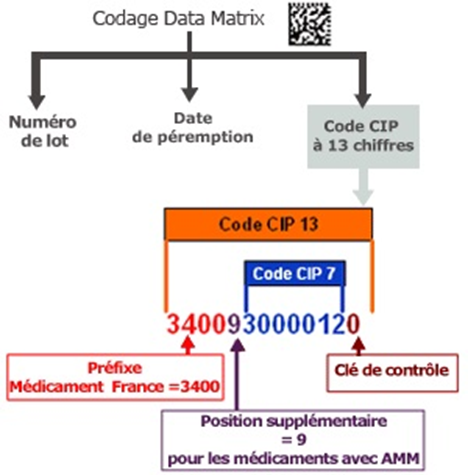
How is the 13-digit CIP code structured?

Since January 1, 2009, the 7-digit CIP code has been replaced by a 13-digit code, due to the saturation of the initial format and changes in the regulatory framework. This transition to CIP 13 allows, in particular, the integration of the expiration date and batch number into a machine-readable label, in accordance with stricter health safety requirements.

The 13-digit CIP code is structured as follows:

  • “3400”: prefix indicating the pharmaceutical sector in France;
  • “9”: heading number designating a pharmaceutical presentation;
  • 7 digits: the original 7-digit CIP code, identifying the specific medication presentation (form, dosage, packaging);
  • 1 digit: control key, calculated using the EAN 13 algorithm.

When preceded by a “0”, this code complies with ISO/IEC 15459-3 2014 and ISO/IEC 15459-4 2014 standards. This format is compatible with machine-readable barcodes, such as EAN-13 or Data Matrix, placed on packaging and ensuring reliable scanning in pharmacies, healthcare facilities, and specialized software.

In the hospital setting, the UCD code also uses a 13-digit numeric format. The first five digits are “34008,” and the last digit is a check digit calculated using the Luhn algorithm.


What is the CIP code used for?

The CIP code is used to:

  • make it easier to manage stocks, supply flows, and market organization.
  • help fight against counterfeit medicines.
  • identify each medicine clearly, while monitoring marketing authorizations and checking compliance.
  • handle reimbursement claims, monitor expenses, and code pricing.
  • ensure traceability, monitor safety, and send alerts in case of side effects or product recalls.

Currently, the Inter-Pharmaceutical Club (CIP) is reflecting on the future of drug coding in France. The decision on whether to move to the VIP2400 code will be made by the Ministry of Health.


Article written by Lamya SAOUSSEN, Junior Regulatory Affairs and External Communication Advisor 

The Nitrosamine Risk: A Major Challenge for the Pharmaceutical Industry

Since 2018, the risk of contamination of medicines by nitrosamine-type impurities has emerged as one of the most sensitive topics in pharmaceutical quality. What initially appeared as an isolated signal has become a true global regulatory issue, mobilizing authorities, manufacturers, and control laboratories. Understanding this risk—its origins and its implications—has now become essential for all stakeholders in the medicinal product lifecycle.

1. Where Does the Nitrosamine Risk Come From?

Nitrosamines are compounds classified as potentially carcinogenic. They can form under certain chemical conditions, particularly in the presence of:

  • a nitrosatable agent: precursor (e.g., secondary, tertiary, quaternary amines and ammonium salts)
  • a nitrosating agent (e.g., nitrites)
  • a favorable environment (acidic pH, high temperature, aqueous phase, impurities)

There are two main types of nitrosamines:

  • Generic nitrosamines: small, non‑specific molecules (e.g., NDBA, NDEA, NDIPA, NDMA, NEIPA, NMBA¹)
  • Nitrosamine Drug-Related Impurities (NDSRIs): nitrosamines specific to active substances or their impurities, including:
    • impurities resulting from nitrosation of an active substance (N‑nitroso impurity, i.e., NO‑API)
  • impurities resulting from nitrosation of an impurity of an active substance

Due to their structure, approximately 40% of pharmaceutical active substances and 30% of their impurities are considered potential nitrosamine precursors².

Their detection in several “sartan” medicines (valsartan, candesartan, irbesartan, losartan, and olmesartan) highlighted a previously underestimated risk: the possibility of forming these impurities during synthesis, manufacturing, or even storage of the active substance or finished product.


2. A Strengthened Regulatory Framework

Given the scale of the issue, authorities such as the EMA, FDA, and Health Canada quickly issued expectations. In Europe, the EMA and CMDh published a series of guidelines and Q&A documents requiring Marketing Authorisation Holders (MAHs) to follow a structured three‑step approach (adopted by most EU national competent authorities):

Step 1 – Risk Assessment & Notification to Authorities

Each active substance and finished product must undergo a thorough analysis of potential nitrosamine sources as identified in the Q&A document (EMA/409815/2020).

Step 2 – Confirmatory Testing & Notification

If a risk is identified, validated analytical methods must be implemented to confirm or rule out the presence of nitrosamines.

Step 3 – Short-, Medium-, and Long-Term CAPA

If a nitrosamine is detected at levels exceeding 10% of the Acceptable Limit (AL)—derived from the Acceptable Intake (AI)—the manufacturer must propose corrective and preventive actions (CAPA), such as:

  • modification of the manufacturing process
  • change of raw material supplier
  • change of primary packaging
  • strengthened controls
  • regulatory dossier updates

These requirements apply to chemical, biological, herbal, and radiopharmaceutical products.

The Q&A (EMA/409815/2020) describes when and how to submit Step 1 and Step 2 reports. Templates are available on the EMA, CMDh, and national authority websites.

Compliance is subject to regular authority oversight, including inspections.


3. Definition of Parameters and Toxicological Tests

The following toxicological parameters and tests are defined in ICH M7 “Assessment and control of DNA reactive (mutagenic) impurities in pharmaceuticals to limit potential carcinogenic risk” (Rev2):

AI – Acceptable Intake (ng/day)

  • Maximum allowable daily amount (mass) for a given product, based on toxicity data (notably TD50).
  • Associated with a negligible cancer risk.
  • Based on the carcinogenic potency of a substance (TD50).
  • Applicable to all routes of administration.

TD50 – Toxicological Dose 50 (mg/kg)

  • Dose causing tumors in 50% of animals (equivalent to a cancer risk probability of 1:2).

AL – Acceptable Limit (ng/g or ppb)

  • Maximum acceptable concentration of an impurity in a drug substance or product, derived from the AI and the Maximum Daily Dose (MDD).

4. European Reference Texts: A Constantly Evolving Regulatory Framework

Nitrosamine risk management now relies on a robust set of European documents, regularly updated to reflect scientific advances and regulatory experience. Key publications from the EMA and EDQM include:

  • EMA Questions & Answers on Nitrosamine Contamination”: the regulatory cornerstone detailing expectations for risk assessment, confirmatory testing, and risk reduction/minimization strategies
  • CMDh guidelines: specifying MAH obligations, including deadlines for risk assessments and variations
  • EDQM monographs:
    • Specific monographs for the five initially affected active substances (valsartan, candesartan, irbesartan, losartan, olmesartan)
    • Revised general monographs, with a dedicated “N‑Nitrosamine” paragraph added under “Production”:
    • General monograph 2034 “Substances for Pharmaceutical Use”
      • General monograph 2619 “Pharmaceutical Preparations”

Six analytical procedures for quantifying NDSRIs and impurities from manufacturing intermediates, developed by OMCLs, are available on the EDQM website (Nitrosamine testing activities of the OMCL Network).

These documents form an essential reference framework for industry, which must not only comply but also maintain active regulatory surveillance. Current trends clearly show that European authorities will continue refining their expectations, reinforcing the need for a proactive and well‑documented approach.

5. Long-Term Vigilance
  • European regulatory authorities (EMA/CMDh/EDQM) have continuously adjusted their recommendations to control risks, based on real‑time scientific knowledge. This has significantly disrupted the entire pharmaceutical supply chain (API manufacturers, finished product manufacturers/MAHs).
  • Reference regulatory texts evolve rapidly; MAHs must monitor updates in real time. Tools such as questionnaires are provided to support MAHs in conducting the required risk assessments.

Manufacturers must therefore maintain continuous surveillance, integrate this risk into their quality systems, and follow regulatory developments closely.

Conclusion

The nitrosamine issue has profoundly transformed how the pharmaceutical industry approaches impurity control. Beyond regulatory compliance, it is a matter of patient trust and safety. Companies adopting a proactive, scientific, and well‑documented strategy will be best positioned to meet regulatory expectations and ensure product quality.


Atessia supports manufacturers in their compliance strategies.

1. NDBA: N‑nitrosodibutylamine; NDEA: N‑nitrosodiethylamine; NDIPA: N‑nitroso‑diisopropylamine; NDMA: N‑nitrosodimethylamine; NEIPA: N‑nitroso‑ethyl‑isopropylamine; NMBA: N‑nitroso‑N‑methyl‑4‑aminobutyric acid.

2. Schlingemann et al. J. Pharm Sci. 112 (2023), 1287 1304

Sources :

CMDh/412/2019: CMDh practical guidance for Marketing Authorisation Holders of nationally authorised products (incl. MRP/DCP) in relation to the Art. 5(3) Referral on Nitrosamines

EMA/409815/2020: « Questions and answers for marketing authorisation holders/applicants on the CHMP Opinion for the Article 5(3) of Regulation (EC) No 726/2004 referral on nitrosamine impurities in human medicinal products.

EMA/144509/2025 : Nitrosamine impurities in human medicines

ICH M7(R2) Guideline on assessment and control of DNA reactive (mutagenic) impurities in pharmaceuticals to limit potential carcinogenic risk


Article written by Alison HEWAT

Implementation of ICH Q12 in Europe: where are we now?

What does the ICH Q12 guideline consist of?

The main purpose of the ICH Q12 “Guideline on technical and regulatory considerations for pharmaceutical product lifecycle management” is to provide a framework to facilitate the management of post-approval changes relating to Module 3 of the Marketing Authorisation (MA), or “CMC” changes, in a more predictable and efficient manner.

These guidelines and their appendices were adopted by the EMA’s Committee for Medicinal Products for Human Use (CHMP) in January 2020.

This text aims to promote innovation and continuous improvement, and to strengthen quality assurance and reliability of product supply, including proactive planning of adjustments to the supply chain in a context of transparency between the pharmaceutical industry and health authorities.

It also strives to promote, among regulators (evaluators and inspectors), a better understanding of applicants’ pharmaceutical quality management systems (QMS) for the management of post-marketing CMC changes, with a view to minimising regulatory variations in an international context.

Finally, it complements the ICH Q8 to ICH Q11 guidelines, offering opportunities for a science-based and risk-based approach to evaluating changes throughout the drug lifecycle:

  • ICH Q8 “Pharmaceutical Development” / ICH Q11 “Development and Manufacture of Drug Substances (Chemical Entities and Biotechnological/Biological Entities)”: focus on the early stages of the product life cycle (development, registration, and launch);
  • ICH Q9 “Quality Risk Management“ (QRM): describes the principles and tools for quality risk management that can be applied at different levels;
  • ICH Q10 “Pharmaceutical Quality System“(PQS): describes an evolving model of a quality management system that can be implemented throughout the product lifecycle.

ICH Q12 aims to demonstrate how better knowledge of products and processes can help to determine more accurately which post-approval changes actually require regulatory submission.

To this end, the final version of the text adopted by the ICH in November 2019 presents four regulatory tools and four regulatory facilitators, accompanied by guiding principles, intended to harmonize the management of post-marketing CMC changes at the global level (see Table 1).

Table 1: ICH Q12 regulatory tools and facilitators

Regulatory toolsCategorisation of Post-Approval CMC ChangesFacilitatorsPharmaceutical Quality System (PQS) and Change Management
Established Conditions (ECs)Relationship Between Regulatory Assessment and Inspection
Post-Approval Change Management Protocol (PACMP)Structured Approaches for Frequent CMC Post-Approval Changes
Product Lifecycle Management (PLCM) DocumentStability Data Approaches to Support the Evaluation of CMC Changes


Towards easier implementation of the full potential offered by ICH Q12

In March 2020, the European Commission and the EMA published an explanatory note on the implementation with restrictions of this guideline in the European Union (i.e., ICH Q12 Step 5).

At the time of publication of this note, conceptual differences between the content of ICH Q12 and the EU legal framework were identified as potentially hindering the full implementation of this new guideline in Europe. These differences did not allow for the full application of the operational and regulatory flexibility defined in ICH Q12.

In particular, additional risk-based scientific approaches for defining Established Conditions (EC, see Chapter 3 of ICH Q12) and associated notification categories, as well as the Product Lifecycle Management Document (PLCM, see Chapter 5 of ICH Q12), were not considered compatible with the EU legal framework for variations* in force at that time.

Following the revision of the regulation on modifications applicable since January 1, 2025 in Europe, the European Commission adopted and published on September 22, 2025 the final version of the guidelines on the details of the different categories of modifications and the functioning of the procedures (applicable from January 15, 2026). This regulation is therefore now compatible with ICH Q12 for the subjects it concerns (see Table 2).

With regards to the Pharmaceutical Quality System (PQS, see Chapter 6 of ICH Q12), and change management, as well as the link between regulatory assessment and inspection (see Chapter 7 of ICH Q12), some additional clarifications regarding the demonstration and evaluation of the effectiveness of the QMS and communication between regulatory authorities still require further consideration during the implementation of the guideline (see Table 2).

Table 2: European regulatory developments versus key ICH Q12 tools/concepts

ICHQ12 – Key tools/conceptsVariations guidelines (2013)Variations guidelines (2025)Comments
Chapter 2 – Categorisation of Post-Approval CMC ChangesGreen check mark emoji icon and red cross mark icon, approval and denial button signs. Glossy square symbols with white tick and white X inside. Isolated vector illustration.Green check mark emoji icon and red cross mark icon, approval and denial button signs. Glossy square symbols with white tick and white X inside. Isolated vector illustration.2025 Guidelines: Addition of additional ICH Q12-compliant regulatory tools (QbD, PACMP, PLCM) in cat. Q.I.e & Q.II.g
Chapter 3 – Established Conditions (ECs)Green check mark emoji icon and red cross mark icon, approval and denial button signs. Glossy square symbols with white tick and white X inside. Isolated vector illustration.Green check mark emoji icon and red cross mark icon, approval and denial button signs. Glossy square symbols with white tick and white X inside. Isolated vector illustration.ECs generally reflect information and quality characteristics that are subject to variation.
Chapter 4 – Post-Approval Change Management Protocol (PACMP)Green check mark emoji icon and red cross mark icon, approval and denial button signs. Glossy square symbols with white tick and white X inside. Isolated vector illustration.Green check mark emoji icon and red cross mark icon, approval and denial button signs. Glossy square symbols with white tick and white X inside. Isolated vector illustration.2025 Guidelines: > Active substance: cat. Q.I.e.2 to Q.I.e.5 > Finished product: cat. Q.II.g.2 to Q.II.g.5
Chapter 5 – Product Lifecycle Management (PLCM) DocumentGreen check mark emoji icon and red cross mark icon, approval and denial button signs. Glossy square symbols with white tick and white X inside. Isolated vector illustration.Green check mark emoji icon and red cross mark icon, approval and denial button signs. Glossy square symbols with white tick and white X inside. Isolated vector illustration.2025 Guidelines: > Active substance: cat. Q.I.e.6 to Q.I.e.8 > Finished product: cat. Q.II.g.6 to Q.II.g.8
Chapter 6 – Pharmaceutical Quality System (PQS) and Change ManagementSee ICH Q10 (PQS) & GMP (chapter 1) – clarifications expected
Chapter 7 – Relationship Between Regulatory Assessment and Inspectionclarifications expected
Chapter 8 – Structured Approaches for Frequent CMC Post-Approval Changesclarifications expected
Chapter 9 – Stability Data Approaches to Support the Evaluation of CMC ChangesSee draft ICH Q1 – clarifications expected

Green check mark emoji icon and red cross mark icon, approval and denial button signs. Glossy square symbols with white tick and white X inside. Isolated vector illustration. Compatible // Green check mark emoji icon and red cross mark icon, approval and denial button signs. Glossy square symbols with white tick and white X inside. Isolated vector illustration. Not compatible // – No reference


To summarise, changes in European regulations are effectively tending to make the implementation of ICH Q12 necessary in order to benefit from all the advances envisaged in this text and thus facilitate the management of CMC changes after marketing authorization in a more predictable and efficient manner.

Furthermore, a future revision of the ICH Q12 guidelines is to be expected once the ICH M4Q(R2) “CTD on Quality” guideline has been adopted by the CHMP in Europe, in particular to amend Appendix 1 (relating to the sections of the CTD containing ECs).

EC Variations Guidelines (2013) = Guidelines on the details of the various categories of variations, on the operation of the procedures laid down in Chapters II, IIa, III and IV of Commission Regulation (EC) No 1234/2008 of 24 November 2008 concerning the examination of variations to the terms of marketing authorisations for medicinal products for human use and veterinary medicinal products and on the documentation to be submitted pursuant to those procedures (2013/C 223/01)

** EC Variations Guidelines (2025)= Guidelines on the details of the various categories of variations, on the operation of the procedures laid down in Chapters II, IIa, III and IV of Commission Regulation (EC) No 1234/2008 of 24 November 2008 concerning the examination of variations to the terms of marketing authorisations for medicinal products for human use and veterinary medicinal products and on the documentation to be submitted pursuant to those procedures (C/2025/5045)

Sources:

– ICH – Quality Guidelines

– EMA – Guidance on the application of the revised variations framework


Article written by par Isabelle MOUVAULT, Senior Advisor in Pharmaceutical Affairs

Centralised Procedure

The centralised procedure is defined by Regulation (EC) No 726/2004 of the European Parliament and of the Council of 31 March 2004 laying down Community procedures for the authorisation and supervision of medicinal products for human and veterinary use and establishing the European Medicines Agency (EMA).

This procedure allows obtaining a single marketing authorisation (MA), issued by the European Commission, valid in all Member States of the European Union as well as in the Member States of the European Economic Area (EEA): Iceland, Liechtenstein and Norway.

1/ Scope of application

The centralized procedure is mandatory for certain categories of medicines :

  • advanced therapy medicinal products
  • biotechnology medicinal products
  • medicinal products containing a new, unauthorized active substance used in the treatment of acquired immunodeficiency syndrome (AIDS), cancer, neurodegenerative diseases, diabetes autoimmune diseases and other immune dysfunctions, and viral diseases
    • orphan drugs.

It is optional for other categories of medicines which, although not mandatory, may be of interest at the European level. These include:

  • medicines containing a new active substance that, as of 20 May 2004, was not authorized in the European Union
  • medicines representing a significant therapeutic, scientific, or technical innovation
    • medicinal products presenting an interest for patients at European Union level.

Generic medicines of a reference medicine authorised in the European Union may also be eligible for the centralised procedure.

2/ The actors involved

The Committee for Medicinal Products for Human Use (CHMP), the EMA’s scientific body, is at the core of the centralized procedure. To carry out its pharmacovigilance tasks, the CHMP relies on the scientific assessment and recommendations of the Pharmacovigilance Risk Assessment Committee (PRAC).

The main actors are :

  • The applicant : the holder of the marketing authorisation application.
  • The rapporteurs and co-rapporteurs : two Member States appointed by the CHMP to assess the application and draft the assessment reports.
  • The CHMP : responsible for the scientific review and for providing  an opinion on the benefit/risk balance of the medicinal product.
  • The European Commission : the competent authority for the final marketing authorisation decision, based on the CHMP’s opinion.

3/ Timetable

The total duration of the scientific evaluation is 210 days, excluding clock stops to allow the applicant to answer questions from the CHMP.

Pre-submission

The applicant may arrange a pre-submission meeting with the EMA. These meetings are an essential opportunity to obtain procedural and regulatory advice from the Agency and to ensure that the application complies with the requirements of the centralised procedure.

Submission and validation

The complete dossier is submitted via the EMA portal. A technical validation is carried out, covering the dossier structure (eCTD), as well as a validation of the administrative and regulatory content. Once these validations are completed, the scientific evaluation officially begins on Day 1.

First evaluation (Day 1 to Day 120)

The rapporteurs and co-rapporteurs appointed by the CHMP carry out their initial scientific evaluation and draft a preliminary assessment report, consolidated with comments of the other members of the CHMP.

A peer review is then conducted by the rapporteur and co-rapporteur to harmonize opinions and finalize the list of questions to be addressed to the applicant. Day 120 marks the start of the clock-stop period, during which the applicant typically has up to three months to prepare its response document. Response time is not included in the 210 regulatory days.

Second evaluation (Day 121 to Day 210)

After the clock-stop period, the CHMP resumes the scientific evaluation based on the responses provided by the applicant (Day 121). This phase aims to verify that all questions have been adequately addressed and to finalize the Final Assessment Report (joint assessment) (Day 150).

If some questions remain unresolved or if a point requires clarification, the CHMP may hold a second clock-stop, during which the applicant provides additional information (Day 180).

After this second clock-stop, an oral explanation may be requested by either the applicant or the CHMP (Day 181). This hearing is generally held when the CHMP maintains major objections and allows the applicant to respond directly to the critical points raised by the committee.

Once all the answers to the questions have been received, the Final Assessment Report can be finalized and the CHMP adopts its final opinion on the benefit-risk balance of the medicinal product (Day 210). This opinion may be positive, adopted either by consensus or by an absolute majority of members, or negative. In the event of a negative opinion, the applicant has the right to appeal the decision in accordance with EMA’s procedures.

European Commission Decision

When the CHMP opinion is positive, the European Commission has 67 days to make the final decision on granting the marketing authorisation.

4/ In summary

The centralized procedure is the preferred authorisation route for innovative medicines seeking a European presence. It ensures a harmonized scientific evaluationassessment. However, its complexity requires solid strategic preparation and proven regulatory expertise.

ATESSIA supports pharmaceutical companies in defining their registration strategy, preparing and submitting applications under the centralised procedure, and managing interactions with both the EMA and the European Commission.

Article written byLamya SAOUSSEN, Junior Regulatory Affairs and External Communication Advisor 

Do “over the counter” medicines exist in France?

French always do it different
In many domains, French people like to stand out, either in a positive or negative way.In the Healthcare field, France has set a system that is highly effective, and very protective for the patient, but at the price of a heavy state involvement and of one of the most complex regulations.
As a result, understanding the regulatory specificities of France is key for entering the French market.
ATESSIA can help you in this process and provide you assistance and expertise.
Here are a few areas where France follows its own, often complicated and restrictive, rules.

What are direct-access medicines ?

Over-the-counter (OTC) drugs do not constitute a legal category of drugs under French or European law. This concept, imported from Anglo-Saxon countries, refers to drugs that are directly available to patients at authorized dispensing locations. They promote responsible self-medication and patient autonomy.

In France, since July 1, 2008, certain medicines known as officinal medicines (MMO) can be made directly available to the public in pharmacies, under strict conditions. They are referred to in several ways: “self-medication medicines“, “over-the-counter medicines” or “direct access medicines

A dedicated space in pharmacies

Article R. 4235-55 of the Public Health Code (CSP), authorizes pharmacists to display MMO in a dedicated, clearly identified space located in the immediate vicinity of the dispensing and pharmaceutical record stations.

Their dispensing remains subject to the effective control of the pharmacist, in accordance with the obligation to provide advice imposed on them by the Code of Ethics and Good dispensing practices.

Eligibility Criteria for Inclusion on the MMO List

To be presented for direct public access, medicines must be listed by the Director General of the National Agency for the Safety of Medicines and Health Products (ANSM). Under Article R.5121-202 of the PHC, inclusion is subject to the following conditions:

  • Medicine must not require a mandatory medical prescription (excluding those classified in Lists I and II of poisonous substances, such as narcotics, as well as other medicines subject to restricted prescription);
  • Therapeutic indications, treatment duration, and information provided in the package leaflet must allow safe use by the patient, on pharmacist advice and without a medical prescription: : symptoms must be easily recognisable and must not risk concealing a serious condition;
  • Packaging (weight, volume, number of dosage units) must correspond to the posology and recommended treatment duration indicated in the leaflet;
  • The medicine must not be subject to advertising restrictions for public health reasons;
  • It must not appear on the lists provided for under Article L.162-17 of the Social Security Code, which qualifies for reimbursement by health insurance.

The required documentation for the application is detailed in the ANSM document, “Modalities for Submitting Requests to Add, Modify, or Remove a Medicine from the List of Officinal Medications for Direct Public Access”, available on the ANSM website.

Following review, under Article R.5121-203, the ANSM’s Director General may, by reasoned decision, refuse the listing of medicine on public health grounds, including after reassessment of the benefit-risk balance. The Director General may also suspend or remove a medicine from the list if it no longer meets the criteria of Article R.5121-202 or for any public health reason.

Advertising authorized for the public

Given the criteria imposed by Article R.5121-202, these drugs meet the conditions imposed by Article L.5122-6 of the CSP and may therefore be advertised to the public, subject to obtaining a GP (“Grand Public”) visa

The ANSM recommendations specify that reference to the fact that it is an officinal medicine remains possible provided that “it is sober and informative in nature […]”. This reference cannot constitute the main focus of the communication and must not be interpreted in its form as “[…] an official accreditation or label for the advertising message.”

Messages or slogans must not suggest that the medicine is effective or safe.

Conclusion: Balancing Accessibility and Safety

The French regulatory framework allows community pharmacists to provide direct public access to certain non-prescription medicines, provided that their MA permits safe use under pharmacist guidance. This voluntary procedure for MA holders balances healthcare accessibility and patient safety while complying with strict regulatory requirements.


Article written by Arthur DI RUGGIERO, Regulatory Affairs Advisor

Clinical Trials versus Research Involving Human Subjects (RIPH): How Are Pharmaceutical Companies Affected?

Medical research constitutes an essential lever for the development of new treatments and for the continuous improvement of patient care.

In France, this research is governed by strict regulations designed to protect participants and ensure the integrity of human subjects. The Jardé Law, adopted in March 2012 and fully applied since November 2016, constitutes the legal framework for research involving human subjects (RIPH).

Relationship between the Jardé Law and the European Clinical Trials Framework

It should be noted that clinical trials involving medicinal products are primarily regulated by the EU Clinical Trials Regulation (EU) 536/2014 (CTR), which came into effect on January 31, 2022. This regulation repealed and replaced Directive 2001/20/EC. Since that date, clinical trials on drugs must be submitted via the Clinical Trials Information System (CTIS). As a reminder, any clinical trial with at least one active investigator site in France as of January 31, 2025 had to undergo a transition request to CTIS by its sponsor. The ANSM notice to sponsors provides practical guidance on the submission of applications.

The Jardé Law does not replace the CTR but complements the European framework with specific national requirements, notably regarding the protection of participants, consent and information, research classification, and procedures involving the Committees for the Protection of Persons (CPP).
Other regulatory provisions must also be integrated by sponsors, such as procedures on personal data protection (GDPR, CNIL rfefernce methodologies), procedures related to the use of medicinal products composed wholly or partially of genetically modified organisms (GMOs), and specific rules applicable to certain health products.

Indeed, depending on the nature of the research object, the applicable provisions differ. The Jardé Law thus covers: drugs, medical devices (clinical investigation) in vitro diagnostic medical devices (performance study), cell therapy products, tissues, organs, labile blood products (LBPs), or even research on dietary supplements or cosmetics.

What is the Jardé Law?

The Jardé Law, named after Deputy Olivier Jardé, is a regulation that governs the conditions under which research involving human participants can be conducted in France. It replaces the Huriet-Sérusclat Law of 1988 and aims to strengthen the protection of participants while simplifying and harmonizing procedures, taking into account the level of risk incurred.

The main reference texts include: 

The Jardé Law, Law No. 2012-300 of March 5, 2012, relating to research involving human subjects. 

The ordinance, known as the “modified Jardé Law,” relating to research involving human subjects. 

Decree No. 2016-1537 of November 16, 2016, relating to research involving human subjects. 

Classification of RIPH

Research organized and conducted on human beings with the aim of developing biological or medical knowledge is referred to as “research involving human subjects” (RIPH). There are three types of RIPH:

Category Legal Provisions Framework 
Category 1 Interventional research involving a risk to participants (intervention not justified by usual care)Articles L1121-1 to L1121-17 of the Public Health CodeThese studies require prior authorization from the ANSM (French National Agency for Medicines and Health Products Safety) and a favorable opinion from a Committee for the Protection of Persons (CPP).
Category 2: Interventional research with minimal risks and constraints *Articles L1121-1 to L1121-17 of the Public Health CodeThese studies require a favorable opinion from a CPP, but not authorization from the ANSM.
Category 3: Non-interventional research (observational studies – negligible risks)Article L1121-1 of Public Health CodeThese studies require a favorable opinion from a CPP, but not authorization from the ANSM.

* Research involving drugs cannot in principle fall under Category 2, except for very specific cases defined by regulation. An order sets the criteria to be met to remain within the scope of RIPH 2.

What Are the Implications for the Industry? 

Participant Information and consent

The objective of the Jardé Law is to ensure the safety of participants. Special attention is given to the notions of informed consent and clear, understandable, and fair information.

Industrials, as sponsors, must ensure that participants fully understand the stakes, procedures, risks and constraints, and potential benefits of the study. These requirements are detailed in Articles L1122-1-1 to L1122-2 of the Public Health Code (CSP).

Determination of Competent Authorities and Applicable Procedures

Sponsors must determine the category of their research during the design phase, ensure they obtain the necessary authorizations (CPP and/or ANSM), and define the applicable procedure (CTR/CTIS for drugs).

Interactions with CPPs and the ANSM 

CPPs are French ethics committees (Committees for the Protection of Persons) responsible for evaluating participant protection, the quality of information and consent, and the benefit/risk balance. Interactions with CPPs and the ANSM are essential for the validation of research projects. Good communication and submission of complete dossiers are necessary, in accordance with Articles L1123-6 and L1123-7 of the Public Health Code. For each RIPH, a CPP responsible for assessing the application is selected by random draw. The information system for research involving the human person (SI RIPH 2G) enables the submission of an application for an opinion and the random designation of a CPP. The platform also allows for the declaration of healthy volunteers participating in a study.

Procedures

Before submitting the authorization request dossier (initial authorization and substantial modification) and/or human research opinion request, or routine care research, sponsors must obtain an IDRCB registration number for the research. This number identifies each research conducted in France. For a interventional research authorization and opinion request concerning a medicinal product for human use, sponsors must instead obtain a research registration number in the European CTIS database (formerly: EudraCT).

Subsequently, sponsors will electronically submit the biomedical research authorization and/or opinion request dossier to the ANSM and/or CPP, in accordance with the current orders setting the dossier formats for each type of research. Various “Notices to Sponsors” guide these procedures according to the situation.

Conclusion

The Jardé Law thus ensures the safety of participants in clinical research in France.

For health manufacturers, understanding and complying with these regulations is not only a legal obligation but also a guarantee of the quality of the data generated, particularly for use in a Marketing Authorization Application (MAA) dossier.

By integrating the requirements of the Jardé Law into their processes, manufacturers contribute to the development of innovative treatments while ensuring high ethical standards, in accordance with French and European regulations on this subject.

Atessia supports you in implementing these processes with its expertise in clinical trials.

Article written by Mathilde ISRAEL 

Comprendre EUDAMED

Understanding EUDAMED: The European Database on Medical Devices

The new regulation (EU) 2017/745 introduces new requirements to enhance the safety of patients and users. One of the novelties of this new regulation is the creation of a European database dedicated to information on medical devices called EUDAMED.

This database will allow:

  • Increased transparency of information on medical devices with public access.
  • Better coordination between Member States in the post-market surveillance of medical devices.

EUDAMED is a secure platform used to collect and share data related to medical devices placed on the European Union market, as well as those undergoing clinical investigation.

The regulation introduces new requirements for the various actors involved in EUDAMED.

This database will consist of six interconnected modules:

Module :  Who needs to record information?Accessible to the public
1-ActorsEconomic operators must register as actors in EUDAMED and provide the required information.– EU and third-country manufacturers,
– Authorized representatives,
– System/procedure pack producers,
– Importers.
Available on a voluntary basis since December 2020 and will be mandatory from Q1 2026.
2-Devices Manufacturers must submit the basic-UDI and information of all devices they place on the EU market into EUDAMED.Only manufacturers.
Registration of medical devices under MDR.
No obligation for legacy devices (if registered in EUDAMED, a new registration will be required for products under MDR, considered as new products).
Available on a voluntary basis since October 2021 and will be mandatory from Q1 2026.
3- Notified Bodies (NB) and CertificatesNotified bodies must register in EUDAMED all information regarding issued, suspended, reinstated, withdrawn, or refused certificates and other restrictions imposed on these certificates. This information is accessible to the public.  Notified Bodies.Available on a voluntary basis since October 2021 and will be mandatory from Q1 2026.
4-Vigilance  Module dedicated to all vigilance and post-market surveillance reports.
– Safety information (Field Safety Notice, FSN),
– Field Safety Corrective Action (FSCA),
– Investigation report of incident causes and corrective measures (MIR),
– Trend report,
– Periodic Safety Update Report (PSUR).  
Manufacturer.Will be mandatory from Q3 2026.
5- Market SurveillanceCoordination of market surveillance actions between the various competent authorities.  Competent authority only.Will be mandatory from Q1 2026.
6- Clinical Investigation/Performance Studies (CI/PS):  This module concerns the registration of clinical investigations (MD) and performance studies (IVD). – Clinical investigation report and summary, – Serious adverse event during clinical investigations.Sponsor.Not yet available.


Source : European commission


And the Distributors?

The MDR imposes no requirements on distributors regarding EUDAMED. They have no secure access to EUDAMED and only have public access. However, some countries may set additional requirements, such as France, which requires distributors to register via the ANSM form.

EUDAMED Deployment Schedule

In October 2019, the European Commission announced a two-year postponement of EUDAMED’s launch to May 2022.

Some modules are already available and can be used voluntarily. A roadmap project was released on July 10, 2024, indicating a full deployment of EUDAMED scheduled for the second quarter of 2027.

On 27 November 2025, the European Commission published Decision (EU) 2025/2371 on the functionality and compliance with specifications for EUDAMED modules:

  • Registration of economic operators” module (ACT module)
  • Medical device registration and UDI database module (UDI/DEV module)
  • Certificates and notified bodies module (NB/CRF module)
    • Market surveillance module (MSU module)

These 4 modules are therefore operational and will be compulsory from 28 May 2026 (i.e. 6 months after publication in the OJEU) in accordance with Regulation (EU) 2024/1860


The remaining 2 modules are not currently available:

  • Clinical investigations/performance studies module (CI/PS module)
  • Post-trade surveillance and vigilance module (VGL module)

roadmap has been updated:


Useful Documents and Guides:

Q&A “on practical aspects related to the implementation of the gradual roll-out of Eudamed pursuant to the MDR and IVDR, as amended by Regulation (EU) 2024/1860 amending Regulations (EU) 2017/745 and (EU) 2017/746 as regards a gradual roll-out of Eudamed, the obligation to inform in case of interruption or discontinuation of supply, and transitional provisions for certain in vitro diagnostic medical devices” (22/11/2024)

USER GUIDES to record the information in EUDAMED

MDCG “EUDAMED”

European Commission – The EUDAMED four first modules will be mandatory to use as from 28 May 2026

OJEU – Commission Decision (EU) 2025/2371 of 26 November 2025 concerning the opinion on the functionality and compliance with functional specifications of certain electronic systems included in the European database on medical devices referred to in Article 34(1) of Regulation (EU) 2017/745 of the European Parliament and of the Council


Article written by Camille Neermul

New ICH M4Q(R2) guidelines: towards a paradigm shift for Module 2.3 and 3 formats

Background

In Europe, information relating to the quality, safety, and efficacy of the Marketing Authorization Application (MAA) for medicinal products is compiled in a common format known as the Common Technical Document (CTD) format. The CTD format applies in all regions that recognize ICH guidelines. It is currently organized into five Modules: Module 1 is specific to the region, while Modules 2, 3, 4, and 5 are common to all regions (see Figure 1).

Figure 1 : The CTD triangle

The CTD format, described in ICH M4, became the mandatory format for marketing authorization applications for new drugs in Europe in July 2003. Prior to its implementation, marketing authorization dossiers met the requirements of the NtA Volume 2B format (1998 edition).

For industries, the introduction of the CTD format eliminated the need to reformat information submitted to the various ICH regulatory authorities.

Subsequently, the introduction of the ‘eCTD’ (electronic Common Technical Document) format, which first became mandatory in Europe in 2007 for centralized marketing authorizations, revolutionized regulatory practices by harmonizing electronic submissions to ICH regulatory authorities, notably replacing submissions in NeeS (Non-eCTD electronic Submission) format. Information on the eCTD format is available in ICH M8.


Reasons for the revision of ICH M4Q(R1)

In Europe, the content of Module 2.3 (QOS – Quality Overall Summary) and Module 3 of the marketing authorisation dossier meets the requirements detailed in the ICH M4Q(R1) guidelines implemented in July 2003. No revision of this text has been carried out for more than 20 years, which has led legislators to several observations:

Observation #1) The traditional CTD structure is not suited to addressing modern quality concepts.

Since the publication of ICH M4Q(R1), new guidelines ICH Q8 to ICH Q14 have been developed, introducing innovative concepts such as Quality by Design (QbD), Quality Risk Management (QRM) and Life Cycle Management (LCM) approaches, as well as Continuous Manufacturing (CM).

The ICH M4Q(R1) document was not designed to take into account the new quality principles, and integrating them into the current CTD format is not straightforward.

Observation #2) The traditional CTD structure is not suited to handling changes in technologies and product types.

ICH M4Q(R1) was designed primarily for conventional small molecules and is structured around the active substance (Part 32S) and the finished product (Part 32P), with adaptations for biological products. Experience has shown that complex products and new therapeutic modalities (nanomedicines, oligonucleotides and biological products such as vaccines, cell and gene therapies, and tissue-engineered products) as well as combination products often do not fit perfectly into this framework.

Observation #3) The traditional CTD structure creates ambiguity in the organisation and placement of information.

The required modular format (i.e. summary of quality data included in Module 2.3 and detailed information included in Module 3) leaves room for differing interpretations as to which details should be included in Module 2.3 versus Module 3 and often leads to repetition of information. Ambiguity remains regarding the location of information and cross-references between modules.

The management of updates and variations to marketing authorizations throughout the lifecycle, while maintaining consistency in the CTD structure with ICH M4Q(R1), is not optimal.

Observation #4) The traditional CTD structure allows regional differences to remain.

Despite the harmonization of the dossier format within the ICH, additional requirements specific to certain countries/regions often persist, thereby reducing the advantage of having a single format.

Observation #5) The current eCTD format does not allow for the integration of new requirements for electronic and structured data.

The current trend is towards structured, machine-readable submissions and the use of data standards (e.g. ISO IDMP 11615), in line with the future implementation of SPQS (Structured Product Quality Submission) by the EMA, which will lead to future ICH M16 guidelines (see Figure 2).

Figure 2: Interactions between ICH M4Q(R2) and SPQS (future ICH M16)

ICH M4Q(R1) was not designed for such structured content, which complicates automation and prevents data reuse between submissions.

For all these reasons, ICH MQ4(R1) must be redesigned to enable data management and standardisation, thereby promoting the efficiency of the dossier review and approval process.


Overview of the ICH M4Q(R1) revision: current framework versus future framework

Although changes are being made to the location of information in the future Modules 2.3 and 3, these do not alter regulatory expectations. The data used as the basis for regulatory assessment, previously presented in Module 3, will now be included in Module 2.3. Module 3 will now serve as a repository for technical data (protocols, reports, data, etc.) (see Figure 3).

Figure 3: Changes in data location between ICH M4Q(R1) and ICH M4Q(R2)

The future granularity of Module 2.3 and Module 3, as anticipated in the 14 May 2025 draft version of ICH M4Q(R2), is presented in Figure 4 and Figure 5.

Figure 4: Granularity of Module 2.3 according to ICH M4Q(R2) (1)

Figure 4: Granularity of Module 2.3 according to ICH M4Q(R2) (2)

Figure 4: Granularity of Module 2.3 according to ICH M4Q(R2) (3)

Figure 5: Granularity of Module 3 according to ICH M4Q(R2)


Essential information on quality (2.3.3 Core Quality Information (CQI)):

– shall include all information subject to lifecycle management in accordance with regional requirements for post-authorisation changes to ensure product quality.

– shall be maintained throughout the product lifecycle to ensure that product quality information remains current.

The information contained in sections 2.3.1 (General Information), 2.3.2 (Overall Development and Overall Control Strategy), 2.3.4 (Development Summary and Justification), 2.3.5 (Product Lifecycle Management), 2.3.6 (Product Quality Benefit Risk) and Module 3 will be supportive information, which may be modified or supplemented for post-marketing submissions.

In the future ICH M4Q(R2), information will be grouped into specific subsections of materials/components used in manufacturing:

  • drug substances (DS),
  • substances intermediates (SI),
  • raw materials (RM),
  • starting/source materials (SM),
  • excipients (EX),
  • reference materials (RS),
  • impurities (IM),
  • drug products (DP),
  • products intermediates (PI),
  • packaged medicinal products (PM),
  • pharmaceutical products (PH) and
  • medical devices (MD).

Information relating to analytical procedures and facilities that apply to all materials will be presented in dedicated sections.

Each subsection will then be organized according to the following DMCS structure:

  • Description: identifies the material and its key characteristics;
  • Manufacture: outlines the production process and process controls;
  • Control: Control: describes quality control measures such as specifications;
  • Storage: provides stability, container closure information, and retest period/shelf-life

The relationships between Module 2.3 and Module 3 in the context of the DMCS model used for materials/components are illustrated as follows:

 2.3.3 Core Quality Information2.3.4 Development Summary and Justification3.2 Body of Data
 Information related to what the material is and its key characteristics, which is considered necessary to enable marketing authorization and facilitate lifecycle managementScientific and risk-based development summary and justifications related to what the material is and its key characteristicsSupportive information including reports and data related to what the material is and its key characteristics
DescriptionNomenclature, structure, composition, key characteristicsCharacterization summary, formulation development and justificationCharacterization data, formulation development and justification data
ManufactureManufacturing process description, IPCs, critical process parametersProcess development and validation/evaluation summaryProcess development and validation/evaluation data
ControlSpecificationsOverview of batch analysis, justification of specificationsBatch analysis and justification data
StorageContainer closure system description, storage conditions, and retest period/shelf lifeOverview of stability studies, justification of proposed container closure systemContainer closure selection and stability data  


Conclusion

In conclusion, ICH M4Q(R2) aims to promote harmonization of the quality content of dossiers, ideally enabling a single dossier to be submitted in all ICH member countries.

Where required by law, the applicant shall provide any additional region-specific information directly in the relevant section of a separate document, in the form of an addendum to the harmonized base document used in all ICH regions.

Atessia supports pharmaceutical companies in preparing Modules 2.3 and 3.


Sources:

– The CTD Triangle

– ICH M4 Organisation Including the Granularity document that provides guidance on document location and pagination

– Notice to Applicants, Volume 2B incorporating the Common Technical Document (CTD) (May 2008)

– ICH M4Q(R1) CTD on Quality

– ICH M4Q Q&As (R1) Questions & Answers: CTD on Quality

– ICH M4Q(R2) EWG Revision of M4Q(R1) (draft guideline 14 May 2025)

– M4Q(R2) Step 2 presentation (18 June 2025)

– Présentation Finding your way with the new eCTD (ICH-M4Q), Ivica Malnar, Agency for Medicinal Products and Medical Devices (HALMED) (23-24 September 2025)

– ICH M8 electronic Common Technical Document (eCTD) v3.2.2

– ICH M8 electronic Common Technical Document (eCTD) v4.0


Article written by Isabelle MOUVAULT, Senior Advisor in Pharmaceutical Affairs

The Post-Approval Change Management Protocol or “PACMP” 

In Europe, changes to a marketing authorisation (MA) for a human medicine are covered by Regulation (EC) No. 1234/2008 of November 24, 2008. This regulation has been applicable since January 1, 2010 to MAs obtained in centralized, decentralized and mutual recognition procedures, and since August 4, 2013 to MAs obtained in national procedures. It presents multiple possibilities for classifying the modifications that can be made to a MA, including the Post-Approval Change Management Protocol (known by the acronym “PACMP”) which we will focus on in this article.

Origin and definition 

A PACMP is a regulatory tool providing predictability and transparency in terms of requirements and studies necessary for the implementation of a strictly CMC (for “Chemistry, Manufacturing & Controls”) change, because the approved protocol of the planned changes constitutes an agreement between the MA holder and the regulatory authority. This is a stepwise approach to evaluate modifications, initially allowing for an early evaluation of the modification strategy and, in a 2nd step, a subsequent separate evaluation of the data produced after implementation of the planned changes on the basis of the agreed strategy.

The objective of this tool is to allow faster and more predictable implementation of modifications after approval, given that the MA holder will have previously obtained the agreement of the authorities on the proposed strategy and the tests allowing to check the effect of the modification on the quality of the product. Typically, the variation category designated for reporting changes under a PACMP is at least one category lower than it would normally be (e.g., Type IB instead of Type II). The implementation of the changes planned in an approved PACMP is therefore faster and less risky for the laboratories that request it, which ultimately benefits to the marketing of the drug and therefore to the patient.

In 2012, the EMA compiled a set of questions and answers regarding the PACMP in the document “Questions and answers on post approval change management protocols (EMA/CHMP/CVMP/QWP/586330/2010)”. This document was revised in December 2025 to reflect experience gained since its initial publication, the revision of the regulations on variations (2024), and the associated guidelines on variations (2025) applicable on January 15, 2026. The following topics are covered:

  • Suggestions for PACMP content; 
  • PACMP submission and evaluation mechanisms; 
  • Implementation of the change(s) after finalisation of the studies described in the PACMP; 
  • Types of changes that may be subject to a PACMP; 
  • Multiple changes within the framework of a single PACMP; 
  • Place of the PACMP in the Module 3 of the MA; 
  • PACMP and development according to the traditional approach versus the improved approach (so called “QbD” for “Quality by Design”). 

In 2019, the ICH Q12 guideline “Technical and regulatory considerations for pharmaceutical product lifecycle management“, proposed in order to provide a framework to facilitate the management of changes to chemical properties, manufacturing and control measures after the authorisation, in a more predictable and efficient manner throughout the lifecycle of the product, has reinforced the place of the PACMP as an essential regulatory tool in the management of the lifecycle of medicines in Europe.

Scope of the PACMP use 

The PACMP concerns both CMC modifications relative to the drug substance (DS) and modifications relative to the drug product (DP). It applies to all medicinal products for human use, including biotechnological or biological products, whether a traditional or improved (“QbD”) approach was followed for the development of the product. However, its use is optional.

A PACMP can be applied to a single product, multiple products, or multiple products and multiple sites.

The presence of a PACMP in its MA file involves careful risk analysis and a full understanding of the different risk assessments to ensure that the quality, safety and efficacy of the medicine are never compromised.

It has to be noted that no modification described in a PACMP should result in additional risks to patient safety, product quality or efficacy. Also, a CMC modification that would require human efficacy, safety, or pharmacokinetic/pharmacodynamic data to evaluate the effect of the modification (e.g., certain formulation changes, clinical or nonclinical studies to evaluate new impurities, evaluation of immunogenicity or antigenicity) cannot be included in a PACMP.

Formalisation of the PACMP in the MA file 

The PACMP takes the form of one or more document(s) presented in section 3.2.R “Regional Information” of the MA file. It can be planned as soon as the MA application is made or during a MA variation application (Type II).

MA modifications linked to the PACMP 

The different variations linked to the introduction, deletion or modification of a PACMP in a MA file are presented in the table below. 

Active substance Finished product 
Variation Type II/Q.I.e.2: Introduction of a post-approval change management protocol (PACMP) related to the active substance
> Absence of conditions to be fulfilled.
> Three supportive documentations to be provided:
1. Detailed description for the proposed change.
2. Post-approval change management protocol related to the active substance.
3. Amendment of the relevant section(s) of the dossier
Variation Type II/Q.II.g.2: Introduction of a post-approval change management protocol related to the finished product (PACMP)
> Absence of conditions to be fulfilled.
> Three supportive documentations to be provided:
1. Detailed description for the proposed change.
2. Post-approval change management protocol related to the finished product.
3. Amendment of the relevant section(s) of the dossier. 
Variation Type IA/Q.I.e.3: Deletion of a post-approval change management protocol (PACMP) related to the active substance
> One condition to be fulfilled:
1. The deletion of the post-approval change management protocol related to the active substance is not a result of unexpected events or out of specification results during the implementation of the change(s) described in the protocol and does not have any effect on the already approved information in the dossier.
>Two supportive documentations to be provided:
1. Justification for the proposed deletion.
2. Amendment of the relevant section(s) of the dossier.
Variation Type IA/Q.II.g.3: Deletion of a post-approval change management protocol (PACMP) related to the finished product
> One condition to be fulfilled:
1. The deletion of the post-approval change management protocol related to the finished product is not a result of unexpected events or out of specification results during the implementation of the change(s) described in the protocol and does not have any effect on the already approved information in the dossier.
> Two supportive documentations to be provided:
1. Justification for the proposed deletion.
2. Amendment of the relevant section(s) of the dossier.
Variation Type II/Q.I.e.4(a): Changes to a post-approval change management protocol (PACMP) – Major changes to a post-approval change management protocolVariation Type II/Q.II.g.4(a): Changes to a post-approval change management protocol – Major changes to a post-approval change management protocol
Variation Type IB/Q.I.e.4(b): Changes to a post-approval change management protocol (PACMP) – Minor changes to a post-approval change management protocol that do not change the strategy defined in the protocol
> Absence of conditions to be fulfilled.
> One supportive documentation to be provided:
1. Declaration that the changes do not change the overall strategy defined in the protocol and are not broader than the currently approved protocol.
Variation Type IB/Q.II.g.4(b): Changes to a post-approval change management protocol – Minor changes to a post-approval change management protocol that do not change the strategy defined in the protocol
> Absence of conditions to be fulfilled.
> One supportive documentation to be provided:
1. Declaration that the changes do not change the overall strategy defined in the protocol and are not broader than the currently approved protocol. 
Variation Type IA/Q.I.e.5(a): Implementation of changes foreseen in a post-approval change management protocol (PACMP) – Implementation of changes foreseen in a PACMP via Type IA notification
> One condition to be fulfilled:
1. The proposed change has been performed fully in line with the post-approval change management protocol which requires its notification within 12 months following implementation.
>Three supportive documentations to be provided:
1. Reference to the post-approval change management protocol.
2. Declaration that the change is in accordance with the post-approval change management protocol and that the study results meet the acceptance criteria specified in the protocol (*).
3. Amendment of the relevant section(s) of the dossier.

(*) In case the acceptance criteria and/or other conditions in the protocol are not met, the change cannot be implemented as a variation of this category and should instead be submitted as variation of the applicable category without PACMP.
Variation Type IA/Q.II.g.5(a): Implementation of changes foreseen in a post-approval change management protocol (PACMP) – Implementation of changes foreseen in a PACMP via Type IA notification
> One condition to be fulfilled:
1. The proposed change has been performed fully in line with the post-approval change management protocol which requires its notification within 12 months following implementation.
> Four supportive documentations to be provided:
1. Reference to the post-approval change management protocol.
2. Declaration that the change is in accordance with the post-approval change management protocol and that the study results meet the acceptance criteria specified in the protocol (*).
3. Results of the studies performed and any other supporting documentation in accordance with the post-approval change management protocol.
4. Amendment of the relevant section(s) of the dossier.

(*) In case the acceptance criteria and/or other conditions in the protocol are not met, the change cannot be implemented as a variation of this category and should instead be submitted as variation of the applicable category without PACMP. 
Variation Type IAIN/Q.I.e.5(b): Implementation of changes foreseen in a post-approval change management protocol (PACMP) – Implementation of changes foreseen in a PACMP via Type IAIN notification
>One condition to be fulfilled:
1. The proposed change has been performed fully in line with the post-approval change management protocol, which requires its immediate notification following implementation.
>Four supportive documentations to be provided:
1. Reference to the post-approval change management protocol.
2. Declaration that the change is in accordance with the post-approval change management protocol and that the study results meet the acceptance criteria specified in the protocol (*).
3. Amendment of the relevant section(s) of the dossier.
4. Results of the studies performed in accordance with the post-approval change management protocol.

(*) In case the acceptance criteria and/or other conditions in the protocol are not met, the change cannot be implemented as a variation of this category and should instead be submitted as variation of the applicable category without PACMP.
Variation Type IAIN/Q.II.g.5(b): Implementation of changes foreseen in a post-approval change management protocol (PACMP) – Implementation of changes foreseen in a PACMP via Type IAIN notification
>One condition to be fulfilled:
1. The proposed change has been performed fully in line with the post-approval change management protocol, which requires its immediate notification following implementation.
>Four supportive documentations to be provided:
1. Reference to the post-approval change management protocol.
2. Declaration that the change is in accordance with the post-approval change management protocol and that the study results meet the acceptance criteria specified in the protocol (*).
3. Amendment of the relevant section(s) of the dossier.
4. Results of the studies performed in accordance with the post-approval change management protocol.

(*) In case the acceptance criteria and/or other conditions in the protocol are not met, the change cannot be implemented as a variation of this category and should instead be submitted as variation of the applicable category without PACMP. 
Variation Type IB/Q.I.e.5(c): Implementation of changes foreseen in a post-approval change management protocol (PACMP) – Implementation of changes foreseen in a PACMP via Type IB notification
> Absence of conditions to be fulfilled.
>Four supportive documentations to be provided:
1. Reference to the post-approval change management protocol.
2. Declaration that the change is in accordance with the post-approval change management protocol and that the study results meet the acceptance criteria specified in the protocol (*).
3. Amendment of the relevant section(s) of the dossier.
4. Results of the studies performed in accordance with the post-approval change management protocol.

(*) In case the acceptance criteria and/or other conditions in the protocol are not met, the change cannot be implemented as a variation of this category and should instead be submitted as variation of the applicable category without PACMP.
Variation Type IB/Q.II.g.5(c): Implementation of changes foreseen in a post-approval change management protocol (PACMP) – Implementation of changes foreseen in a PACMP via Type IB notification
> Absence of conditions to be fulfilled.
> Four supportive documentations to be provided:
1. Reference to the post-approval change management protocol.
2. Declaration that the change is in accordance with the post-approval change management protocol and that the study results meet the acceptance criteria specified in the protocol (*).
3. Amendment of the relevant section(s) of the dossier.
4. Results of the studies performed in accordance with the post-approval change management protocol.

(*) In case the acceptance criteria and/or other conditions in the protocol are not met, the change cannot be implemented as a variation of this category and should instead be submitted as variation of the applicable category without PACMP.


The use of PACMP is strongly recommended by regulatory authorities and in line with the latest ICH guidelines (Q8, Q9, Q10, Q12 and Q14). As a result, an increase in this type of variation seems predictable for the years to come.

 
Article written by Isabelle MOUVAULT, Pharmaceutical Affairs Senior Consultant