Lise CHEVANCE

Implementation of ICH Q12 in Europe: where are we now?

What does the ICH Q12 guideline consist of?

The main purpose of the ICH Q12 “Guideline on technical and regulatory considerations for pharmaceutical product lifecycle management” is to provide a framework to facilitate the management of post-approval changes relating to Module 3 of the Marketing Authorisation (MA), or “CMC” changes, in a more predictable and efficient manner.

These guidelines and their appendices were adopted by the EMA’s Committee for Medicinal Products for Human Use (CHMP) in January 2020.

This text aims to promote innovation and continuous improvement, and to strengthen quality assurance and reliability of product supply, including proactive planning of adjustments to the supply chain in a context of transparency between the pharmaceutical industry and health authorities.

It also strives to promote, among regulators (evaluators and inspectors), a better understanding of applicants’ pharmaceutical quality management systems (QMS) for the management of post-marketing CMC changes, with a view to minimising regulatory variations in an international context.

Finally, it complements the ICH Q8 to ICH Q11 guidelines, offering opportunities for a science-based and risk-based approach to evaluating changes throughout the drug lifecycle:

  • ICH Q8 “Pharmaceutical Development” / ICH Q11 “Development and Manufacture of Drug Substances (Chemical Entities and Biotechnological/Biological Entities)”: focus on the early stages of the product life cycle (development, registration, and launch);
  • ICH Q9 “Quality Risk Management“ (QRM): describes the principles and tools for quality risk management that can be applied at different levels;
  • ICH Q10 “Pharmaceutical Quality System“(PQS): describes an evolving model of a quality management system that can be implemented throughout the product lifecycle.

ICH Q12 aims to demonstrate how better knowledge of products and processes can help to determine more accurately which post-approval changes actually require regulatory submission.

To this end, the final version of the text adopted by the ICH in November 2019 presents four regulatory tools and four regulatory facilitators, accompanied by guiding principles, intended to harmonize the management of post-marketing CMC changes at the global level (see Table 1).

Table 1: ICH Q12 regulatory tools and facilitators

Regulatory toolsCategorisation of Post-Approval CMC ChangesFacilitatorsPharmaceutical Quality System (PQS) and Change Management
Established Conditions (ECs)Relationship Between Regulatory Assessment and Inspection
Post-Approval Change Management Protocol (PACMP)Structured Approaches for Frequent CMC Post-Approval Changes
Product Lifecycle Management (PLCM) DocumentStability Data Approaches to Support the Evaluation of CMC Changes


Towards easier implementation of the full potential offered by ICH Q12

In March 2020, the European Commission and the EMA published an explanatory note on the implementation with restrictions of this guideline in the European Union (i.e., ICH Q12 Step 5).

At the time of publication of this note, conceptual differences between the content of ICH Q12 and the EU legal framework were identified as potentially hindering the full implementation of this new guideline in Europe. These differences did not allow for the full application of the operational and regulatory flexibility defined in ICH Q12.

In particular, additional risk-based scientific approaches for defining Established Conditions (EC, see Chapter 3 of ICH Q12) and associated notification categories, as well as the Product Lifecycle Management Document (PLCM, see Chapter 5 of ICH Q12), were not considered compatible with the EU legal framework for variations* in force at that time.

Following the revision of the regulation on modifications applicable since January 1, 2025 in Europe, the European Commission adopted and published on September 22, 2025 the final version of the guidelines on the details of the different categories of modifications and the functioning of the procedures (applicable from January 15, 2026). This regulation is therefore now compatible with ICH Q12 for the subjects it concerns (see Table 2).

With regards to the Pharmaceutical Quality System (PQS, see Chapter 6 of ICH Q12), and change management, as well as the link between regulatory assessment and inspection (see Chapter 7 of ICH Q12), some additional clarifications regarding the demonstration and evaluation of the effectiveness of the QMS and communication between regulatory authorities still require further consideration during the implementation of the guideline (see Table 2).

Table 2: European regulatory developments versus key ICH Q12 tools/concepts

ICHQ12 – Key tools/conceptsVariations guidelines (2013)Variations guidelines (2025)Comments
Chapter 2 – Categorisation of Post-Approval CMC ChangesGreen check mark emoji icon and red cross mark icon, approval and denial button signs. Glossy square symbols with white tick and white X inside. Isolated vector illustration.Green check mark emoji icon and red cross mark icon, approval and denial button signs. Glossy square symbols with white tick and white X inside. Isolated vector illustration.2025 Guidelines: Addition of additional ICH Q12-compliant regulatory tools (QbD, PACMP, PLCM) in cat. Q.I.e & Q.II.g
Chapter 3 – Established Conditions (ECs)Green check mark emoji icon and red cross mark icon, approval and denial button signs. Glossy square symbols with white tick and white X inside. Isolated vector illustration.Green check mark emoji icon and red cross mark icon, approval and denial button signs. Glossy square symbols with white tick and white X inside. Isolated vector illustration.ECs generally reflect information and quality characteristics that are subject to variation.
Chapter 4 – Post-Approval Change Management Protocol (PACMP)Green check mark emoji icon and red cross mark icon, approval and denial button signs. Glossy square symbols with white tick and white X inside. Isolated vector illustration.Green check mark emoji icon and red cross mark icon, approval and denial button signs. Glossy square symbols with white tick and white X inside. Isolated vector illustration.2025 Guidelines: > Active substance: cat. Q.I.e.2 to Q.I.e.5 > Finished product: cat. Q.II.g.2 to Q.II.g.5
Chapter 5 – Product Lifecycle Management (PLCM) DocumentGreen check mark emoji icon and red cross mark icon, approval and denial button signs. Glossy square symbols with white tick and white X inside. Isolated vector illustration.Green check mark emoji icon and red cross mark icon, approval and denial button signs. Glossy square symbols with white tick and white X inside. Isolated vector illustration.2025 Guidelines: > Active substance: cat. Q.I.e.6 to Q.I.e.8 > Finished product: cat. Q.II.g.6 to Q.II.g.8
Chapter 6 – Pharmaceutical Quality System (PQS) and Change ManagementSee ICH Q10 (PQS) & GMP (chapter 1) – clarifications expected
Chapter 7 – Relationship Between Regulatory Assessment and Inspectionclarifications expected
Chapter 8 – Structured Approaches for Frequent CMC Post-Approval Changesclarifications expected
Chapter 9 – Stability Data Approaches to Support the Evaluation of CMC ChangesSee draft ICH Q1 – clarifications expected

Green check mark emoji icon and red cross mark icon, approval and denial button signs. Glossy square symbols with white tick and white X inside. Isolated vector illustration. Compatible // Green check mark emoji icon and red cross mark icon, approval and denial button signs. Glossy square symbols with white tick and white X inside. Isolated vector illustration. Not compatible // – No reference


To summarise, changes in European regulations are effectively tending to make the implementation of ICH Q12 necessary in order to benefit from all the advances envisaged in this text and thus facilitate the management of CMC changes after marketing authorization in a more predictable and efficient manner.

Furthermore, a future revision of the ICH Q12 guidelines is to be expected once the ICH M4Q(R2) “CTD on Quality” guideline has been adopted by the CHMP in Europe, in particular to amend Appendix 1 (relating to the sections of the CTD containing ECs).

EC Variations Guidelines (2013) = Guidelines on the details of the various categories of variations, on the operation of the procedures laid down in Chapters II, IIa, III and IV of Commission Regulation (EC) No 1234/2008 of 24 November 2008 concerning the examination of variations to the terms of marketing authorisations for medicinal products for human use and veterinary medicinal products and on the documentation to be submitted pursuant to those procedures (2013/C 223/01)

** EC Variations Guidelines (2025)= Guidelines on the details of the various categories of variations, on the operation of the procedures laid down in Chapters II, IIa, III and IV of Commission Regulation (EC) No 1234/2008 of 24 November 2008 concerning the examination of variations to the terms of marketing authorisations for medicinal products for human use and veterinary medicinal products and on the documentation to be submitted pursuant to those procedures (C/2025/5045)

Sources:

– ICH – Quality Guidelines

– EMA – Guidance on the application of the revised variations framework


Article written by par Isabelle MOUVAULT, Senior Advisor in Pharmaceutical Affairs
Centralised Procedure

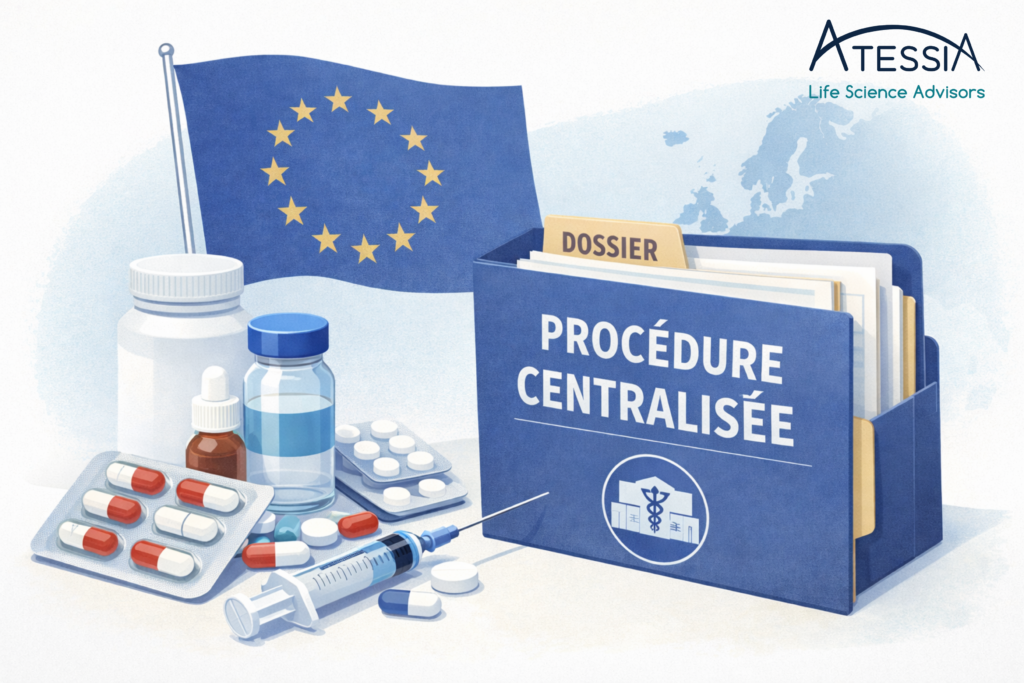
The centralised procedure is defined by Regulation (EC) No 726/2004 of the European Parliament and of the Council of 31 March 2004 laying down Community procedures for the authorisation and supervision of medicinal products for human and veterinary use and establishing the European Medicines Agency (EMA).

This procedure allows obtaining a single marketing authorisation (MA), issued by the European Commission, valid in all Member States of the European Union as well as in the Member States of the European Economic Area (EEA): Iceland, Liechtenstein and Norway.

1/ Scope of application

The centralized procedure is mandatory for certain categories of medicines :

  • advanced therapy medicinal products
  • biotechnology medicinal products
  • medicinal products containing a new, unauthorized active substance used in the treatment of acquired immunodeficiency syndrome (AIDS), cancer, neurodegenerative diseases, diabetes autoimmune diseases and other immune dysfunctions, and viral diseases
    • orphan drugs.

It is optional for other categories of medicines which, although not mandatory, may be of interest at the European level. These include:

  • medicines containing a new active substance that, as of 20 May 2004, was not authorized in the European Union
  • medicines representing a significant therapeutic, scientific, or technical innovation
    • medicinal products presenting an interest for patients at European Union level.

Generic medicines of a reference medicine authorised in the European Union may also be eligible for the centralised procedure.

2/ The actors involved

The Committee for Medicinal Products for Human Use (CHMP), the EMA’s scientific body, is at the core of the centralized procedure. To carry out its pharmacovigilance tasks, the CHMP relies on the scientific assessment and recommendations of the Pharmacovigilance Risk Assessment Committee (PRAC).

The main actors are :

  • The applicant : the holder of the marketing authorisation application.
  • The rapporteurs and co-rapporteurs : two Member States appointed by the CHMP to assess the application and draft the assessment reports.
  • The CHMP : responsible for the scientific review and for providing  an opinion on the benefit/risk balance of the medicinal product.
  • The European Commission : the competent authority for the final marketing authorisation decision, based on the CHMP’s opinion.

3/ Timetable

The total duration of the scientific evaluation is 210 days, excluding clock stops to allow the applicant to answer questions from the CHMP.

Pre-submission

The applicant may arrange a pre-submission meeting with the EMA. These meetings are an essential opportunity to obtain procedural and regulatory advice from the Agency and to ensure that the application complies with the requirements of the centralised procedure.

Submission and validation

The complete dossier is submitted via the EMA portal. A technical validation is carried out, covering the dossier structure (eCTD), as well as a validation of the administrative and regulatory content. Once these validations are completed, the scientific evaluation officially begins on Day 1.

First evaluation (Day 1 to Day 120)

The rapporteurs and co-rapporteurs appointed by the CHMP carry out their initial scientific evaluation and draft a preliminary assessment report, consolidated with comments of the other members of the CHMP.

A peer review is then conducted by the rapporteur and co-rapporteur to harmonize opinions and finalize the list of questions to be addressed to the applicant. Day 120 marks the start of the clock-stop period, during which the applicant typically has up to three months to prepare its response document. Response time is not included in the 210 regulatory days.

Second evaluation (Day 121 to Day 210)

After the clock-stop period, the CHMP resumes the scientific evaluation based on the responses provided by the applicant (Day 121). This phase aims to verify that all questions have been adequately addressed and to finalize the Final Assessment Report (joint assessment) (Day 150).

If some questions remain unresolved or if a point requires clarification, the CHMP may hold a second clock-stop, during which the applicant provides additional information (Day 180).

After this second clock-stop, an oral explanation may be requested by either the applicant or the CHMP (Day 181). This hearing is generally held when the CHMP maintains major objections and allows the applicant to respond directly to the critical points raised by the committee.

Once all the answers to the questions have been received, the Final Assessment Report can be finalized and the CHMP adopts its final opinion on the benefit-risk balance of the medicinal product (Day 210). This opinion may be positive, adopted either by consensus or by an absolute majority of members, or negative. In the event of a negative opinion, the applicant has the right to appeal the decision in accordance with EMA’s procedures.

European Commission Decision

When the CHMP opinion is positive, the European Commission has 67 days to make the final decision on granting the marketing authorisation.

4/ In summary

The centralized procedure is the preferred authorisation route for innovative medicines seeking a European presence. It ensures a harmonized scientific evaluationassessment. However, its complexity requires solid strategic preparation and proven regulatory expertise.

ATESSIA supports pharmaceutical companies in defining their registration strategy, preparing and submitting applications under the centralised procedure, and managing interactions with both the EMA and the European Commission.

Article written byLamya SAOUSSEN, Junior Regulatory Affairs and External Communication Advisor 

Do “over the counter” medicines exist in France?

French always do it different
In many domains, French people like to stand out, either in a positive or negative way.In the Healthcare field, France has set a system that is highly effective, and very protective for the patient, but at the price of a heavy state involvement and of one of the most complex regulations.
As a result, understanding the regulatory specificities of France is key for entering the French market.
ATESSIA can help you in this process and provide you assistance and expertise.
Here are a few areas where France follows its own, often complicated and restrictive, rules.

What are direct-access medicines ?

Over-the-counter (OTC) drugs do not constitute a legal category of drugs under French or European law. This concept, imported from Anglo-Saxon countries, refers to drugs that are directly available to patients at authorized dispensing locations. They promote responsible self-medication and patient autonomy.

In France, since July 1, 2008, certain medicines known as officinal medicines (MMO) can be made directly available to the public in pharmacies, under strict conditions. They are referred to in several ways: “self-medication medicines“, “over-the-counter medicines” or “direct access medicines

A dedicated space in pharmacies

Article R. 4235-55 of the Public Health Code (CSP), authorizes pharmacists to display MMO in a dedicated, clearly identified space located in the immediate vicinity of the dispensing and pharmaceutical record stations.

Their dispensing remains subject to the effective control of the pharmacist, in accordance with the obligation to provide advice imposed on them by the Code of Ethics and Good dispensing practices.

Eligibility Criteria for Inclusion on the MMO List

To be presented for direct public access, medicines must be listed by the Director General of the National Agency for the Safety of Medicines and Health Products (ANSM). Under Article R.5121-202 of the PHC, inclusion is subject to the following conditions:

  • Medicine must not require a mandatory medical prescription (excluding those classified in Lists I and II of poisonous substances, such as narcotics, as well as other medicines subject to restricted prescription);
  • Therapeutic indications, treatment duration, and information provided in the package leaflet must allow safe use by the patient, on pharmacist advice and without a medical prescription: : symptoms must be easily recognisable and must not risk concealing a serious condition;
  • Packaging (weight, volume, number of dosage units) must correspond to the posology and recommended treatment duration indicated in the leaflet;
  • The medicine must not be subject to advertising restrictions for public health reasons;
  • It must not appear on the lists provided for under Article L.162-17 of the Social Security Code, which qualifies for reimbursement by health insurance.

The required documentation for the application is detailed in the ANSM document, “Modalities for Submitting Requests to Add, Modify, or Remove a Medicine from the List of Officinal Medications for Direct Public Access”, available on the ANSM website.

Following review, under Article R.5121-203, the ANSM’s Director General may, by reasoned decision, refuse the listing of medicine on public health grounds, including after reassessment of the benefit-risk balance. The Director General may also suspend or remove a medicine from the list if it no longer meets the criteria of Article R.5121-202 or for any public health reason.

Advertising authorized for the public

Given the criteria imposed by Article R.5121-202, these drugs meet the conditions imposed by Article L.5122-6 of the CSP and may therefore be advertised to the public, subject to obtaining a GP (“Grand Public”) visa

The ANSM recommendations specify that reference to the fact that it is an officinal medicine remains possible provided that “it is sober and informative in nature […]”. This reference cannot constitute the main focus of the communication and must not be interpreted in its form as “[…] an official accreditation or label for the advertising message.”

Messages or slogans must not suggest that the medicine is effective or safe.

Conclusion: Balancing Accessibility and Safety

The French regulatory framework allows community pharmacists to provide direct public access to certain non-prescription medicines, provided that their MA permits safe use under pharmacist guidance. This voluntary procedure for MA holders balances healthcare accessibility and patient safety while complying with strict regulatory requirements.


Article written by Arthur DI RUGGIERO, Regulatory Affairs Advisor

New ICH M4Q(R2) guidelines: towards a paradigm shift for Module 2.3 and 3 formats

Background

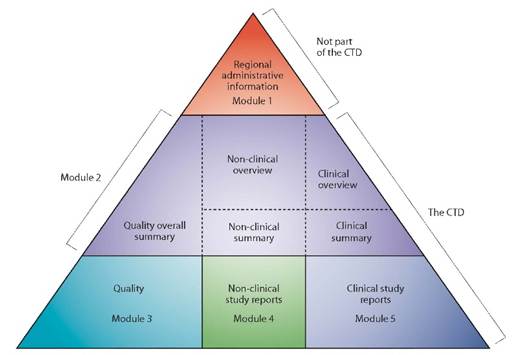
In Europe, information relating to the quality, safety, and efficacy of the Marketing Authorization Application (MAA) for medicinal products is compiled in a common format known as the Common Technical Document (CTD) format. The CTD format applies in all regions that recognize ICH guidelines. It is currently organized into five Modules: Module 1 is specific to the region, while Modules 2, 3, 4, and 5 are common to all regions (see Figure 1).

Figure 1 : The CTD triangle

The CTD format, described in ICH M4, became the mandatory format for marketing authorization applications for new drugs in Europe in July 2003. Prior to its implementation, marketing authorization dossiers met the requirements of the NtA Volume 2B format (1998 edition).

For industries, the introduction of the CTD format eliminated the need to reformat information submitted to the various ICH regulatory authorities.

Subsequently, the introduction of the ‘eCTD’ (electronic Common Technical Document) format, which first became mandatory in Europe in 2007 for centralized marketing authorizations, revolutionized regulatory practices by harmonizing electronic submissions to ICH regulatory authorities, notably replacing submissions in NeeS (Non-eCTD electronic Submission) format. Information on the eCTD format is available in ICH M8.


Reasons for the revision of ICH M4Q(R1)

In Europe, the content of Module 2.3 (QOS – Quality Overall Summary) and Module 3 of the marketing authorisation dossier meets the requirements detailed in the ICH M4Q(R1) guidelines implemented in July 2003. No revision of this text has been carried out for more than 20 years, which has led legislators to several observations:

Observation #1) The traditional CTD structure is not suited to addressing modern quality concepts.

Since the publication of ICH M4Q(R1), new guidelines ICH Q8 to ICH Q14 have been developed, introducing innovative concepts such as Quality by Design (QbD), Quality Risk Management (QRM) and Life Cycle Management (LCM) approaches, as well as Continuous Manufacturing (CM).

The ICH M4Q(R1) document was not designed to take into account the new quality principles, and integrating them into the current CTD format is not straightforward.

Observation #2) The traditional CTD structure is not suited to handling changes in technologies and product types.

ICH M4Q(R1) was designed primarily for conventional small molecules and is structured around the active substance (Part 32S) and the finished product (Part 32P), with adaptations for biological products. Experience has shown that complex products and new therapeutic modalities (nanomedicines, oligonucleotides and biological products such as vaccines, cell and gene therapies, and tissue-engineered products) as well as combination products often do not fit perfectly into this framework.

Observation #3) The traditional CTD structure creates ambiguity in the organisation and placement of information.

The required modular format (i.e. summary of quality data included in Module 2.3 and detailed information included in Module 3) leaves room for differing interpretations as to which details should be included in Module 2.3 versus Module 3 and often leads to repetition of information. Ambiguity remains regarding the location of information and cross-references between modules.

The management of updates and variations to marketing authorizations throughout the lifecycle, while maintaining consistency in the CTD structure with ICH M4Q(R1), is not optimal.

Observation #4) The traditional CTD structure allows regional differences to remain.

Despite the harmonization of the dossier format within the ICH, additional requirements specific to certain countries/regions often persist, thereby reducing the advantage of having a single format.

Observation #5) The current eCTD format does not allow for the integration of new requirements for electronic and structured data.

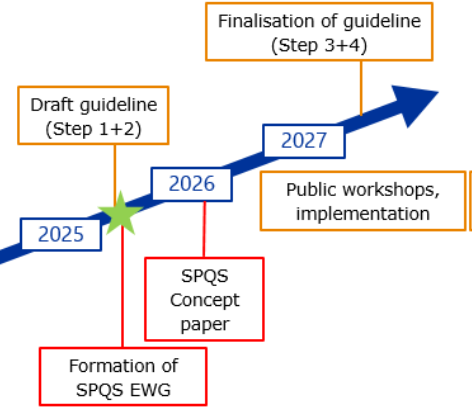
The current trend is towards structured, machine-readable submissions and the use of data standards (e.g. ISO IDMP 11615), in line with the future implementation of SPQS (Structured Product Quality Submission) by the EMA, which will lead to future ICH M16 guidelines (see Figure 2).

Figure 2: Interactions between ICH M4Q(R2) and SPQS (future ICH M16)

ICH M4Q(R1) was not designed for such structured content, which complicates automation and prevents data reuse between submissions.

For all these reasons, ICH MQ4(R1) must be redesigned to enable data management and standardisation, thereby promoting the efficiency of the dossier review and approval process.


Overview of the ICH M4Q(R1) revision: current framework versus future framework

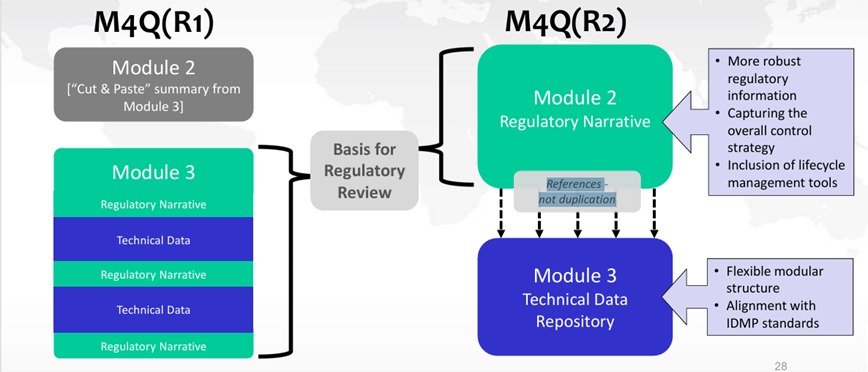
Although changes are being made to the location of information in the future Modules 2.3 and 3, these do not alter regulatory expectations. The data used as the basis for regulatory assessment, previously presented in Module 3, will now be included in Module 2.3. Module 3 will now serve as a repository for technical data (protocols, reports, data, etc.) (see Figure 3).

Figure 3: Changes in data location between ICH M4Q(R1) and ICH M4Q(R2)

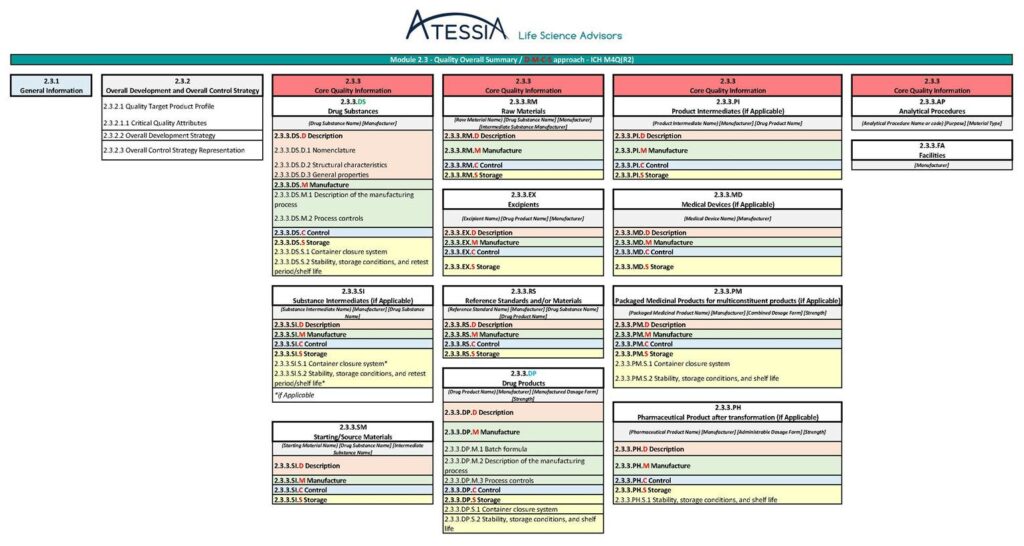
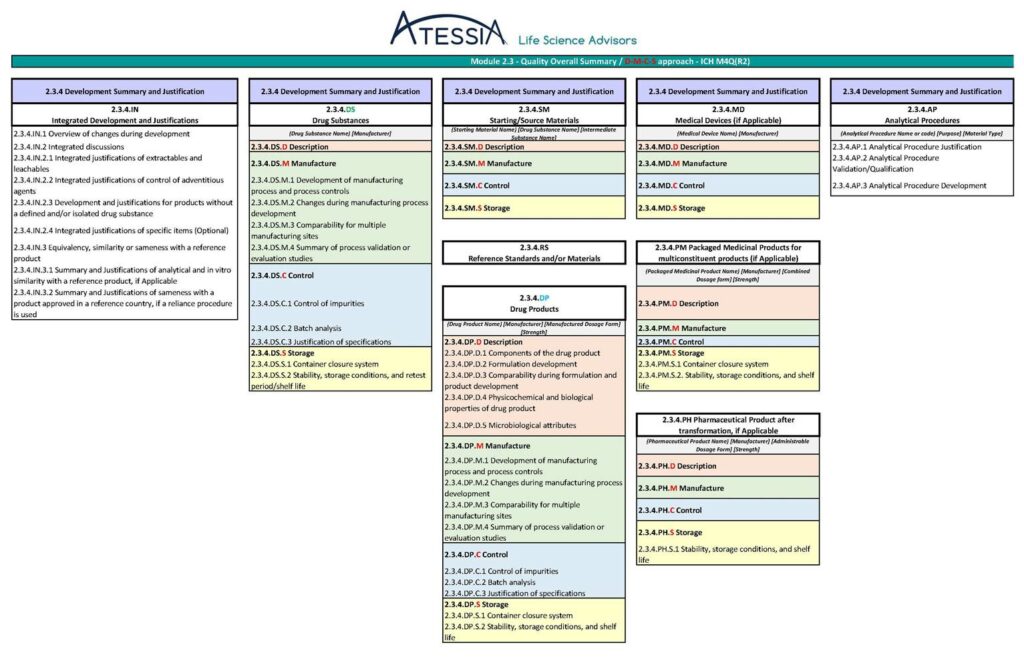
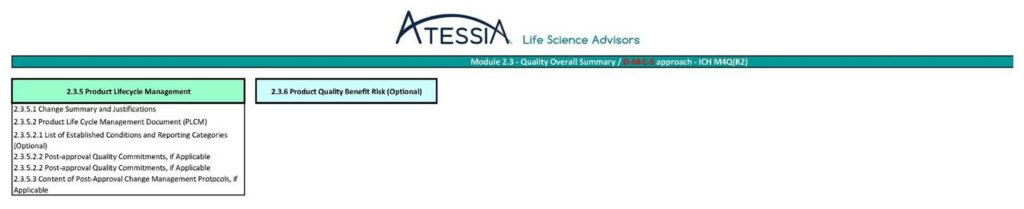
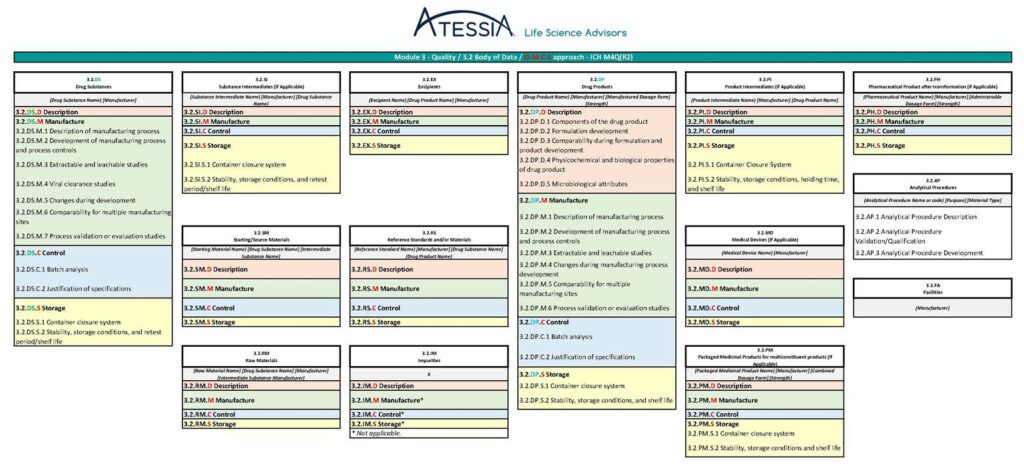
The future granularity of Module 2.3 and Module 3, as anticipated in the 14 May 2025 draft version of ICH M4Q(R2), is presented in Figure 4 and Figure 5.

Figure 4: Granularity of Module 2.3 according to ICH M4Q(R2) (1)

Figure 4: Granularity of Module 2.3 according to ICH M4Q(R2) (2)

Figure 4: Granularity of Module 2.3 according to ICH M4Q(R2) (3)

Figure 5: Granularity of Module 3 according to ICH M4Q(R2)


Essential information on quality (2.3.3 Core Quality Information (CQI)):

– shall include all information subject to lifecycle management in accordance with regional requirements for post-authorisation changes to ensure product quality.

– shall be maintained throughout the product lifecycle to ensure that product quality information remains current.

The information contained in sections 2.3.1 (General Information), 2.3.2 (Overall Development and Overall Control Strategy), 2.3.4 (Development Summary and Justification), 2.3.5 (Product Lifecycle Management), 2.3.6 (Product Quality Benefit Risk) and Module 3 will be supportive information, which may be modified or supplemented for post-marketing submissions.

In the future ICH M4Q(R2), information will be grouped into specific subsections of materials/components used in manufacturing:

  • drug substances (DS),
  • substances intermediates (SI),
  • raw materials (RM),
  • starting/source materials (SM),
  • excipients (EX),
  • reference materials (RS),
  • impurities (IM),
  • drug products (DP),
  • products intermediates (PI),
  • packaged medicinal products (PM),
  • pharmaceutical products (PH) and
  • medical devices (MD).

Information relating to analytical procedures and facilities that apply to all materials will be presented in dedicated sections.

Each subsection will then be organized according to the following DMCS structure:

  • Description: identifies the material and its key characteristics;
  • Manufacture: outlines the production process and process controls;
  • Control: Control: describes quality control measures such as specifications;
  • Storage: provides stability, container closure information, and retest period/shelf-life

The relationships between Module 2.3 and Module 3 in the context of the DMCS model used for materials/components are illustrated as follows:

 2.3.3 Core Quality Information2.3.4 Development Summary and Justification3.2 Body of Data
 Information related to what the material is and its key characteristics, which is considered necessary to enable marketing authorization and facilitate lifecycle managementScientific and risk-based development summary and justifications related to what the material is and its key characteristicsSupportive information including reports and data related to what the material is and its key characteristics
DescriptionNomenclature, structure, composition, key characteristicsCharacterization summary, formulation development and justificationCharacterization data, formulation development and justification data
ManufactureManufacturing process description, IPCs, critical process parametersProcess development and validation/evaluation summaryProcess development and validation/evaluation data
ControlSpecificationsOverview of batch analysis, justification of specificationsBatch analysis and justification data
StorageContainer closure system description, storage conditions, and retest period/shelf lifeOverview of stability studies, justification of proposed container closure systemContainer closure selection and stability data  


Conclusion

In conclusion, ICH M4Q(R2) aims to promote harmonization of the quality content of dossiers, ideally enabling a single dossier to be submitted in all ICH member countries.

Where required by law, the applicant shall provide any additional region-specific information directly in the relevant section of a separate document, in the form of an addendum to the harmonized base document used in all ICH regions.

Atessia supports pharmaceutical companies in preparing Modules 2.3 and 3.


Sources:

– The CTD Triangle

– ICH M4 Organisation Including the Granularity document that provides guidance on document location and pagination

– Notice to Applicants, Volume 2B incorporating the Common Technical Document (CTD) (May 2008)

– ICH M4Q(R1) CTD on Quality

– ICH M4Q Q&As (R1) Questions & Answers: CTD on Quality

– ICH M4Q(R2) EWG Revision of M4Q(R1) (draft guideline 14 May 2025)

– M4Q(R2) Step 2 presentation (18 June 2025)

– Présentation Finding your way with the new eCTD (ICH-M4Q), Ivica Malnar, Agency for Medicinal Products and Medical Devices (HALMED) (23-24 September 2025)

– ICH M8 electronic Common Technical Document (eCTD) v3.2.2

– ICH M8 electronic Common Technical Document (eCTD) v4.0


Article written by Isabelle MOUVAULT, Senior Advisor in Pharmaceutical Affairs

Advertising for medicines: the keys to obtaining a visa in France

French always do it different In many domains, French people like to stand out, either in a positive or negative way. In the Healthcare field, France has set a system that is highly effective, and very protective for the patient, but at the price of a heavy state involvement and of one of the most complex regulations. As a result, understanding the regulatory specificities of France is key for entering the French market. ATESSIA can help you in this process and provide you assistance and expertise. Here are a few areas where France follows its own, often complicated and restrictive, rules.

Prior control of advertising

The control exercised by the French Health Authorities over advertising for medicinal products is probably one of the most demanding. Any advertising for a medicine is therefore subject to control and authorization by the ANSM*. Since 2012, this authorization system has been entirely based on an a priori process, i.e. the distribution of an advertisement can only start once the precious visa has been granted. In the absence of a visa, the distribution of an advertisement may lead to criminal and financial penalties.

Regarding the content of promotional documents, in application of the French Public Health Code and taking into account the state of scientific and medical knowledge, the ANSM will ensure the security of the message which must not induce bad prescribing or a danger to the public. Vector of proper use, advertising must also present the medicine objectively, and ensure compliance with the standards in force such as the MA** and the therapeutic strategies recommended by the HAS***.

Regarding advertising aimed at health professionals, in order to enable them to form their own personal idea of ​​the therapeutic value of the medicine, the ANSM ensures that the target population and the benefit-risk ratio are clearly perceptible, particularly in the documents used by persons carrying out a promotional information activity. Numerous guidelines, which are mandatory in practice, have been drawn up by the authorities to assist pharmaceutical companies in this delicate task.

Concerning advertising to the general public is only permitted for certain medicines:

  • Medicinal products not subject to compulsory medical prescription, non-reimbursable and not including in their marketing authorization a ban on advertising due to a risk to public health, in particular when the medicinal product is not suitable for use without medical supervision;
  • Certain vaccines included on a list from the Ministry of Health;
  • Smoking cessation products.

It should also be noted that control of advertising is also exercised a priori for certain categories of medical devices presenting a significant risk to human health, the list of which is defined by a ministerial order. As with medicinal products, advertising for these devices is therefore subject to prior authorization in accordance with the French Public Health Code.

An Immutable Authorization Schedule

But the real constraint lies in respecting the timetable governing this control, implying for pharmaceutical companies to anticipate and plan their needs well in advance. Advertising is indeed subject to strict filing periods (4 per year for documents for healthcare professionals, and 8 per year for advertisements targeting the general public), and files are processed by the authorities within a regulatory time limit of 2 months.

Outside of these periods called the “deposit slot”, it is forbidden to apply for a visa. Only medicinal products that have been subject to an advertising ban during a reassessment of the benefit/risk ratio can derogate from this principle, and be the subject of a visa application outside the determined periods.

At the end of the evaluation period, the request will result in the granting of a prior authorization called the GP visa for advertising aimed at the public and the PM visa for advertising aimed at healthcare professionals, for a duration of 2 years. However, in the event of breaches of the requirement criteria on the content or presentation of the communication tool, the ANSM may issue a refusal. The applicant will then have no choice but to make a new request during the next slot. Each year, more than 10,000 visa applications are generally submitted to the ANSM (including both GP and PM visas), and this number tends to increase over time. Among these applications, approximately 15% are rejected (according to the ANSM’s 2022 and 2023 activity reports), a percentage that also appears to be rising each year.

It should be noted that it is possible to submit visa applications before the final decision on an initial marketing authorization (MA) or a modification of an existing MA, in the following cases: for an initial European MA obtained through the centralized, decentralized, or mutual recognition procedures, after the end of the European phase and based on the draft translation of the MA; for an initial national MA, based on the draft MA; and for MA modifications resulting from the above-mentioned European procedures, once the European phase is completed, also based on the draft translation. Naturally, the visa will only be valid if the MA itself is granted. The MA holder must ensure that the advertising strictly complies with the annexes of the approved MA.

The dematerialization of applying

Accelerated by the COVID-19 health crisis, the ANSM has implemented the dematerialization of visa applications via the national platform demarches-simplifiées.fr. The ANSM is thus temporarily opening a specific form for each filing period, and requests sent in paper format must now be exceptional. The applicant must then complete by scrupulously following the notice made available to users of the platform, by attaching a receipt of €510 previously issued after payment to the tax authorities.

ATESSIA supports laboratories throughout the entire review process of both promotional and non-promotional external communication materials : from communication strategy to the validation and submission of dossiers.

Article written by Mathilde ISRAEL, Regulatory Affairs and External Communication Advisor.

* ANSM : Agence Nationale de Sécurité du Médicament et des produits de santé (ANSM is the French Authority in charge of assessing and surveying pharmaceutical products) 

** MA : Marketing Authorization

*** HAS : Haute Autorité de Santé (HAS is taked for the French Government with the evaluating of health products from a medical and economic perspective and recommending best practices)

Atessia takes a strategic leap with the integration of AnticipSanté

This merger enriches our service offering and affirms our commitment to supporting healthcare players in meeting the regulatory and operational challenges of today and tomorrow.

This union marks the coming together of Dr. Nathalie CASABURO and Dr. Géraldine BAUDOT-VISSER: two experts driven by a shared vision of excellence at the service of healthcare players.

Two visions, a shared ambition
Created in 2004, AnticipSanté has established itself as a key player in health vigilance, thanks to its expertise and local approach. Today, this entity joins Atessia to form a strategic alliance combining innovation, personalization and excellence.

This integration embodies our determination to transform regulatory challenges into opportunities, and to provide our partners with sustainable solutions adapted to changes in the sector.

Press release January 2025

What are the next steps for therapeutic cannabis in France? 


A bit of history 

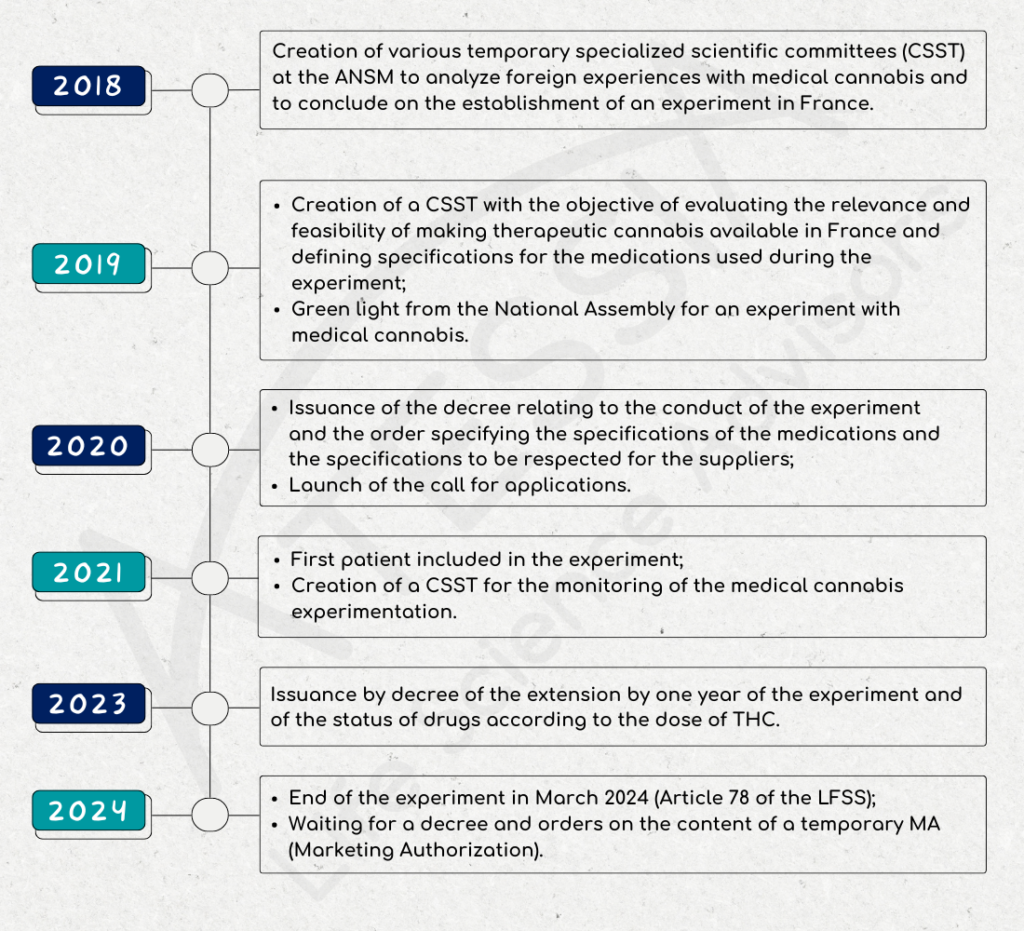
In September 2018, a multidisciplinary scientific committee made up of ANSM, healthcare professionals and patients was set up to review scientific knowledge and foreign experience on medical cannabis.   

In December 2018, this committee concludes that the use of cannabis is appropriate for patients in certain clinical situations, and wishes to set up an experiment.  

As of January 2019, a temporary specialised scientific committee (CSST) is being set up with the aim of assessing the relevance and feasibility of making therapeutic cannabis available in France. This CSST is tasked with issuing an opinion on:  

  • the therapeutic value of cannabis in the treatment of certain pathologies;  
  • the modalities for making cannabis available for medical use.  

At the same time, the committee had to define specifications for: 

  • The drugs used during the experiment;  
  • The content of training for doctors and pharmacists and information for patients;  
  • The content of the patient follow-up register.  

Launch of the experimental framework  

On October 25, 2019, the French National Assembly gives the go-ahead for an experiment in the use of medical cannabis.  

Decree no. 2020-1230 of October 7, 2020 on the experimentation of the medical use of cannabis defined in particular:   

  • the duration of the pilot (2 years),   
  • the status of medical cannabis as a narcotic drug,  
  • the number of patients who may be included,  
  • the conditions of treatment,  
  • the setting up of a register to monitor adverse events.  

The Order of October 16, 2020 set out the specifications for cannabis-based medicines used during the experiment provided for in Article 43 of Law no. 2019-1446 of December 24, 2019 on the financing of social security (LFSS) for 2020, together with the conditions for making them available and the therapeutic indications or clinical situations in which they will be used.  

This order defined:  

  • The indications for which medical cannabis products entered the trial,  
  • The authorized pharmaceutical forms:   
  • form for inhalation by vaporization, such as dried flowering tops or granules; 
  • oral form in capsule or equivalent form  
  • oral or sublingual oil form  
  • as well as specifications for the free supply and distribution of cannabis-based medicines for patients taking part in the experiment in the medical use of cannabis.  

The call for applications for therapeutic cannabis suppliers launched on October 19, 2020 by ANSM closed on November 24, 2020. Applications were examined on the basis of strict and demanding specifications in terms of compliance with good cultivation and manufacturing practices, drug quality and securing the distribution circuit as defined in the decree. This examination was carried out by the ANSM, and in particular by its control laboratories, and by experts from the Temporary Specialised Scientific Committee (CSST).  

In all, six supplier/operator pairs were selected for the trial.   

First patient – Start of the trial  

On March 26, 2021, the medical cannabis trial officially began with the inclusion of the first patient at Clermont-Ferrand University Hospital. The experiment will run for 2 years.   

In June 2021, a CSST was set up to monitor the medical cannabis experiment. It is made up of 16 members, including 4 patients and healthcare professionals, general practitioners, specialists in the therapeutic indications selected for medical cannabis, pharmacists and representatives of the Centre Régional de Pharmacovigilance (CRPV) and the Centres d’Evaluation et d’Information sur la Pharmacodépendance-addictovigilance (CEIP-A).  

This committee is involved in monitoring the progress of the experiment and must issue an opinion on the evaluation data collected and on the framework for the marketing and use of medical cannabis.  

2023: the first turning point  

Decree 2023-202 of March 25, 2023, amending Decree 2020-1230 of October 7, 2020:   

  • extends the trial period for the medical use of cannabis by one year;   
  • indicates that medicines with a THC content of over 0.30% are subject to the narcotics regime; conversely, those with a THC content of less than or equal to 0.30% are now subject to the regime for medicines covered by lists I and II of poisonous substances.  

At the same time, various decrees dated March 25, 2023 specify that:  

  • Pharmacovigilance and addictovigilance will now be handled in the same way as for other drugs;   
  • Inhalation granules have been discontinued;  
  • The ANSM is no longer responsible for selecting suppliers and operators of cannabis for medical use. The Direction Générale de la Santé (DGS) is now the competent authority in this area, via a public procurement contract. The medicines used will therefore no longer be supplied free of charge by participating companies.  

End of the experiment  

Article 78 of the Social Security Finance Act of December 26, 2023 puts an end to the experiment.  

As of March 26, 2024, no new patients can be included. Patients included before this date will still be able to benefit from their treatment, with the exception of inhaled forms.  

Other patients will have to wait until a medicine is authorized and available “no later than December 31, 2024” before they can benefit from a cannabis-based treatment for therapeutic use.  

Pending the completion of the work enabling the widespread use of therapeutic cannabis in France, the Ministry has decided to extend coverage for patients still undergoing treatment since the end of the trial on December 31, 2024. 

Therefore, until March 31, 2026, coverage for patients included in the experimentand still undergoing treatment will be provided under the same conditions and, exceptionally, for medications authorised as part of the experiment. 

Key figures of the experiment: 

Since the start of the experiment in March 2021, 3,209 patients have been enrolled, of whom 1,655 were still receiving treatment as of June 13, 2025

A growing number of healthcare professionals are involved in this experiment (figures as of June 2025): 

  • 341 registered volunteer referral centers
  • More than 700 physicians in referral centers, both in private practice and hospitals, 
  • More than 1,400 pharmacists

What’s next?   

Article 78 of the Social Security Finance Act for 2024 creates an ad hoc status for cannabis-based medicines and introduces, for those medicines, the authorisation of use for a 5-year temporary period granted by the French HAs.  

  • Therapeutic indications: 

A decree is expected to define the precise indications for these medications. 

Article 78 of the Social Security Finance Act for 2024 precises that such prescription may only be done if the use of these products meets the special needs of a given patient, and there is no suitable pharmaceutical packsize available, including due to the absence of effective marketing, with, for example, a marketing authorization (article L5121-1 4° of the CSP).  

  • Content of the application for temporary authorisation 

A decree is also pending to define the content of the application for temporary authorisation. A draft notice to applicants was published for consultation by the French HAs in July 2024 and guides future applicants on the expected content of these applications. 

It should be noted that the final texts are still awaiting official publication and that no applications for temporary authorization can be submitted at this time. 

Article written by Isabelle BARBIEUX, Senior Quality Assurance Consultant and Agathe DAUBISSE, Senior Regulatory Affairs Consultant 


Are you wondering? Want to get started?

Atessia is here to answer your questions and help you make your project a reality.

Call on our experts.

Therapeutic patient education versus learning programs: what is role for the pharmaceutical industry?

> Definition and content

Therapeutic patient education (TPE) can be defined in several ways.

The World Health Organization (WHO) gave the following definition in 1996: “Therapeutic patient education aims to help patients acquire or maintain the skills they need to manage their lives with a chronic disease”.

In 2007, the French National Authority for Health (HAS) clarified the specific aims of therapeutic education:

– The acquisition and maintenance by the patient of self-care skills;

– The mobilization or acquisition of coping skills”.

Under the French law no. 2009-879 of July 21, 2009 on hospital reform and patients, health and territories (known as the HPST law), TPE is defined as being “[…] part of the patient’s care pathway. Its aim is to make patients more autonomous by facilitating their compliance with prescribed treatments and improving their quality of life. It is not enforceable against the patient and cannot condition the rate of reimbursement for his or her treatment or for drugs related to his or her illness”.

ETP, as provided for in the French Public Health Code, is divided into three distinct actions:

Therapeutic patient education programs, which comply with national specifications, are implemented at local level after registration with regional health agencies (ARS). They are proposed to the patient by a healthcare professional and lead to the development of a personalized program;

Accompaniment programs, which comply with national specifications, are designed to provide assistance and support to patients and their families in managing their disease;

Learning programs are designed to help patients acquire the technical skills they need to use a medicine/Auto-administration. These programs are implemented by healthcare professionals working on behalf of an operator who may be financed by the company exploiting the medicine. The learning program is proposed by the prescribing physician to the patient. In this case, the ANSM authorizes their implementation, after consulting an approved patient association To this end, the manufacturer submits a training application, justifying the expected benefits for the patient.

> ETP objectives

ETP is based on an individualized approach, considering the specific characteristics of each patient. It involves close collaboration between the patient, healthcare professionals and often the patient’s family and friends. The aim is to foster an in-depth understanding of the disease, its implications and associated treatments. This approach encompasses not only the medical aspects, but also the psychological, social and environmental aspects of health.

– Understanding the disease: ETP enables patients to understand the mechanisms of their disease, their symptoms, treatments and effects. Better knowledge helps patients adhere to treatment and prevent complications.

– Skills acquisition: Patients learn to manage their treatment, recognize the early signs of complications and adopt healthy lifestyle habits.

– Autonomy and decision-making: ETP aims to reinforce patients’ autonomy by giving them the tools they need to actively participate in decisions concerning their health.

> Who can set up this type of program?

Healthcare professionalsOthersLegal entities
> Doctors and specialists: They play an essential role in defining therapeutic objectives and validating educational content;
> Nurses: They are often on the front line in delivering education and educational follow-up to patients;
> Pharmacists: They can help explain treatments and their dosage;
> Psychologists or psychiatrists: They help patients manage the stress and psychological impact of their illness.
> Specialized educators: They are specifically trained to deliver TVE;
> Expert patients: people living with the same pathology can share their experience and provide invaluable support.
> A healthcare establishment (public or private);
> A collective practice structure (health center/health home/health cluster);
> A health network;
> An association;
> The Assurance Maladie (health insurance) for health examination centers and the Sécurité Sociale Agricole (agricultural social security);
> A mutual or other complementary insurance company;
> A foundation;
> A municipality.


> Manufacturers and their medicines, at the heart of TVE… but with less room for manoeuvre:

– Ever more innovative medicines

– Pathologies requiring increasingly advanced patient knowledge/technical gestures

– Image and communication issues, as well as the promotion of public health, may lead the laboratory to wish to support an ETP program especially when self-administering drugs.

In order to remain compliant, it is essential for manufacturers wishing to leverage the benefits of ETP to be aware of the roles and levels of involvement they are allowed to play.

Finally, implementing a TVE program without being authorized to do so is punishable by a fine of up to 30,000 euros.

> Conclusion

Therapeutic patient education represents a major evolution in the way we approach health and illness. In a world where it is becoming commonplace for patients to become experts in their own disease, they are a tool for them to understand, actively participate in their treatment and adopt health-promoting behaviors, while contributing to comprehensive, personalized care.

However, the role of the operator of a medicine is regulated and requires a case-by-case analysis of each project.

In such a context, manufacturers have a role to play, while considering the regulatory complexity imposed by the system and the need to steer clear of the multiple risks associated with their highly regulated field of activity (promotional requalification, contact with patients, granting benefits to patients or healthcare professionals).

Article written by Zarine RAMJAUNY, Legal Advisor

What is the Requirement for Transparency of Conflicts of Interest with Healthcare Professionals in France?

Following the “Médiator” case and inspired by the Sunshine Act in the United States, the law of December 29, 2011, concerning the strengthening of health safety, known as the “Bertrand Law,” was passed. 

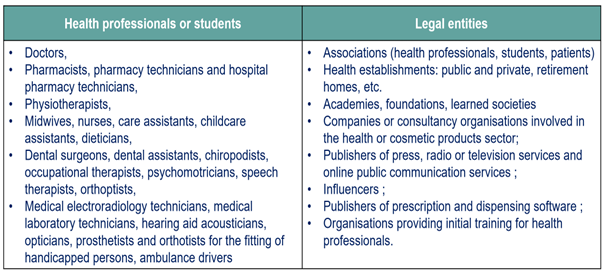
This law establishes systematic transparency of links between health industries on one hand, and other actors in the health field on the other. This primarily includes healthcare professionals, but also students, learned societies, associations, media, etc. 

The “transparency of links” system, which provides the general public with information on the relationships between health industries and members of the health system, is in line with the “regulation of benefits” system, which aims at the ethics of healthcare professionals. These two legislations interact with each other, with some subtle specificities that distinguish them. 

Who is Affected by the System? 

The following actors are concerned: 

Types of Declaration and Publication 

It is appropriate to publicly disclose retrospectively: 

  • Agreements: publication of all contracts made between laboratories and a health actor (for example: agreements with coverage of hospitality expenses (catering, transport, accommodation, registration fees at a congress)); 
  • Service provision contracts (for example: remuneration for clinical expert work); 
  • Benefits exceeding 10 euros including taxes (for example, the granting of health product samples); 
  • Remunerations awarded (for example: remuneration of a healthcare professional for speaking at an event). 

Commercial contracts are excluded. 

The typology of benefits and agreements responds to precise definitions that have been clarified by the authorities. 

The system requires that pharmaceutical companies, in particular, are obliged to publish information on the public database https://www.transparence.sante.gouv.fr, according to the following frequency: 

  • Publication twice a year: 
  • First calendar semester, i.e. from January 1st of year N to June 30th of year N: submission on the “transparency-health” website by September 1st of year N. 
  • Second half of the calendar year, i.e. from 1 July of year N to 31 December of year N: submission on the “transparency in health” website no later than 1 March of year N+1. 

Thus, the general public can access the work links and professional relationships maintained between health industries and actors in the French healthcare system. 

In parallel, the European Federation of Pharmaceutical Industries and Associations (EFPIA) has also adopted the “EFPIA code of practice” to frame collaboration with Healthcare Professionals or their Organizations when conflicts of interest exist. This text is applicable to member companies. 

After more than fifteen years of implementation, France’s transparency of interests framework stands as a benchmark for ethics and regulation in the healthcare sector. Inspired by the U.S. Sunshine Act, the Bertrand Law has strengthened public trust and clarified relationships between industry and healthcare stakeholders. 

With this experience, companies have made transparency a cornerstone of their compliance culture. This pioneering framework paved the way for broader harmonization through the European Pharmaceutical Package and EFPIA initiatives, which require the annual disclosure of Transfers of Value (ToV). 

The recent inclusion of social media influencers highlights the French model’s ability to adapt to new communication trends while maintaining high ethical standards in an ever-evolving environment. 

ATESSIA supports its clients on all these questions. 

Article written by Johanna DROUVILLE, Legal Consultant at ATESSIA

ATESSIA Life Science Advisors, a Catalyst for Regulatory Innovation: Collaborating with UBAQ, ATESSIA Sets a New Standard to Facilitate the Management of Regulatory Challenges in the Health Sector

An alliance capable of moving mountains.

ATESSIA and UBAQ jointly pave the way for health sector players.

The health sector, constantly evolving and in the spotlight, requires wisely chosen partnerships.

ATESSIA, a consulting and expertise firm in regulatory and pharmaceutical affairs, and UBAQ, a recognized expert in SaaS solutions for Health Tech, naturally meet at the crossroads of their paths.

Their collaboration aims to simplify and strengthen the regulatory management of health industries, each contributing their expertise: ATESSIA with its deep knowledge of the regulatory field, distinctive know-how, and disruptive approach to consulting, and UBAQ with its sharp technological skills and fresh perspective on sector challenges.

Together, they offer a value proposition that combines innovation, expertise, and accessibility.

With this partnership, ATESSIA offers tailored support, deeply focused on quality customer experience, aiming to meet diverse needs and expectations at every interaction level.

“We were looking for a technical solution with an innovative approach to offer our clients. Having been in contact with UBAQ for several years, we now fully trust them and share the same values and ambitions: to support the Health Industries in their regulatory issues, always placing patients at the heart of our solutions.”

Géraldine BAUDOT-VISSER, Doctor of Pharmacy, founder of ATESSIA, and AMARYLYS.


A Tailored Partnership for the Health Industries

Always seeking to add value for health industry players, ATESSIA has teamed up with UBAQ to offer tailored support. This collaboration revolves around implementing an innovative technical tool designed to ease the daily life of health industry professionals. Indeed,

UBAQ aims to provide its clients with regulatory support that goes beyond its SaaS solution, choosing to partner with one of the most renowned firms in this field.

Both companies share a key priority: placing the customer, their experience, and satisfaction at the heart of each solution.

In addition to tool implementation, ATESSIA offers 360° support, covering all business and regulatory issues health industries may face.

This partnership provides an integrated solution, combining ATESSIA’s sharp expertise with an intuitive digital tool to ensure optimal regulatory compliance.

“Partnering with a regulatory affairs firm was obvious for us and is in line with the continuous support we offer our clients. ATESSIA breaks the mold and stands out with a very flexible and innovative approach: this is exactly what we were looking for.”

François CANCELLONI, General Manager and co-founder of UBAQ.


ATESSIA Life Science Advisors: The Strategic Partner in Pharmaceutical Regulatory Navigation

Founded in 2017 by Géraldine BAUDOT-VISSER, Doctor of Pharmacy, ATESSIA Life Science Advisors is an essential player in guiding health industries through regulatory landscape challenges.

With a team of experts and a client-centered approach, ATESSIA ensures compliance and relevance through personalized technical and strategic development support and health product commercialization.

ATESSIA positions itself as a market leader, with its insightful regulatory monitoring service, ATESSIA INTELLIGENCE, handling French and European regulatory subtleties.

ATESSIA’s renown highlights its expertise and commitment to assisting clients in successfully navigating the rigorous and complex world of regulatory and pharmaceutical affairs.


Key Points:

  • Expertise in 6 main areas: Pharmaceutical Affairs, Regulatory Affairs, Quality System Management, Health Product Promotion, Pharmacovigilance, Medical Devices, Regulatory Monitoring.
  • 126 companies subscribed to the regulatory monitoring tool, ATESSIA INTELLIGENCE.
  • Extended presence in Paris, Lyon, Luxembourg, Nice, Bordeaux, Lille, Auxerre, Orléans, and other locations.
  • 98% retention and satisfaction rate, according to the ISO indicator.

UBAQ, European Leader in Health Tech

Founded in 2023 from the merger of Qairn and Clardian (formerly BMI System), UBAQ supports the digital transformation of health industries with a suite of SaaS software.

These software solutions help dematerialize and simplify the application of the particularly strict and constantly evolving regulatory framework. UBAQ offers two solutions:

  • UBAQ DocPromo, which aims to comply with promotional documents.
  • NAYACT Transparency by UBAQ, focusing on the Law of Benefits Framework and transparency of interest links.