

_Blog

New ICH M4Q(R2) guidelines: towards a paradigm shift for Module 2.3 and 3 formats

Background

In Europe, information relating to the quality, safety, and efficacy of the Marketing Authorization Application (MAA) for medicinal products is compiled in a common format known as the Common Technical Document (CTD) format. The CTD format applies in all regions that recognize ICH guidelines. It is currently organized into five Modules: Module 1 is specific to the region, while Modules 2, 3, 4, and 5 are common to all regions (see Figure 1).
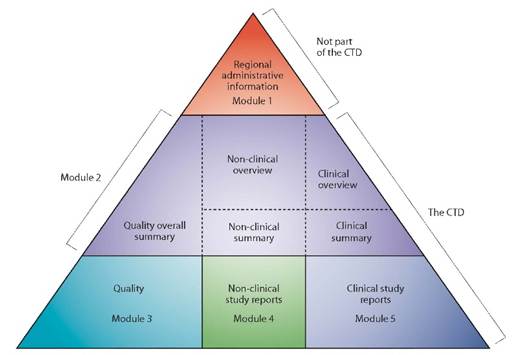
Figure 1 : The CTD triangle

The CTD format, described in ICH M4, became the mandatory format for marketing authorization applications for new drugs in Europe in July 2003. Prior to its implementation, marketing authorization dossiers met the requirements of the NtA Volume 2B format (1998 edition).

For industries, the introduction of the CTD format eliminated the need to reformat information submitted to the various ICH regulatory authorities.

Subsequently, the introduction of the ‘eCTD’ (electronic Common Technical Document) format, which first became mandatory in Europe in 2007 for centralized marketing authorizations, revolutionized regulatory practices by harmonizing electronic submissions to ICH regulatory authorities, notably replacing submissions in NeeS (Non-eCTD electronic Submission) format. Information on the eCTD format is available in ICH M8.


Reasons for the revision of ICH M4Q(R1)

In Europe, the content of Module 2.3 (QOS – Quality Overall Summary) and Module 3 of the marketing authorisation dossier meets the requirements detailed in the ICH M4Q(R1) guidelines implemented in July 2003. No revision of this text has been carried out for more than 20 years, which has led legislators to several observations:

Observation #1) The traditional CTD structure is not suited to addressing modern quality concepts.

Since the publication of ICH M4Q(R1), new guidelines ICH Q8 to ICH Q14 have been developed, introducing innovative concepts such as Quality by Design (QbD), Quality Risk Management (QRM) and Life Cycle Management (LCM) approaches, as well as Continuous Manufacturing (CM).

The ICH M4Q(R1) document was not designed to take into account the new quality principles, and integrating them into the current CTD format is not straightforward.

Observation #2) The traditional CTD structure is not suited to handling changes in technologies and product types.

ICH M4Q(R1) was designed primarily for conventional small molecules and is structured around the active substance (Part 32S) and the finished product (Part 32P), with adaptations for biological products. Experience has shown that complex products and new therapeutic modalities (nanomedicines, oligonucleotides and biological products such as vaccines, cell and gene therapies, and tissue-engineered products) as well as combination products often do not fit perfectly into this framework.

Observation #3) The traditional CTD structure creates ambiguity in the organisation and placement of information.

The required modular format (i.e. summary of quality data included in Module 2.3 and detailed information included in Module 3) leaves room for differing interpretations as to which details should be included in Module 2.3 versus Module 3 and often leads to repetition of information. Ambiguity remains regarding the location of information and cross-references between modules.

The management of updates and variations to marketing authorizations throughout the lifecycle, while maintaining consistency in the CTD structure with ICH M4Q(R1), is not optimal.

Observation #4) The traditional CTD structure allows regional differences to remain.

Despite the harmonization of the dossier format within the ICH, additional requirements specific to certain countries/regions often persist, thereby reducing the advantage of having a single format.

Observation #5) The current eCTD format does not allow for the integration of new requirements for electronic and structured data.

The current trend is towards structured, machine-readable submissions and the use of data standards (e.g. ISO IDMP 11615), in line with the future implementation of SPQS (Structured Product Quality Submission) by the EMA, which will lead to future ICH M16 guidelines (see Figure 2).
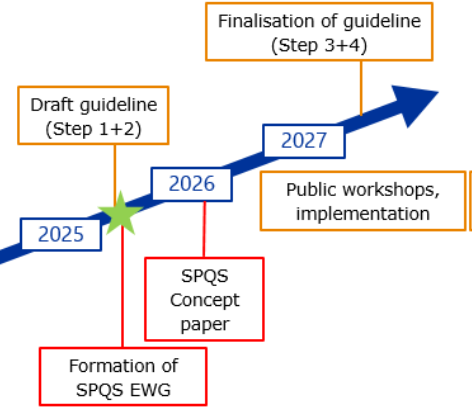
Figure 2: Interactions between ICH M4Q(R2) and SPQS (future ICH M16)

ICH M4Q(R1) was not designed for such structured content, which complicates automation and prevents data reuse between submissions.

For all these reasons, ICH MQ4(R1) must be redesigned to enable data management and standardisation, thereby promoting the efficiency of the dossier review and approval process.


Overview of the ICH M4Q(R1) revision: current framework versus future framework

Although changes are being made to the location of information in the future Modules 2.3 and 3, these do not alter regulatory expectations. The data used as the basis for regulatory assessment, previously presented in Module 3, will now be included in Module 2.3. Module 3 will now serve as a repository for technical data (protocols, reports, data, etc.) (see Figure 3).
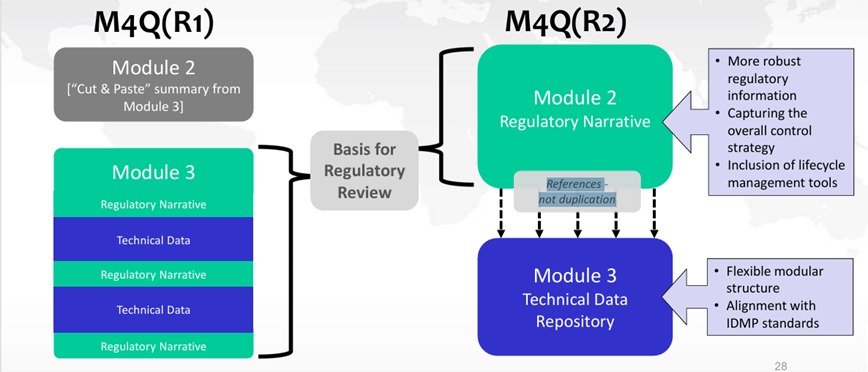
Figure 3: Changes in data location between ICH M4Q(R1) and ICH M4Q(R2)

The future granularity of Module 2.3 and Module 3, as anticipated in the 14 May 2025 draft version of ICH M4Q(R2), is presented in Figure 4 and Figure 5.
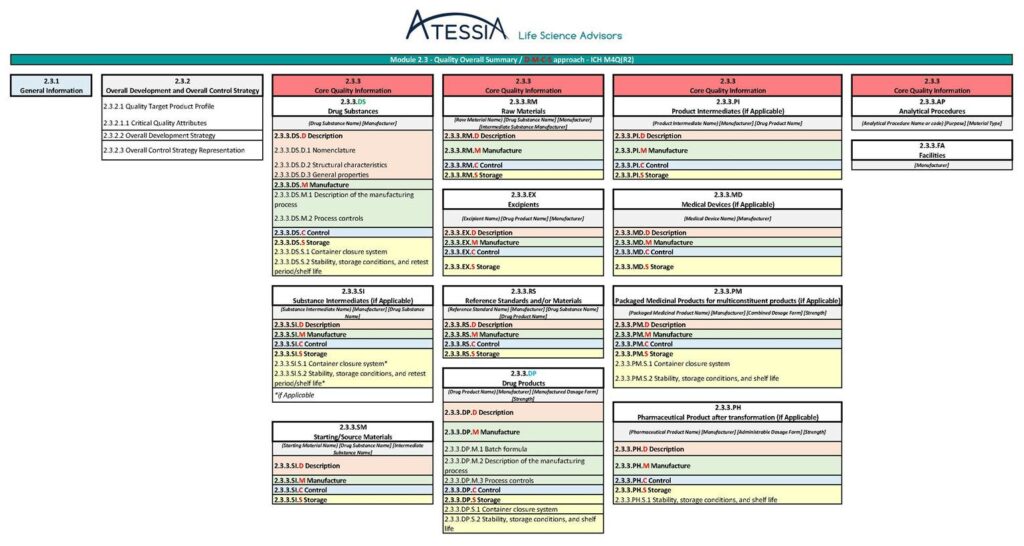
Figure 4: Granularity of Module 2.3 according to ICH M4Q(R2) (1)
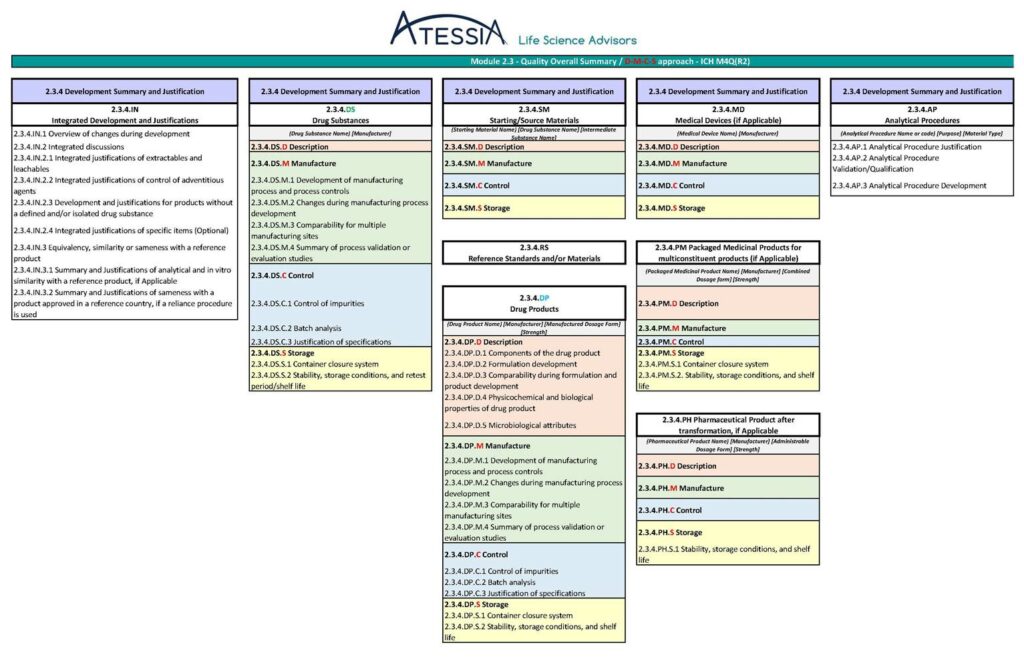
Figure 4: Granularity of Module 2.3 according to ICH M4Q(R2) (2)
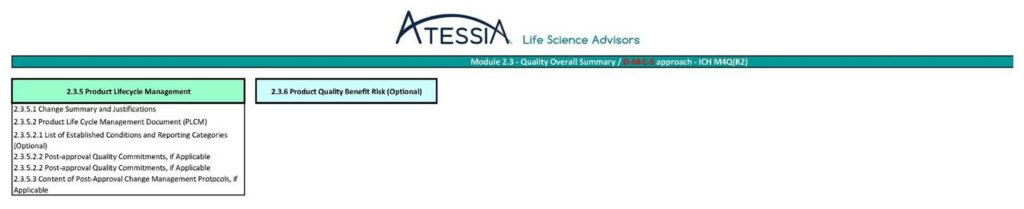
Figure 4: Granularity of Module 2.3 according to ICH M4Q(R2) (3)
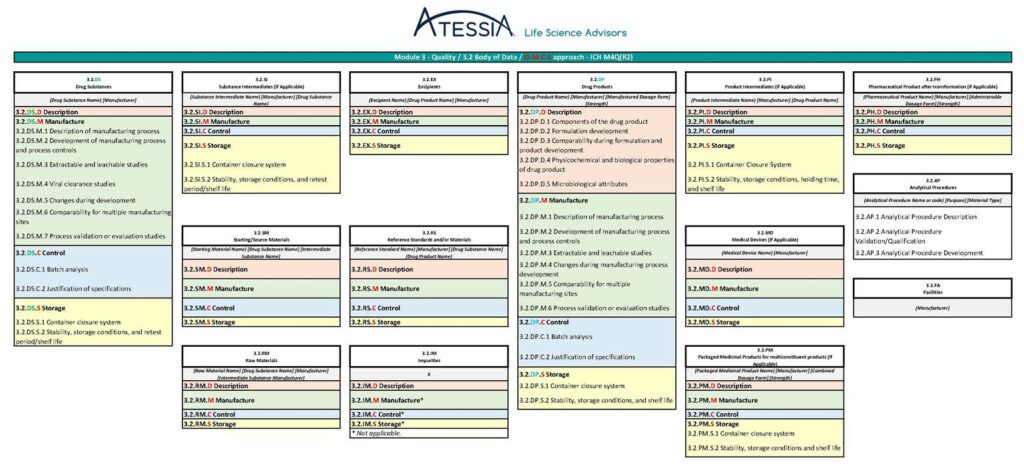
Figure 5: Granularity of Module 3 according to ICH M4Q(R2)


Essential information on quality (2.3.3 Core Quality Information (CQI)):

– shall include all information subject to lifecycle management in accordance with regional requirements for post-authorisation changes to ensure product quality.

– shall be maintained throughout the product lifecycle to ensure that product quality information remains current.

The information contained in sections 2.3.1 (General Information), 2.3.2 (Overall Development and Overall Control Strategy), 2.3.4 (Development Summary and Justification), 2.3.5 (Product Lifecycle Management), 2.3.6 (Product Quality Benefit Risk) and Module 3 will be supportive information, which may be modified or supplemented for post-marketing submissions.

In the future ICH M4Q(R2), information will be grouped into specific subsections of materials/components used in manufacturing:

  • drug substances (DS),
  • substances intermediates (SI),
  • raw materials (RM),
  • starting/source materials (SM),
  • excipients (EX),
  • reference materials (RS),
  • impurities (IM),
  • drug products (DP),
  • products intermediates (PI),
  • packaged medicinal products (PM),
  • pharmaceutical products (PH) and
  • medical devices (MD).

Information relating to analytical procedures and facilities that apply to all materials will be presented in dedicated sections.

Each subsection will then be organized according to the following DMCS structure:

  • Description: identifies the material and its key characteristics;
  • Manufacture: outlines the production process and process controls;
  • Control: Control: describes quality control measures such as specifications;
  • Storage: provides stability, container closure information, and retest period/shelf-life

The relationships between Module 2.3 and Module 3 in the context of the DMCS model used for materials/components are illustrated as follows:

 2.3.3 Core Quality Information2.3.4 Development Summary and Justification3.2 Body of Data
 Information related to what the material is and its key characteristics, which is considered necessary to enable marketing authorization and facilitate lifecycle managementScientific and risk-based development summary and justifications related to what the material is and its key characteristicsSupportive information including reports and data related to what the material is and its key characteristics
DescriptionNomenclature, structure, composition, key characteristicsCharacterization summary, formulation development and justificationCharacterization data, formulation development and justification data
ManufactureManufacturing process description, IPCs, critical process parametersProcess development and validation/evaluation summaryProcess development and validation/evaluation data
ControlSpecificationsOverview of batch analysis, justification of specificationsBatch analysis and justification data
StorageContainer closure system description, storage conditions, and retest period/shelf lifeOverview of stability studies, justification of proposed container closure systemContainer closure selection and stability data  


Conclusion

In conclusion, ICH M4Q(R2) aims to promote harmonization of the quality content of dossiers, ideally enabling a single dossier to be submitted in all ICH member countries.

Where required by law, the applicant shall provide any additional region-specific information directly in the relevant section of a separate document, in the form of an addendum to the harmonized base document used in all ICH regions.

Atessia supports pharmaceutical companies in preparing Modules 2.3 and 3.


Sources:

– The CTD Triangle

– ICH M4 Organisation Including the Granularity document that provides guidance on document location and pagination

– Notice to Applicants, Volume 2B incorporating the Common Technical Document (CTD) (May 2008)

– ICH M4Q(R1) CTD on Quality

– ICH M4Q Q&As (R1) Questions & Answers: CTD on Quality

– ICH M4Q(R2) EWG Revision of M4Q(R1) (draft guideline 14 May 2025)

– M4Q(R2) Step 2 presentation (18 June 2025)

– Présentation Finding your way with the new eCTD (ICH-M4Q), Ivica Malnar, Agency for Medicinal Products and Medical Devices (HALMED) (23-24 September 2025)

– ICH M8 electronic Common Technical Document (eCTD) v3.2.2

– ICH M8 electronic Common Technical Document (eCTD) v4.0


Article written by Isabelle MOUVAULT, Senior Advisor in Pharmaceutical Affairs

The Post-Approval Change Management Protocol or “PACMP” 

In Europe, changes to a marketing authorisation (MA) for a human medicine are covered by Regulation (EC) No. 1234/2008 of November 24, 2008. This regulation has been applicable since January 1, 2010 to MAs obtained in centralized, decentralized and mutual recognition procedures, and since August 4, 2013 to MAs obtained in national procedures. It presents multiple possibilities for classifying the modifications that can be made to a MA, including the Post-Approval Change Management Protocol (known by the acronym “PACMP”) which we will focus on in this article.

Origin and definition 

A PACMP is a regulatory tool providing predictability and transparency in terms of requirements and studies necessary for the implementation of a strictly CMC (for “Chemistry, Manufacturing & Controls”) change, because the approved protocol of the planned changes constitutes an agreement between the MA holder and the regulatory authority. This is a stepwise approach to evaluate modifications, initially allowing for an early evaluation of the modification strategy and, in a 2nd step, a subsequent separate evaluation of the data produced after implementation of the planned changes on the basis of the agreed strategy.

The objective of this tool is to allow faster and more predictable implementation of modifications after approval, given that the MA holder will have previously obtained the agreement of the authorities on the proposed strategy and the tests allowing to check the effect of the modification on the quality of the product. Typically, the variation category designated for reporting changes under a PACMP is at least one category lower than it would normally be (e.g., Type IB instead of Type II). The implementation of the changes planned in an approved PACMP is therefore faster and less risky for the laboratories that request it, which ultimately benefits to the marketing of the drug and therefore to the patient.

In 2012, the EMA compiled a set of questions and answers regarding the PACMP in the document “Questions and answers on post approval change management protocols (EMA/CHMP/CVMP/QWP/586330/2010)”. This document was revised in December 2025 to reflect experience gained since its initial publication, the revision of the regulations on variations (2024), and the associated guidelines on variations (2025) applicable on January 15, 2026. The following topics are covered:

  • Suggestions for PACMP content; 
  • PACMP submission and evaluation mechanisms; 
  • Implementation of the change(s) after finalisation of the studies described in the PACMP; 
  • Types of changes that may be subject to a PACMP; 
  • Multiple changes within the framework of a single PACMP; 
  • Place of the PACMP in the Module 3 of the MA; 
  • PACMP and development according to the traditional approach versus the improved approach (so called “QbD” for “Quality by Design”). 

In 2019, the ICH Q12 guideline “Technical and regulatory considerations for pharmaceutical product lifecycle management“, proposed in order to provide a framework to facilitate the management of changes to chemical properties, manufacturing and control measures after the authorisation, in a more predictable and efficient manner throughout the lifecycle of the product, has reinforced the place of the PACMP as an essential regulatory tool in the management of the lifecycle of medicines in Europe.

Scope of the PACMP use 

The PACMP concerns both CMC modifications relative to the drug substance (DS) and modifications relative to the drug product (DP). It applies to all medicinal products for human use, including biotechnological or biological products, whether a traditional or improved (“QbD”) approach was followed for the development of the product. However, its use is optional.

A PACMP can be applied to a single product, multiple products, or multiple products and multiple sites.

The presence of a PACMP in its MA file involves careful risk analysis and a full understanding of the different risk assessments to ensure that the quality, safety and efficacy of the medicine are never compromised.

It has to be noted that no modification described in a PACMP should result in additional risks to patient safety, product quality or efficacy. Also, a CMC modification that would require human efficacy, safety, or pharmacokinetic/pharmacodynamic data to evaluate the effect of the modification (e.g., certain formulation changes, clinical or nonclinical studies to evaluate new impurities, evaluation of immunogenicity or antigenicity) cannot be included in a PACMP.

Formalisation of the PACMP in the MA file 

The PACMP takes the form of one or more document(s) presented in section 3.2.R “Regional Information” of the MA file. It can be planned as soon as the MA application is made or during a MA variation application (Type II).

MA modifications linked to the PACMP 

The different variations linked to the introduction, deletion or modification of a PACMP in a MA file are presented in the table below. 

Active substance Finished product 
Variation Type II/Q.I.e.2: Introduction of a post-approval change management protocol (PACMP) related to the active substance
> Absence of conditions to be fulfilled.
> Three supportive documentations to be provided:
1. Detailed description for the proposed change.
2. Post-approval change management protocol related to the active substance.
3. Amendment of the relevant section(s) of the dossier
Variation Type II/Q.II.g.2: Introduction of a post-approval change management protocol related to the finished product (PACMP)
> Absence of conditions to be fulfilled.
> Three supportive documentations to be provided:
1. Detailed description for the proposed change.
2. Post-approval change management protocol related to the finished product.
3. Amendment of the relevant section(s) of the dossier. 
Variation Type IA/Q.I.e.3: Deletion of a post-approval change management protocol (PACMP) related to the active substance
> One condition to be fulfilled:
1. The deletion of the post-approval change management protocol related to the active substance is not a result of unexpected events or out of specification results during the implementation of the change(s) described in the protocol and does not have any effect on the already approved information in the dossier.
>Two supportive documentations to be provided:
1. Justification for the proposed deletion.
2. Amendment of the relevant section(s) of the dossier.
Variation Type IA/Q.II.g.3: Deletion of a post-approval change management protocol (PACMP) related to the finished product
> One condition to be fulfilled:
1. The deletion of the post-approval change management protocol related to the finished product is not a result of unexpected events or out of specification results during the implementation of the change(s) described in the protocol and does not have any effect on the already approved information in the dossier.
> Two supportive documentations to be provided:
1. Justification for the proposed deletion.
2. Amendment of the relevant section(s) of the dossier.
Variation Type II/Q.I.e.4(a): Changes to a post-approval change management protocol (PACMP) – Major changes to a post-approval change management protocolVariation Type II/Q.II.g.4(a): Changes to a post-approval change management protocol – Major changes to a post-approval change management protocol
Variation Type IB/Q.I.e.4(b): Changes to a post-approval change management protocol (PACMP) – Minor changes to a post-approval change management protocol that do not change the strategy defined in the protocol
> Absence of conditions to be fulfilled.
> One supportive documentation to be provided:
1. Declaration that the changes do not change the overall strategy defined in the protocol and are not broader than the currently approved protocol.
Variation Type IB/Q.II.g.4(b): Changes to a post-approval change management protocol – Minor changes to a post-approval change management protocol that do not change the strategy defined in the protocol
> Absence of conditions to be fulfilled.
> One supportive documentation to be provided:
1. Declaration that the changes do not change the overall strategy defined in the protocol and are not broader than the currently approved protocol. 
Variation Type IA/Q.I.e.5(a): Implementation of changes foreseen in a post-approval change management protocol (PACMP) – Implementation of changes foreseen in a PACMP via Type IA notification
> One condition to be fulfilled:
1. The proposed change has been performed fully in line with the post-approval change management protocol which requires its notification within 12 months following implementation.
>Three supportive documentations to be provided:
1. Reference to the post-approval change management protocol.
2. Declaration that the change is in accordance with the post-approval change management protocol and that the study results meet the acceptance criteria specified in the protocol (*).
3. Amendment of the relevant section(s) of the dossier.

(*) In case the acceptance criteria and/or other conditions in the protocol are not met, the change cannot be implemented as a variation of this category and should instead be submitted as variation of the applicable category without PACMP.
Variation Type IA/Q.II.g.5(a): Implementation of changes foreseen in a post-approval change management protocol (PACMP) – Implementation of changes foreseen in a PACMP via Type IA notification
> One condition to be fulfilled:
1. The proposed change has been performed fully in line with the post-approval change management protocol which requires its notification within 12 months following implementation.
> Four supportive documentations to be provided:
1. Reference to the post-approval change management protocol.
2. Declaration that the change is in accordance with the post-approval change management protocol and that the study results meet the acceptance criteria specified in the protocol (*).
3. Results of the studies performed and any other supporting documentation in accordance with the post-approval change management protocol.
4. Amendment of the relevant section(s) of the dossier.

(*) In case the acceptance criteria and/or other conditions in the protocol are not met, the change cannot be implemented as a variation of this category and should instead be submitted as variation of the applicable category without PACMP. 
Variation Type IAIN/Q.I.e.5(b): Implementation of changes foreseen in a post-approval change management protocol (PACMP) – Implementation of changes foreseen in a PACMP via Type IAIN notification
>One condition to be fulfilled:
1. The proposed change has been performed fully in line with the post-approval change management protocol, which requires its immediate notification following implementation.
>Four supportive documentations to be provided:
1. Reference to the post-approval change management protocol.
2. Declaration that the change is in accordance with the post-approval change management protocol and that the study results meet the acceptance criteria specified in the protocol (*).
3. Amendment of the relevant section(s) of the dossier.
4. Results of the studies performed in accordance with the post-approval change management protocol.

(*) In case the acceptance criteria and/or other conditions in the protocol are not met, the change cannot be implemented as a variation of this category and should instead be submitted as variation of the applicable category without PACMP.
Variation Type IAIN/Q.II.g.5(b): Implementation of changes foreseen in a post-approval change management protocol (PACMP) – Implementation of changes foreseen in a PACMP via Type IAIN notification
>One condition to be fulfilled:
1. The proposed change has been performed fully in line with the post-approval change management protocol, which requires its immediate notification following implementation.
>Four supportive documentations to be provided:
1. Reference to the post-approval change management protocol.
2. Declaration that the change is in accordance with the post-approval change management protocol and that the study results meet the acceptance criteria specified in the protocol (*).
3. Amendment of the relevant section(s) of the dossier.
4. Results of the studies performed in accordance with the post-approval change management protocol.

(*) In case the acceptance criteria and/or other conditions in the protocol are not met, the change cannot be implemented as a variation of this category and should instead be submitted as variation of the applicable category without PACMP. 
Variation Type IB/Q.I.e.5(c): Implementation of changes foreseen in a post-approval change management protocol (PACMP) – Implementation of changes foreseen in a PACMP via Type IB notification
> Absence of conditions to be fulfilled.
>Four supportive documentations to be provided:
1. Reference to the post-approval change management protocol.
2. Declaration that the change is in accordance with the post-approval change management protocol and that the study results meet the acceptance criteria specified in the protocol (*).
3. Amendment of the relevant section(s) of the dossier.
4. Results of the studies performed in accordance with the post-approval change management protocol.

(*) In case the acceptance criteria and/or other conditions in the protocol are not met, the change cannot be implemented as a variation of this category and should instead be submitted as variation of the applicable category without PACMP.
Variation Type IB/Q.II.g.5(c): Implementation of changes foreseen in a post-approval change management protocol (PACMP) – Implementation of changes foreseen in a PACMP via Type IB notification
> Absence of conditions to be fulfilled.
> Four supportive documentations to be provided:
1. Reference to the post-approval change management protocol.
2. Declaration that the change is in accordance with the post-approval change management protocol and that the study results meet the acceptance criteria specified in the protocol (*).
3. Amendment of the relevant section(s) of the dossier.
4. Results of the studies performed in accordance with the post-approval change management protocol.

(*) In case the acceptance criteria and/or other conditions in the protocol are not met, the change cannot be implemented as a variation of this category and should instead be submitted as variation of the applicable category without PACMP.


The use of PACMP is strongly recommended by regulatory authorities and in line with the latest ICH guidelines (Q8, Q9, Q10, Q12 and Q14). As a result, an increase in this type of variation seems predictable for the years to come.

 
Article written by Isabelle MOUVAULT, Pharmaceutical Affairs Senior Consultant 

MPUP Non GMP

How to manage a non-GMP raw material in your MA files? 

French always do it different 

In many domains, French people like to stand out, either in a positive or negative way. 

In the Healthcare field, France has set a system that is highly effective, and very protective for the patient, but at the price of a heavy state involvement and of one of the most complex regulations. 

As a result, understanding the regulatory specificities of France is key for entering the French market. 

ATESSIA can help you in this process and provide you assistance and expertise. 

Here are a few areas where France follows its own, often complicated and restrictive, rules. 

The substances used in a medicinal product intended for the European market, including for export, are defined as raw materials for pharmaceutical use (RMP). They can be active (active substance) or inert (excipients). 

Whether the medicinal products are intended for human or veterinary use, only active substances manufactured and distributed in accordance with European Good Manufacturing Practices (GMP – Part II) and Good Distribution Practices (GDP), introduced by article L.5138-3 of the French Heath Code, can be used. 

Thus, when applying for a marketing authorization or for certain applications to modify the marketing authorization, the notice to applicants requires the submission of a signed QP declaration by the qualified person of the manufacturing site and/or of the certification of the batches of the finished product attesting that the active substance used is manufactured in accordance with good manufacturing practices. 

Concerning the excipients used in medicinal products for human or veterinary use, there is no enforceable standard in the national or European regulations and they are not subject to the QP declaration in the marketing authorization file. It is up to the manufacturer or distributor of the finished product to define its quality system the applicable standard(s) for the manufacture or distribution of the excipient, according to its/their intended use(s). This exercise will be carried out in consultation with pharmaceutical users on the basis of the results obtained during a formal quality risk assessment (GMP point 5.29). It should be noted that ANSM recommends, at a minimum, the IPEC/PQG GMP & GDP reference systems.  

However, it is recognized that for some raw materials, their pharmaceutical use may represent only a minor fraction of their other industrial uses (agri-food, cosmetics or others). Thus, their producers may not have the objective of meeting the specific requirements of pharmaceutical customers. 

The EMA’s Q&A Part 1 reaffirms that compliance with the above-mentioned standards is a legal obligation and that, in the event of difficulties in guaranteeing a supply of satisfactory quality, alternative GMP sources must be sought out, qualified and, if necessary, registered. In the case of a source identified on European territory, the establishment must apply for authorization or registration from the competent authority of the Member State in which it is established. In case of import from a third country to the European territory, the source of the identified active substance will be conditioned by the provision of a written confirmation from the competent authority of the exporting third country. This document attests that the applicable standards are at least equivalent to the GMP defined by the European Union.  

In exceptional circumstances these same EMA Q&A Part 1 introduces the possibility for manufacturing authorization holders (of the finished product) to assess and document the extent to which GMP is met, and to provide a risk-based justification for the acceptance of any deviation. At the MA level, the QP declaration should detail the rationale for stating that the standards applied provide the same level of assurance as GMP. The EMA will collect the experience gained with this approach, which can be used as a basis for discussion of possible future related changes to the guidelines. 

However, at the national level, the ANSM does not, for example, explicitly provide for derogations or for exceptional circumstances, unlike the EMA for centralized MA. When informed in advance of a particular context (such as medicinal products of major therapeutic interest or the absence of a therapeutic alternative), the competent authorities could then request additional information or carry out an inspection to ensure that the establishment complies with the standards in force in the Union. Thus, this situation can only be transitory, since these alternative sources (in the EU or in third countries) and/or their principals can request an express request for an inspection of the raw materials from a competent authority of one of the member states in order to obtain a certificate of conformity. 

The control of the supply chain is the key word. Deficiencies in the qualification and monitoring process of suppliers and/or manufacturers of raw materials are regularly the subject of injunctions issued by the ANSM against pharmaceutical establishments (2 for the year 2024 and 2 for the year 2025). For the alternative identified source, this may be a hindrance (compulsion to comply with the opposable standards) or an opportunity (to comply with them in order to enter the EU market for UPMPs). A mutualization of supplies (and on-site audits) can also be an interesting approach to encourage the source to seize this opportunity.  

This article was written by Véronique LEWIN, Senior Consultant in CMC Regulatory Affairs

Prescription et délivrance

Conditions for the Prescription and Dispensing of Medicines in France

The conditions for prescription and dispensing (CPD) define how patients may access a medicine. The prescription and/or dispensing of a medicine may be restricted—meaning reserved for hospital use or to certain physicians (such as specialists), or subject to specific requirements (regarding treatment duration or additional examinations)—in the interest of patient safety.

The prescribing of healthcare products falls within the scope of physicians and certain healthcare professionals, within the limits of their professional practice: dentists, midwives, physiotherapists, podiatrists, nurses, and occupational therapists.

Medicines that present difficulties in use or risks in case of inappropriate use may only be obtained, depending on the case, with a prescription from a physician, dentist, or midwife. These are known as prescription-only medicines (PMO, Rx). They are classified into different categories based on their prescribing and dispensing rules:

  • List I medicines (single dispensing with the same prescription unless otherwise specified by the prescriber) and List II medicines (renewals allowed for up to one month of treatment for a maximum of 12 months).
  • Narcotics: around twenty medicines, including morphine and its derivatives, whose dispensing is subject to very strict rules (secured prescription, batch number and a micro-lettering box to prevent falsification, with quantities limited to 7, 14, or 28 days of treatment).

If a medicine is not included in these lists, it is considered “non-mandatory prescription” (PMF), or even OTC (available over the counter in pharmacies).

As an exception, community pharmacists are authorised to prescribe and administer, to certain populations, the vaccines included in the national immunisation schedule, as well as seasonal influenza and COVID-19 vaccines. They may also dispense, without a prescription, certain prescription-only medicines for the management of sore throats and cystitis in pharmacies, after performing a rapid diagnostic test (TROD).

Some prescription-restricted medicines may be dispensed to the public by a hospital pharmacy (PUI). These medicines are included on the “retrocession” list.

Medicines with Restricted Prescription

This term covers five categories of medicines belonging to List I:

  • Medicines reserved for hospital use (RH): they may only be prescribed, dispensed, and used in hospitals.
  • Hospital-prescription-only medicines: they may only be prescribed in hospitals. They are dispensed in any pharmacy or, in some cases, only in hospital pharmacies.
  • Hospital-only initial prescription medicines: the initial prescription must be issued in a hospital, but renewal prescriptions may be issued by a community physician. Depending on the case, dispensing may occur in hospital or community pharmacies. In some situations, the number of renewals is limited, and a new hospital prescription is required after a set period (usually one year).
  • Medicines restricted to certain specialists: these medicines are complex to use or treat complex diseases. They may be dispensed in hospital or community pharmacies.
  • Medicines requiring special monitoring: patients treated with these medicines must undergo regular monitoring (blood tests, additional examinations, more frequent consultations). The prescription may only be renewed if these monitoring requirements are met.

Regulatory Framework – Directive 2001/83/EC

Directive 2001/83/EC includes articles dedicated to prescription and dispensing requirements.
According to Article 70:

“1. When granting a marketing authorisation for a medicinal product, competent authorities shall specify its classification as either:
— medicinal product subject to medical prescription,
— medicinal product not subject to medical prescription.
They shall apply the criteria set out in Article 71(1).

  1. Competent authorities may establish subcategories for medicinal products that may only be supplied on medical prescription, referring to the following classification:
    a) medicinal products on prescription that may or may not be renewed;
    b) medicinal products subject to special medical prescription;
    c) medicinal products under ‘restricted’ medical prescription, reserved for certain specialised settings.”

These provisions are also reflected in French regulation (Article R5121-36 for prescription conditions and Articles R5121-77 et seq. for restricted-prescription medicines). According to Articles R5121-77 et seq. of the French Public Health Code, the marketing authorisation (MA) defines the prescription and dispensing conditions of a medicine.

The MA of a restricted-prescription medicine may require the prescriber to indicate on the prescription that the patient has been informed of the associated risks.
When the reference medicinal product of a generic is classified in a restricted-prescription category, the generic’s MA follows the same classification.

Evolving Toward Greater Access in Community Pharmacies

Law n° 2020-1525 of 7 December 2020 on accelerating and simplifying public action, integrated into Article L5123-2 of the Public Health Code, illustrates a desire to shift medicines towards community pharmacy distribution.
According to Article L5123-2, any request for inclusion on the hospital formulary of a medicinal product that is not classified as reserved for hospital use must be accompanied by a request for inclusion on the “community list”

Atessia’s Support

Atessia assists pharmaceutical companies in defining or modifying the prescription and dispensing conditions of their medicinal products.

This article was written by Estelle ICARD, Regulatory & Pharmaceutical Affairs Consultant.

Rétrocession

The Hospital-to-Community Dispensing (“Retrocession”) of Hospital Medicines to Outpatients in France

In France, community pharmacies are the standard point of dispensing for outpatients when medicines are not restricted to hospital use. 

“Retrocession” refers to the dispensing of medicines to outpatients by hospital pharmacies (PUI – pharmacies à usage intérieur), as an exception to or in addition to the community pharmacy supply chain. It is justified by public health or safety reasons listed in the French Public Health Code. 

According to Articles L5126-6 and R5126-58 of the French Public Health Code, and the dedicated page on the ANSM website, medicines must meet the following criteria to be eligible for rétrocession: 

  • not be restricted to hospital use (RH status), 
  • present specific dispensing or administration constraints, 
  • have particular requirements related to supply security, 
  • require monitoring of the prescription or dispensing. 
  •  

Medicines are included on this list for public health reasons, in the interest of patients. 

The retrocession list, initially established in 2004 and managed by the Ministry of Health until 2021, was originally built on the basis of practice and needs. 
Its management was then transferred to the ANSM at the end of 2021 (Decree No. 2021-1531 of 26 November 2021). It is now supplemented by generic medicines corresponding to reference products already listed, or by certain new medicines considered by the ANSM to have added value when dispensed through hospital pharmacies due to safety-of-use or supply considerations. These medicines hold a Marketing Authorisation (MA) or an Import Authorisation (AI). The ANSM has expressed its intention to streamline this list, keeping only medicines that legitimately require access through this distribution channel. 

Decisions to include medicines on the retrocession list are published on the ANSM website approximately every 15 days, depending on the flow of newly granted MAs. A consolidated and updated retrocession list is also available (including antibiotics/antifungals, anticancer agents/immunosuppressants, antivirals, plasma-derived medicinal products, etc.). 

Other medicines may be dispensed through retrocession without being explicitly listed. These include the following categories: magistral or hospital preparations, medicines granted early access or compassionate use. 

The purpose of the retrocession system is to ensure that patients can access certain treatments despite specific distribution, dispensing, or administration constraints, or when particular monitoring of the prescription or dispensing is required, without the need for hospitalisation. 

When medicines have been marketed for several years and sufficient experience has been gathered, their switch to community pharmacy dispensing logically leads to their removal from the retrocession list. 

Atessia supports pharmaceutical companies in defining or modifying the prescribing and dispensing conditions of their medicinal products. 

This article was written by Estelle ICARD, Regulatory & Pharmaceutical Affairs Consultant. 

PCVRR

The PRRC: Person Responsible for Regulatory Compliance 

Article 15 of Regulation (EU) 2017/745 on medical devices and Article 15 of Regulation (EU) 2017/746 on in vitro diagnostic medical devices formally introduce the requirement for each manufacturer (and each authorised representative) to designate a Person Responsible for Regulatory Compliance (PRRC). This requirement aims to ensure the continuous compliance of devices placed on the market, regardless of their class or medical purpose. 

This obligation applies to all types of devices: 

  • Implantable or non-implantable 
  • Active or non-active 
  • Standard or custom-made 
  • With or without a medical purpose 

Who Needs a PRRC? 

  • Manufacturers  

All manufacturers placing CE-marked medical devices on the EU market are required to appoint a PRRC. 

  • Authorised Representatives (ARs) 

EU-based authorised representatives acting on behalf of non-EU manufacturers are also required to designate a PRRC. 

Other economic operators such as distributors, importers, and assemblers are not required to have a PRRC. 

Roles and Responsibilities of the PRRC 

The PRRC plays a critical role throughout the regulatory lifecycle of a medical device. The main responsibilities include : 

  • Verifying the conformity of devices prior to their release, relying on the manufacturer’s quality management system. 
  • Preparing and updating technical documentation, including the EU declaration of conformity. 
  • Post-market surveillance obligations: monitoring device performance and safety after it has been placed on the market. 
  • Reporting obligations to competent authorities in the event of incidents or significant changes. 
  • Submitting declarations in case of clinical investigations and performance studies, as required by the regulation. 

🔒 Independence Guarantee : The regulation ensures that the PRRC cannot be disadvantaged in carrying out their duties, whether they are an employee of the company or an external party. 

Required Qualifications to Act as a PRRC 

There are two possible routes to qualify as a PRRC, as set out in the regulation: 

1. Academic Path + Experience 

  • A diploma (or certificate) in law, medicine, pharmacy, or another relevant scientific discipline. 
  • ≥ 1 year of professional experience in regulatory affairs or quality management systems related to medical devices/or in vitro diagnostic medical devices. 
  • For custom-made devices: ≥ 2 years of experience in a relevant manufacturing field. 

2. Professional Experience Path 

  • ≥ 4 years of professional experience in regulatory affairs or quality systems applicable to medical devices /or in vitro diagnostic medical devices. 

PRRC Role Based on Company Size 

The regulation acknowledges structural differences between large companies and SMEs: 

  • Large enterprises: The PRRC must be a permanent part of the organization. 
  • Micro and small enterprises*: The PRRC role can be outsourced, provided the person is permanently and continuously available. 

Multiple PRRCs: If more than one person is appointed, they share joint responsibility for regulatory compliance. Their respective responsibilities must be clearly defined in writing, and each individual must meet the qualification requirements. 

Registration and Compliance 

Since the Regulation came into effect on 26 May 2021, the contact details of the PRRC must be registered in EUDAMED, the European database for medical devices. 
(See our blog post on EUDAMED for more details.) 

Useful References 

  • SNITEM Guide – The Person Responsible for Regulatory Compliance 

*Commission Recommendation 2003/361/ΕC of 6 May 2003 concerning the definition of micro, small and medium-sized enterprises: 

-Within the SME category, a small enterprise is defined as an enterprise which employs fewer than 50 persons and whose annual turnover and/or annual balance sheet total does not exceed EUR 10 million. 

-Within the SME category, a microenterprise is defined as an enterprise which employs fewer than 10 persons and whose annual turnover and/or annual balance sheet total does not exceed EUR 2 million. 

Article written by Camille NEERMUL, Senior Consultant in Quality and Regulatory Affairs for medical devices 

Extension d'AMM versus variation de type II

Marketing Autorisation Extension versus type II variation. 

Legal basis: 

When marketing authorization holders wish to register a medicine in Europe, they submit a marketing authorisation (MA) application to the health authorities.  

Once marketing authorisation has been obtained, it is the responsibility of the marketing authorisation holder to keep the dossier up to date and to report any changes that affect the marketing authorisation. These changes may be of various types (administrative, quality, safety).  To do this, the marketing authorisation holder must submit a notification or a variation application to the competent health authorities.  

A variation is a modification to the marketing authorisation.  

There are also other types of MA modifications, known as MA extensions. 

Changes to the terms of a European marketing authorisation are provided for in Directive 2001/83/EC and Regulation (EC) No 726/2004, and detailed in Regulation (EC) No 1234/2008 on the examination of variations to the terms of marketing authorisations for medicinal products for human use (hereinafter referred to as the ‘Variations’ Regulation). New guidelines to facilitate the interpretation and application of the Variations Regulation were published in the Official Journal on 22 September 2025 and are applicable on 15 January 2026. The Annex to these guidelines provides details of the classification of variations. These guidelines cover the following categories of variations, defined in Article 2 of the Variations Regulation: 

— Minor variations of Type IA, 

— Minor variations of Type IB, 

— Major variations of Type II, 

— Extensions, 

— Urgent safety restrictions. 

Any modification must be classified in one of the above categories. However, in some cases, the distinction between a Type II (major) variation or an extension is complex. 

Definitions: 

  1. Type II variations 

Type II variations are considered as major variations. These are variations which are not extensions of marketing authorisations and may have a significant impact on the quality, safety or efficacy of the medicinal product concerned. This type of variation is generally assessed within 60 days, but shorter assessment periods (30 days for safety-related variations) or longer periods (90 days for indication extensions) may be necessary. 

  1. Extensions 

Certain changes to a marketing authorisation must be considered as fundamentally altering the terms of that authorisation and therefore cannot be granted through a variation procedure. Annex I of the Variations Regulation sets out a list of changes to be considered as extensions; the two main changes requiring an extension are:  

– Changes to the active substance(s): 

– Changes to strength, pharmaceutical form and route of administration 

According to Article 19 of the « modification » Regulation, an application for an extension shall be evaluated and granted in accordance with the same procedure as for the initial marketing authorisation to which it relates.  

The extension may either be granted as a new marketing authorisation (national procedures, MRP and DCP) or included in the initial marketing authorisation to which it refers (centralised procedure). 

In all cases, the new MA obtained is part of the global marketing authorisation and is not eligible to additional data protection (except in cases of ‘significant’ indication extensions based on comparative data). 

The assessment timetable for an extension is the same as that for an initial marketing authorisation application. 

In practice 

Experience has shown problems in the classification of extension applications versus variations particularly regarding the items pharmaceutical form and strength. The « GUIDELINE ON THE CATEGORISATION OF EXTENSION APPLICATIONS (EA) versus VARIATIONS APPLICATIONS (V) » (Revision 4 – July 2019), proposes a harmonised and agreed interpretation of the Standard terms, with the aim of facilitating the application of the Regulation on variations throughout the EU and helping in the classification of requests.   

The main principles of classification of extensions versus type II variations are as follows: 

 Type of changes 
Pharmaceutical form Strength Presentation Route of administration Inclusion of medical devices 
Variation  Deletion of a pharmaceutical form Deletion of a strength Change or deletion of a pack size Change of fill volume    Addition or replacement of a measuring or administration device (part of the primary packaging)* 
Extension Change of addition Different strength or any other changes to the active substance(s)  Change or addition of a route of a route of administration   

* : unless the modification results in a change to the strength, pharmaceutical form or route of administration. 

The guideline also provides examples presented as table for more complex cases. 

It is important to note that variation requests may be grouped together with a marketing authorisation extension request. The assessment period applied to variations will be that of the marketing authorisation extension. 

In summary 

Apart from the question of the regulatory classification of the application (variation or extension), numerous practical questions may arise when compiling the application: 

– Will my brand name be affected? 

– How should I submit my extension request? 

– What data should I generate? 

– Can I group extension submissions with other types of variations? 

– Do I need to meet pediatric requirements in my extension application? 

– How should I integrate this extension into the eCTD? 

ATESSIA can assist you in developing your regulatory strategy and drafting your variation or extension application dossiers, regardless of the registration procedure. 

This article was written by Anne-Valérie Angérard, senior regulatory affairs consultant. 

Désignation orpheline

The EMA orphan designation

In December 1999, the European Parliament and Council adopted Regulation (EC) No. 141/2000 on so-called “orphan” medicinal products. These are drugs developed to treat rare diseases. They are called “orphan” because the pharmaceutical industry has little interest in developing and marketing products that are only intended for a small number of patients.  

This Regulation established a Community procedure for designating certain medicinal products as orphan medicinal products and introduced incentives to promote the research, development and marketing of such designated medicinal products. A large proportion of advanced therapy medicinal products claim orphan drug status. This “orphan drug” designation can be granted at any stage of the drug’s development, prior to obtaining marketing authorization. 

However, certain conditions must be met. According to the regulations, in order to obtain orphan designation, the sponsor must demonstrate

> that the medicinal product is intended for the diagnosis, prevention or treatment of a life-threatening condition or chronic disability affecting no more than 5 in 10,000 people in the European Union;  

> or that, in the absence of incentives, the sale of this medicine in the EU is unlikely to generate sufficient profits to justify the necessary investment; 

> and that there is no satisfactory alternative method or, if available, that the treatment in question will provide a significant benefit. 

Once the “application” file is ready, the sponsor submits their application for orphan designation via the Regulatory & Scientific Information Management Platform (IRIS*).  

Applications for orphan designation are evaluated by a specific committee set up within the EMA, the COMP*. This committee is responsible for examining the applications for designation submitted, in order to issue an opinion to the European Commission within 80 days of receipt of the application. Subsequently, the Commission adopts its final opinion on an application for designation of a medicinal product as an orphan medicinal product within 30 days of receipt of the Committee’s opinion, in the light of the eligibility criteria set out in Regulation (EC) No 847/2000 laying down the provisions for implementation of the criteria for designation of a medicinal product as an orphan medicinal product and definitions of the concepts ‘similar medicinal product’ and ‘clinical superiority’. 

Orphan drug legislation offers sponsors an attractive opportunity to benefit from reductions in regulatory fees payable to the EMA. This incentive leads to reduced fees for protocol assistance, MA applications, pre-authorisation inspections and post-approval MA variation applications.  

Obtaining orphan drug status also brings many other significant advantages that manufacturers can benefit from, such as protocol assistance. This is scientific advice specific to orphan drugs that guides sponsors on the types of clinical studies needed to demonstrate the quality, significant benefits and risks of the drug.  

Another factor encouraging sponsors to apply for orphan designation is the 10-year market exclusivity of their drug after MA is granted. Authorized orphan drugs benefit from ten years of protection from competition on the market from drugs with similar indications. That is, each indication with an orphan designation confers ten years of market exclusivity for that particular indication.  

All of these incentives have proven successful since the implementation of orphan drug legislation in the EU in 2000. The ongoing revision of European drug legislation would retain most of the incentives, according to current discussions. 

Atessia supports its clients in their efforts to obtain orphan designation for their drugs.  

*IRIS: Integrated Regulatory Information System 

*COMP: Committee for Orphan Medicinal Products 

Article written by Blandine LATROBE, Regulatory & Pharmaceutical Affairs Consultant 

Remboursement

What reimbursement for drugs in France? 

In France, certain drugs are covered by the National Health Insurance system. They are referred to as reimbursable drugs. Obtaining reimbursement is not based solely on a product’s therapeutic value. It involves a specific regulatory process, involving several authorities and affecting the price, prescription conditions, and patient access to the drug. 

The reimbursement request must be submitted by the pharmaceutical company that markets the drug. 

Assessment by the Transparency Committee 

The French National Authority for Health (HAS), through its Transparency Committee, assesses each specialty based on: 

  • Actual benefit (Service Médical Rendu – SMR), which determines the applicable reimbursement rate (15%, 30%, 65%, or 100%). 
  • Drugs whose SMR is considered insufficient are not reimbursable. 

The price of a reimbursable drug is then set by the Economic Committee for Health Products (CEPS), following negotiations with the pharmaceutical company, based on: 

  • The Improvement in Medical Service Rendered (Amélioration du Service Médical Rendu – ASMR), which ranks the product in relation to comparators already available, with 5 ASMR levels : from I (major therapeutic progress) to V (no improvement). 

This price, combined with the reimbursement rate, subsequently determines the registration of the drug on the regulatory lists that allow it to be covered by Health Insurance : 

  • List of specialties reimbursable to Social Security Insured (City list): drugs available in community pharmacies, covered by Social Security based on a price negotiated with the CEPS and a reimbursement rate determined according to the SMR. 
  • List of pharmaceutical specialties approved for use by communities (Hospital list): drugs used in hospitals, covered through the standard hospital budget (GHS), without price negotiation with CEPS, as hospitals manage their own budgets and tenders. 
  • Supplementary List (“Liste en sus”): expensive and innovative drugs administered in hospitals, excluded from the GHS budget, reimbursed on an invoice basis, with prices negotiated directly with CEPS, taking into account their therapeutic value and impact on hospital costs. 

A drug only becomes eligible for standard reimbursement after publication in the Official Journal. Note that some medicines are tacitly included on the hospital list. This is the case for medicines under compassionate use or early access programs. According to these prescription and dispensing conditions, the medication must be prescribed by a healthcare professional (doctor, midwife, dental surgeon, chiropodist, nurse) on a prescription in accordance with the regulations and within the limits of prescription rights. It is then dispensed to the patient either in community pharmacies or hospitals. 

Obtaining reimbursement is not just an administrative formality: it is a key step that determines access to the French market. The pharmaceutical company must prepare a solid dossier and anticipate the authorities’ expectations, while ensuring that the product is correctly positioned in relation to existing alternatives. An unfavorable reimbursement or reimbursement obtained within a restrictive framework can limit the drug’s adoption by prescribers and hinder its access to patients. 

Article written by Lamya SAOUSSEN, Junior Regulatory Affairs and External Communication Advisor  

La Charte de QUalité des Pratiques Professionnelles : Un Nouveau Cadre pour la Promotion des Produits de Santé

The Quality Charter for Promotional Practices: A New Framework for the Promotion of Health Products 

In March 2022, the Quality Charter for Professional Practices was published to provide a framework for the presentation, information and promotion of medical devices for individual use, health products other than medicinal products and any associated services. The publication of the Quality Charter for Professional Practices marks a turning point in the supervision of commercial and promotional practices, with the aim of guaranteeing transparent information that complies with quality requirements in the field of medical devices and associated services. 

A strengthened regulatory framework 

This charter, published by decree in the Official Journal on 8 March 2022, is part of an initiative to regulate promotional practices for healthcare products. It was drawn up in consultation with the “Comité économique des produits de santé” (CEPS) and the sector’s professional organisations. Its main objective is to provide a better framework for interactions between healthcare professionals and companies marketing or distributing medical devices or associated services included on the list of reimbursable products and services (LPP). 

The charter applies to all products and services listed on the LPP, used in towns and in healthcare and medico-social establishments, under both brand names and generic descriptions. 

The charter imposes several essential rules to guarantee reliable and ethical information: 

Control of promotional visits: A threshold is proposed for the frequency of visits to healthcare professionals in order to avoid excessive commercial pressure. 

Transparency of information: obligation to provide exhaustive data on the proper use of products. 

Certification of practices: commitment by manufacturers, operators and distributors to respect the principles of the charter and to join a certification process. 

On the basis of this text, the French National Authority for Health (HAS) is drawing up a set of guidelines with a view to the implementation, by accredited bodies, of a certification audit procedure for the practices of economic operators. 

But with all this:  

What can companies give doctors, and what should companies give them? And above all, how should medical sales representatives be trained? How often? How do you declare a conference with a speaker? 

ATESSIA can help you decipher these regulations, prepare for your internal audits, audits of your subcontractors, certification audits, draw up procedures or train your teams in the field. 

Sandrine DE SOUSA, Senior Advisor Compliance and Quality of External Communications